Hangars, warehouses, and industrial buildings with metal structures face operating conditions that differ significantly from conventional buildings. Metal surfaces respond rapidly to outdoor temperatures and solar exposure, allowing heat to transfer indoors, increasing cooling loads and affecting storage and working conditions. The problem is not limited to high temperatures. Under certain conditions, condensation can occur when metal surfaces and indoor air have different temperatures. This can create moisture-related issues that may affect stored products, equipment, metal surfaces, and the overall working environment. For this reason, hangar and warehouse insulation should not be viewed as a cosmetic upgrade or secondary measure. It should be considered part of a facility protection and operational efficiency strategy. Successful insulation depends on selecting the right material, appropriate thickness, installation method, and proper treatment of weak points across roofs and walls. Why Do Temperatures Rise Inside Hangars?
Temperatures inside hangars rise because of several factors working together, including solar exposure on metal roofs and walls, insufficient thermal resistance in the building envelope, and ventilation or cooling systems that may not be adequate for the facility’s size. Metal roofs are among the building components most exposed to solar radiation, particularly during the summer months. As the external surface temperature increases, heat can transfer through the roof assembly into the building, increasing the internal thermal load. 1. Direct Solar Exposure Hangar surfaces are often exposed to large amounts of direct sunlight compared with many conventional buildings. As roof areas become larger, controlling heat transfer from the exterior envelope to the interior becomes increasingly important.
2. The Nature of Metal Buildings Metal structures respond quickly to temperature changes. Therefore, metal building insulation should be selected based on the characteristics of the metal structure, insulation location, installation method, and exposure to moisture.
3. Facility Size and Ceiling Height Hangars typically have large floor areas and high ceilings, making indoor environmental control more challenging. Simply increasing cooling capacity may not always be the most efficient solution if significant amounts of energy are being used to compensate for heat transfer through the building envelope.
4. Poor Insulation or Gaps Even when insulation material is installed, gaps or untreated areas can reduce the overall performance of the system. Insulation should therefore be treated as a complete system rather than simply a material installed on selected surfaces.
How Heat and Condensation Affect Storage and Operations
Heat, humidity, and condensation can affect warehouses and industrial facilities in ways that go beyond occupant discomfort. Cooling costs may increase, temperature-sensitive materials may be affected, and moisture may appear on metal surfaces under suitable conditions. Protecting stored products starts with the indoor environment. In warehouses, product protection does not depend solely on packaging quality. The surrounding storage environment can also play an important role in maintaining product condition throughout the storage period.
Warehouse managers should therefore evaluate temperature, humidity, and the nature of stored goods, especially when products are sensitive to thermal or moisture fluctuations. Reducing Cooling System Load Effective thermal insulation can reduce heat transfer through roofs and walls and may therefore help lower the thermal load placed on cooling systems.
This does not mean insulation eliminates the need for air conditioning. Instead, it helps the cooling system operate under more stable conditions. The objective is to reduce the amount of heat entering the facility rather than relying solely on cooling equipment to compensate for it afterward. Reducing Condensation Risk Condensation occurs when a surface reaches a temperature below the dew point of the surrounding air, causing moisture in the air to turn into water droplets on that surface.
In metal hangars, cold metal surfaces can become potential condensation points under certain conditions. A properly designed and installed insulation system can help control heat transfer and reduce conditions that encourage condensation. How Does Hangar Insulation Work?
Thermal insulation works by reducing heat transfer between the exterior and interior environments. For hangars and warehouses, the insulation system should be selected according to roof and wall construction, climatic conditions, and the required performance level. **United Insulations Co. (UCI) uses low-density polyethylene foam (LDPE Foam) in insulation products, including its Hanger Insulation designed for hangars, warehouses, and metal structures. The company states that the product can be used for roof and wall insulation and offers water absorption resistance, lightweight construction, and ease of use. **
Polyethylene Foam as an Industrial Insulation Solution Polyethylene foam has a structure that helps reduce heat transfer and can be used in applications requiring moisture resistance and installation flexibility. UCI’s Hanger Insulation is available in different thicknesses, including 6 mm, 8 mm, and 15 mm, with width and length options that can be customized according to project requirements. **The published technical data for UCI Hanger Insulation lists an average thermal conductivity of 0.0230 W/m·K, along with tested properties based on relevant ASTM methods. The final thickness and specifications should always be selected according to the project’s engineering requirements and design. **
Insulation Is More Than an Additional Layer A common mistake is to think of insulation simply as a material placed on the roof. Actual performance depends on how the material integrates with the building structure, how it is installed, how joints are treated, and how roof-to-wall interfaces are addressed.
The facility itself must also be considered. A warehouse storing temperature-sensitive products has different requirements from an open hangar used to store equipment or materials that are less sensitive to temperature changes. Choosing the Right System for Roofs and Walls
There is no single insulation system that is suitable for every hangar and warehouse. The right choice starts with understanding the facility, including its location, structural system, surface area, temperature conditions, humidity, indoor use, and stored products. Metal Roof Insulation The roof is one of the most important parts of the facility to assess because it is directly exposed to solar radiation, rain, and temperature fluctuations.
When selecting insulation, it is important to consider the appropriate thickness, installation method, material compatibility with the metal surface, and the ability to properly treat joints and gaps. Metal Wall Insulation External walls can also contribute to heat transfer, particularly in facilities where wall surfaces are exposed to direct sunlight for extended periods.
Therefore, insulating only the roof may not be sufficient for some projects. The building envelope should be assessed as a whole to achieve a balanced solution. The Highest Thickness Is Not Always the Best Choice Choosing the highest available thickness may seem logical, but the correct decision should be based on thermal performance requirements, facility use, surface area, cost, and building design.
For this reason, thickness should not be selected based solely on price or on a generic recommendation unrelated to the project. The actual facility should be assessed and the appropriate technical specifications determined. Simplified Insulation Selection Guide | Factor | Why It Matters |
| Outdoor temperature | Determines the expected thermal load |
| Solar exposure | Affects roof and wall surface temperatures |
| Roof and wall type | Determines the insulation application method |
| Humidity | Important when assessing condensation risk |
| Stored products | Some products are more sensitive to heat and moisture |
| Cooling system | Helps determine the required thermal load |
| Insulation thickness | Affects thermal performance and cost |
| Installation method | Directly affects system performance |
What Should Be Assessed Before Installing Industrial Hangar Insulation?
Before installing industrial hangar insulation, it is advisable to conduct a site assessment rather than relying solely on the facility’s total area. The assessment should include several factors: Common Mistakes That Cause Insulation Failure
Even high-quality insulation materials can lose part of their effectiveness if they are selected or installed incorrectly. The success of an insulation project therefore depends on the material, design, and installation working together. Mistake 1: Choosing the Material Based Only on Price Cost is an important factor in any project, but it should not be the only consideration. Selecting a low-cost material that does not meet technical requirements can lead to poor performance and additional costs later.
Mistake 2: Ignoring Condensation Some projects focus heavily on heat while overlooking moisture. In metal structures, the potential for condensation should be considered when designing the insulation system.
Mistake 3: Insulating One Area While Leaving Weak Points If a large surface is insulated while significant exposed areas or gaps remain untreated, these locations can become pathways for heat or moisture transfer.
Mistake 4: Failing to Address Joints and Connections Insulation performance does not depend on the material alone. Joints, connections, and interfaces require careful installation to minimize weak points in the system.
Mistake 5: Using the Same Solution for Every Facility Every facility has different conditions. Applying one standard specification to every warehouse and hangar may therefore fail to deliver the best result.
How Can These Mistakes Be Avoided? Start with a site assessment, define the required performance, and then select the appropriate material, thickness, and installation method. The product’s technical data should also be reviewed to ensure compatibility with project requirements. **UCI provides technical data for its Hanger Insulation, including density, thermal conductivity, water absorption, tensile strength, and elongation, along with the applicable test methods. **
When Do You Need a Technical Site Assessment?
A technical site assessment becomes especially important when the facility is large, contains sensitive products, already experiences excessive heat or condensation, or has a cooling system that cannot maintain the required conditions. Signs that indicate the need for a technical review include: - Significant temperature increases inside the hangar during peak hours.
- Cooling systems operating for extended periods.
- Water droplets or moisture appearing on metal surfaces.
- Damage or changes in the condition of stored products.
- Recurring rust or corrosion on metal surfaces.
- Significant temperature differences across different areas of the facility.
- Recent modifications to the building or cooling system.
In these situations, asking “What is the best insulation?” is not enough. The more accurate question is: What insulation system is appropriate for this specific facility? Hangar and Warehouse Insulation as an Investment in Operational Stability
When facility managers view insulation only as a cost, its real value can be difficult to see. When insulation is connected to inventory protection, reduced thermal loads, improved indoor conditions, and moisture-risk reduction, it becomes part of operational risk management. This does not mean insulation will eliminate every problem or completely eliminate energy consumption. Rather, it can be an important component of an integrated system that includes building design, ventilation, cooling, humidity control, maintenance, and the nature of stored products. Why Is Polyethylene Foam a Practical Option for Hangars?
**Polyethylene foam is used in various insulation and protection applications due to its lightweight structure and properties related to thermal insulation and moisture resistance. UCI provides low-density polyethylene foam solutions for a range of industrial and construction applications. **
Key properties that can make the product suitable for certain hangar and warehouse applications include: - Thermal insulation: Helps reduce heat transfer.
- Water absorption resistance: An important property for environments where moisture resistance is required.
- Lightweight construction: Makes the material easier to handle during installation.
- Flexibility: Supports use across different applications and surfaces.
- Shock and vibration absorption: A property included among the product’s published features.
**The product information also describes a closed-cell structure that helps resist moisture, an important characteristic for environments where improved moisture control is required. **
How Do You Choose the Right Insulation Company for Your Project?
Choosing an insulation supplier or contractor should not be based simply on product availability. For industrial projects, it is important to verify technical data, product specifications, relevant application experience, and the ability to supply the required quantities. When comparing suppliers, consider asking the following questions: - What type of insulation material is used?
- What thicknesses are available?
- Are technical data and test results available?
- Is the material suitable for metal roofs and walls?
- How are joints and connections treated?
- Can dimensions be customized according to project requirements?
- Are installation and application guidelines available?
- Do the specifications comply with project requirements and applicable codes?
**United Insulations Co. (UCI) provides polyethylene foam solutions alongside products such as foam boards, Hanger Insulation, and protection layers, with published technical information for its various products. **
UCI Hanger Insulation
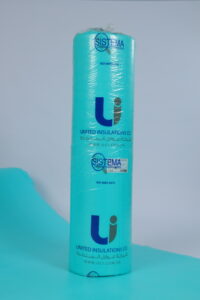
**UCI Hanger Insulation is designed for hangars, warehouses, and metal structures, with a focus on thermal insulation, water absorption resistance, and shock and vibration absorption. The company states that it can be used on roofs and walls to help maintain more stable indoor temperatures. ** **The material is available in multiple thicknesses, with dimensions that can be supplied according to customer requirements, giving industrial projects greater flexibility when specifying the required solution. **
You can explore the product details and technical specifications through the UCI Hanger Insulation page. When Should Insulation Become Part of an Inventory Protection Strategy?
If a facility stores materials or products for extended periods, controlling indoor conditions becomes increasingly important. The more sensitive the products are to heat or moisture, the more important it becomes to assess the indoor environment before selecting a solution. For example, a warehouse storing temperature-sensitive products may require a different level of thermal control than a warehouse storing materials that are less affected by temperature changes. The decision should therefore begin with the stored product and operational requirements—not with the insulation material alone. Pre-Installation Checklist for Hangar and Warehouse Insulation
Before starting the project, facility managers can use the following checklist: - Does the facility experience excessive heat?
- Are there signs of condensation?
- Are the metal roof and walls currently insulated?
- What is the condition of the existing insulation?
- Are there gaps or exposed areas?
- What type of products are stored?
- What indoor temperature range is required?
- Are there issues with the cooling system?
- Is energy consumption higher than expected?
- Are there specific fire, acoustic, or building-code requirements?
If several of these questions are answered with “yes,” a technical assessment should be considered before selecting an insulation system. Conclusion: Effective Insulation Protects More Than the Building
Hangar and warehouse insulation is not simply a way to reduce roof temperature. It can be part of an integrated strategy to protect inventory, improve operating conditions, reduce thermal loads, and control moisture and condensation risks. The right solution starts by identifying the actual problem: excessive heat, condensation, moisture, high cooling demand, or a combination of these factors. The next step is selecting the appropriate material, specifications, thickness, and installation method. For hangars, warehouses, and metal structures, polyethylene foam can be a suitable solution for certain applications, depending on project requirements and technical assessment. If you are planning a new hangar, upgrading an existing warehouse, or dealing with excessive heat and condensation, assessing insulation before the problem becomes more serious can help you make a more efficient and sustainable decision. Request a Customized Insulation Solution for Your Hangar or Warehouse Contact United Insulations Co. (UCI) to discuss your project requirements and explore suitable insulation options, technical specifications, and dimensions for hangars and warehouses. Request a customized insulation solution for your facility and start by assessing your project’s requirements before selecting the right system. SEO Semantic and Related Keywords Suggested Internal Linking Structure Are you dealing with excessive heat or condensation in your facility? Are you looking for a suitable insulation solution for an existing hangar, warehouse, or new industrial project? Contact
United Insulations Co. (UCI) to explore an insulation solution tailored to your facility and project requirements.
Frequently Asked Questions
−What is the best insulation for hangars?
There is no single insulation material that is best for every hangar. The right choice depends on the structure, temperature, humidity, solar exposure, stored products, and project requirements. Polyethylene foam is one option used in hangar and metal building insulation applications, including UCI’s Hanger Insulation.
−Does insulation reduce condensation?
Yes. A properly designed and installed insulation system can help reduce condensation conditions by controlling heat transfer and surface temperatures. However, the level of condensation control also depends on humidity, ventilation, air temperature, and the overall building design.
−Can an existing hangar be insulated?
Yes, in many cases an existing hangar can be insulated or upgraded. However, the roof, walls, structure, existing insulation, leakage points, and suitable installation method should be assessed first.
−Does hangar insulation reduce electricity consumption?
Thermal insulation can reduce heat transfer into a facility, potentially lowering the cooling load. However, actual energy savings depend on building design, cooling systems, climate, operating hours, and the previous insulation level.
−Is hangar insulation suitable for metal buildings?
**Specialized insulation systems can be used for metal buildings, but the material must be compatible with the surface, installation method, and project requirements. UCI’s Hanger Insulation is designed for hangars, warehouses, and metal structures. **
−What insulation thickness is suitable for a hangar?
**The appropriate thickness varies according to project requirements, desired thermal performance, structural type, and climatic conditions. UCI’s Hanger Insulation is available in multiple thicknesses, including 6 mm, 8 mm, and 15 mm, with final specifications selected according to project requirements. **
−Is thermal insulation alone enough to prevent moisture?
Not necessarily. Moisture and condensation control depends on multiple factors, including insulation, ventilation, temperature, indoor humidity, leak prevention, and building design.
−Can Hanger Insulation be used on roofs and walls?
**Yes. UCI’s Hanger Insulation information states that it can be used for roof and wall insulation in hangars, warehouses, and metal structures. **
−When should a technical insulation assessment be conducted?
A technical assessment is recommended when there is excessive heat, condensation, moisture, high cooling demand, sensitive products inside the warehouse, or when an existing hangar is being considered for insulation.

 How to Order Industrial Warehouse Insulation? A Complete Guide to Choosing the Best Hangar Insulation in Saudi Arabia
  Electronic Device Foam Packaging: Protection Against Shipping Damage
  Foam Bags for Automotive Spare Parts Packaging: Better Protection Against Scratches and Damage During Shipping and Storage
  Private & Executive Aircraft Hangar Insulation – Precision Requirements for High-Value Assets