Table of Contents
ToggleSelecting the correct Backer Rod diameter is one of the most important factors in the long-term performance of expansion joints. Even when premium-quality sealants are used, an incorrectly sized Backer Rod can lead to premature sealant failure, poor adhesion, reduced flexibility, and costly maintenance.
For this reason, engineers, consultants, and contractors carefully calculate the proper Backer Rod size before sealant installation. The correct diameter directly affects joint durability, movement capability, and long-term protection against environmental stresses such as expansion, contraction, and temperature changes.
In this practical guide from United Insulation Company (UCI), you’ll learn the engineering principles behind choosing the right Backer Rod diameter, common sizing mistakes, and practical recommendations for achieving reliable joint performance.
The short answer is simple: Backer Rod diameter determines much more than whether the foam stays inside the joint. It controls sealant depth, bead geometry, movement capability, and long-term durability.
Choosing the correct size helps:
The success of any flexible sealant depends heavily on its final geometry. A properly sized Backer Rod creates the correct sealant profile, allowing it to expand and contract efficiently as the structure moves.
When the diameter is correctly selected, the sealant benefits from:
Conversely, an incorrect Backer Rod diameter may result in excessive or insufficient sealant thickness, reducing overall joint performance.
A small difference in diameter can have significant long-term consequences.
If the Backer Rod is undersized, it may sink into the joint or shift during sealant application, producing inconsistent sealant depth.
If the rod is oversized, excessive compression during installation can:
Both situations increase the likelihood of water intrusion, dirt accumulation, and premature joint deterioration, resulting in higher maintenance costs.
Before selecting the proper diameter, it is important to understand the role of a Backer Rod inside an expansion joint. It is far more than a filler—it is an engineered component that optimizes sealant performance while improving durability and movement capability.
One of the primary functions of a Backer Rod is controlling sealant depth. Excessive sealant thickness increases material consumption and reduces movement capability by creating unnecessary stress.
Using the correct Backer Rod diameter helps establish the recommended width-to-depth ratio specified in industry standards, leading to improved sealant performance and longer service life.
One of the primary functions of a Backer Rod is preventing three-sided adhesion, which occurs when the sealant bonds to both joint sides and the bottom surface. This restricts the sealant’s ability to expand and contract, leading to premature failure.
A correctly sized Backer Rod prevents the sealant from adhering to the bottom of the joint, ensuring adhesion only to the two sidewalls. This allows the sealant to move freely with the structure.
Benefits include:
The general engineering guideline is:
The Backer Rod diameter should be approximately 25% larger than the joint width.
This recommendation is widely accepted because it provides sufficient compression to keep the Backer Rod securely in place without excessive force.
The 25% rule provides light compression that secures the Backer Rod while maintaining its closed-cell structure.
Typical examples include:
Joint Width | Recommended Diameter |
|---|---|
10 mm | 13 mm |
15 mm | 19 mm |
20 mm | 25 mm |
25 mm | 32 mm |
30 mm | 38 mm |
This sizing method improves installation quality and ensures consistent sealant depth.
Many installers assume that selecting a significantly larger diameter provides better stability. However, excessive compression can damage the foam.
Over-compression may result in:
Light compression is sufficient to hold the Backer Rod securely while preserving its engineered properties.
Joint Width = 8 mm
Recommended Backer Rod = 10 mm
Joint Width = 12 mm
Recommended Backer Rod = 15 mm
Joint Width = 20 mm
Recommended Backer Rod = 25 mm
Joint Width = 40 mm
Recommended Backer Rod = 50 mm
There is no universal Backer Rod diameter suitable for every project. The correct size depends on joint dimensions, expected movement, and the type of structure.
Narrow joints require careful sizing to achieve proper compression without damaging the foam.
Typical applications include:
They are frequently found in:
Infrastructure projects such as bridges, tunnels, airports, industrial plants, and highways typically require larger Backer Rod diameters to accommodate significant joint movement.
In these applications, diameter selection considers not only joint width but also:
Many people assume that Backer Rod diameter depends only on joint width. In reality, joint depth is equally important because it determines the final sealant profile and movement capability.
Professional installations evaluate both joint width and depth to achieve the recommended sealant geometry, ensuring optimum flexibility, durability, and long-term performance.
In shallow joints, the goal is to position the Backer Rod at the correct depth without excessive compression. This creates an ideal sealant profile while maintaining proper adhesion to the joint sides.
Shallow joints generally:
However, using an undersized Backer Rod may allow it to shift during sealant application, resulting in inconsistent sealant depth.
For these applications, selecting the correct diameter alone is not enough. The installation depth of the Backer Rod must also be carefully controlled according to:
Some large infrastructure projects feature joints that are significantly deeper than required for the sealant. In such cases, engineers may recommend using two Backer Rod layers to position the sealant correctly while minimizing unnecessary sealant consumption.
This approach is commonly used in:
Double-layer installation should always follow engineering recommendations to ensure reliable performance.
Selecting the correct Backer Rod diameter is essential for long-term joint performance. However, several common installation mistakes can compromise sealant durability and increase maintenance costs.
Below are the most frequent issues encountered on construction sites.
This may lead to:
Following the recommended sizing rule helps prevent these issues.
An excessively large Backer Rod may require excessive force during installation, damaging the foam structure.
Potential consequences include:
Joint width is not always consistent throughout a project. Construction tolerances and concrete movement may create noticeable variations.
Therefore, contractors should measure the joint at multiple locations before selecting the final Backer Rod diameter.
Keeping several Backer Rod sizes on-site also helps accommodate unexpected width changes during installation.
Choosing the correct Backer Rod diameter should not rely solely on calculations. Field verification is equally important because construction tolerances, concrete conditions, and joint variations can affect the ideal size.
Experienced engineers and contractors typically perform several checks before full installation to ensure reliable long-term performance.
One of the most effective ways to verify sizing is to install a short piece of Backer Rod into a representative section of the joint.
If the rod fits securely with light compression, the diameter is likely correct. If it slips easily or requires excessive force, another size should be considered.
Best practices:
Professional construction projects should always follow the engineering drawings and technical specifications before selecting a Backer Rod.
These documents often define joint dimensions, sealant types, and movement requirements, helping ensure compatibility across the entire joint system.
For large-scale projects, selecting the wrong Backer Rod size can increase costs and delay installation.
UCI’s technical team can assist with:
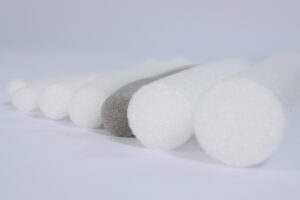
United Insulation Company (UCI) offers a wide range of Backer Rod sizes suitable for residential, commercial, industrial, and infrastructure projects.
This broad selection allows contractors and engineers to select the most appropriate diameter while maintaining high installation quality and long-term performance.
Multiple diameter options are available to accommodate everything from narrow architectural joints to large infrastructure expansion joints.
A broad product range helps:
UCI provides more than just products. Our technical specialists assist customers in selecting the appropriate Backer Rod diameter and estimating material quantities based on project drawings and specifications.
UCI is committed to providing reliable and timely supply solutions for projects of all sizes while maintaining consistent manufacturing quality and product performance.
Selecting the correct Backer Rod diameter is essential for achieving durable, high-performing expansion joints. Proper sizing improves sealant geometry, prevents three-sided adhesion, and enhances long-term flexibility.
Regardless of project size, combining sound engineering practices with high-quality UCI Backer Rod products helps reduce maintenance costs and maximize joint service life.
United Insulations Company (UCI) is a leading Saudi company specialized in manufacturing and supplying thermal and acoustic insulation solutions, as well as low-density foam products. The company is committed to the highest standards of quality and sustainability to support construction and industrial projects within the Kingdom and beyond.
Third Industrial City, P.O. Box: 22766 Jeddah-6838, Saudi Arabia
Sunday - Thursday 8AM : 5PM