If you can hear footsteps from the floor above, furniture being moved, or chairs scraping across the surface, the problem is not always the loudness of the sound itself. It is often related to the way sound travels through the flooring assembly and building structure. This is where
acoustic floor insulation between floors becomes important, particularly when an underlay is installed beneath parquet, vinyl, or other floor finishes. Choosing the right
floor underlay is not simply a matter of selecting the thickest material available. The type of flooring, the source of the noise, foam density, installation method, and the condition of the concrete or structural floor all affect the final result. The selection process should therefore begin by identifying how the noise is generated and transmitted, then matching the product characteristics to the project requirements.
Why Does Sound Travel Between Floors?
Acoustic transmission between floors occurs when sound energy generated on one floor travels through the floor structure and reaches a room or unit below. The source may be as simple as footsteps, a dropped object, or furniture movement, but the resulting vibration can travel through the floor assembly into the space underneath. This type of noise is common in multi-story buildings, apartments, hotels, offices, and commercial properties. When flooring layers are rigidly connected without a suitable resilient layer, vibrations can travel more easily through the structure.
Common Sources of Inter-Floor Noise
Inter-floor noise can generally be associated with several common sources, including:
- Footsteps: especially from hard-soled footwear or frequent movement.
- Furniture movement: such as chairs, tables, or beds being dragged.
- Dropped objects: including toys, tools, or other hard items.
- Surface friction: caused by furniture and equipment moving across the floor.
- Everyday activity: particularly in corridors, offices, and high-traffic spaces.
- Vibration: transferred from the flooring layer into the structural elements.
It is important not to treat every type of noise in the same way. Footstep noise behaves differently from voices or television sounds. Effective
floor sound insulation therefore starts with identifying the type of sound involved.
Airborne Sound vs. Impact Sound: What Is the Difference?
One of the most important considerations when selecting a
floor underlay is understanding the difference between airborne sound and impact sound. Airborne sound travels through the air, while impact sound is generated by direct contact with the floor surface and creates vibrations that can travel through the building structure.
What Is Airborne Sound?
Airborne sound is sound that originates in the air and reaches another building element. Examples include speech, music, television, and certain equipment noises. Addressing this type of sound may require solutions involving walls, ceilings, doors, and floors, depending on the transmission path.
What Is Impact Sound?
Impact sound is one of the most common forms of
impact noise in multi-story buildings. When a person’s foot contacts the floor, kinetic energy is transferred into the flooring surface, and some of that vibration can then travel through the structural layers into the room below. For this reason, a resilient layer beneath certain types of flooring can help reduce the transmission of vibrations generated by movement. Specialized acoustic tests are used to evaluate how floor assemblies respond to impact sound, including test sources designed to simulate human footsteps.
A Quick Comparison
| Factor | Airborne Sound | Impact Sound |
| Typical source | Speech, TV, music | Footsteps, dropped objects, furniture movement |
| Transmission | Through air and surrounding building elements | Through direct contact and structural vibration |
| Typical approach | Depends on the transmission path | Resilient flooring layers can help reduce transmission |
| Role of floor underlay | Project-dependent | Particularly relevant to flooring systems designed to control impact noise |
This is why selecting a
parquet underlay or general floor underlay should be based on the actual application rather than the product name alone.
How Does a Floor Underlay Work?
A
floor underlay acts as an intermediate layer between the finished flooring and the underlying floor surface. In suitable applications, this layer helps reduce rigid contact and can limit some of the vibration generated by walking and movement. It can also provide additional benefits such as improved walking comfort and protection against moisture. One important point should be made clear:
a floor underlay does not necessarily eliminate sound by 100%. Acoustic performance depends on the complete floor assembly, not the underlay alone. Sound can also travel through flanking paths involving walls, columns, joints, and other structural elements. Modern acoustic testing standards also recognize that laboratory measurements are useful for comparing floor assemblies, but laboratory results do not necessarily represent exact in-situ performance because installation conditions and flanking transmission can affect the final result.
What Should You Look for When Choosing an Underlay?
Rather than searching for the words “soundproofing underlay” alone, evaluate a combination of characteristics:
- Material: Is it compatible with the flooring and installation method?
- Thickness: Does it balance performance with the finished floor height?
- Density: Are its mechanical properties suitable for the application?
- Resilience: Can it help reduce rigid contact and vibration?
- Moisture resistance: Particularly important for protecting certain flooring materials.
- Compression performance: Important for maintaining floor performance under continued use.
- Dimensions and installation: Proper coverage helps minimize gaps and uncovered areas.
- Flooring compatibility: A product suitable for parquet may not be suitable for every flooring system.
Choosing Thickness and Density According to Flooring Type
There is no single thickness that can be considered ideal for every project. The appropriate choice depends on the flooring type, project requirements, available floor height, expected traffic, installation method, and the properties of the underlay itself. In some flooring systems, increasing thickness without considering the product’s properties can create issues related to stability, finished floor height, or joint compatibility. Therefore, “thicker” should not automatically be treated as synonymous with “better.”
Parquet and Vinyl Flooring
Parquet and vinyl are among the flooring applications where the underlay deserves careful consideration. The underlay does more than contribute to acoustic performance; it can also influence walking comfort, floor stability, moisture protection, and the service life of the finished flooring. For parquet flooring, it is important to select a
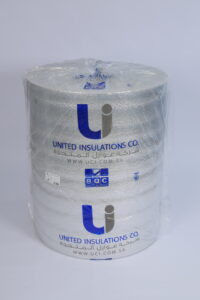
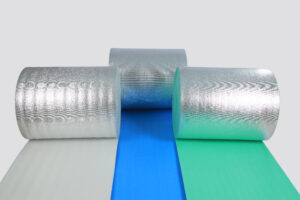
parquet underlay that is compatible with the flooring system and installation method. United Insulation offers a polyethylene foam parquet underlay designed for use beneath parquet and vinyl, with 1, 2, and 3 mm thickness options and a published average density of 32 kg/m³ according to its product data. The product data also includes properties related to water absorption, thermal conductivity, compression behavior, and tensile strength. These characteristics can be relevant when evaluating the underlay as part of the complete flooring system.
Practical tip: If your primary goal is to reduce footstep noise, do not select thickness in isolation. Ask the supplier to recommend the appropriate thickness and density based on the flooring system, traffic level, and project requirements.
Carpet and Rugs
Carpet behaves differently from parquet and vinyl because the carpet itself provides a softer surface than many hard flooring materials. Nevertheless, an appropriate underlay can still be relevant in certain applications for comfort and vibration control, depending on the flooring system and project requirements. In offices, hotels, corridors, and high-traffic buildings, the underlay should be considered part of the complete flooring system rather than as an isolated product. Its ability to withstand continuous use without excessive loss of mechanical performance should also be considered.
A Practical Floor Underlay Selection Guide
| Application | Main Priority | What to Evaluate |
| Residential parquet | Footstep noise and comfort | Thickness, density, resilience, moisture resistance |
| Vinyl | Stability, protection, and acoustics | Vinyl compatibility, thickness, stability |
| Hotels | Noise control | Acoustic performance, durability, installation quality |
| Offices | Traffic and friction | Durability, comfort, vibration reduction |
| Multi-story apartments | Footstep noise | Suitable resilient layer + accurate installation |
| Commercial projects | Continuous use | Density, compression performance, product and installation quality |
How to Choose a Floor Underlay for a Multi-Story Project
If you are working on an apartment building, hotel, or office project, do not start by asking, “What is the best underlay?” Start with a more specific set of questions.
1. What Is the Main Noise Source?
If the primary issue is footsteps and furniture movement, the flooring system should be evaluated for
impact sound. If the problem is speech, television, or music, airborne sound transmission may also need to be addressed.
2. What Is the Finished Flooring Type?
Identify whether the finished floor is parquet, vinyl, carpet, or another system. Each type has different requirements regarding stability, thickness, and installation.
3. How Much Traffic Will the Floor Receive?
A lightly used residential floor is different from a hotel, office, or commercial corridor. As traffic increases, compression performance and long-term durability become increasingly important.
4. Are There Finished-Floor Height Restrictions?
Increasing underlay thickness can affect door clearances, thresholds, steps, and transitions between rooms. The available floor height should therefore be confirmed before selecting the thickness.
5. Does the Project Require Moisture Protection?
In some flooring systems, moisture can significantly affect service life. Water absorption and water vapor transmission characteristics may therefore form part of the selection criteria, depending on the flooring system and moisture conditions.
Installation Mistakes That Can Reduce Floor Underlay Performance
Even a high-quality
floor underlay may fail to deliver its expected performance if it is installed incorrectly. Flooring performance depends not only on the material but also on the compatibility between the underlay, surrounding layers, and installation method.
Mistake 1: Choosing Thickness Without Considering the Flooring
Choosing thickness based on the idea that “thicker is always better” can be inappropriate. The flooring system, installation requirements, finished floor height, and mechanical properties of the underlay should all be considered.
Mistake 2: Leaving Gaps Between Underlay Sections
Large gaps or uncovered areas mean that the underlay is not functioning continuously beneath the entire floor. Installation should therefore follow the appropriate method and ensure consistent coverage.
Mistake 3: Ignoring Floor Edges and Joints
The floor surface itself is not always the only path through which vibration can travel. Edges, joints, and transitions between building elements can influence overall system performance.
Mistake 4: Installing the Underlay Over an Unsuitable Subfloor
The subfloor should be suitable, clean, and stable according to the flooring system requirements. Protrusions, moisture, or defects in the substrate can affect stability and finish quality.
Mistake 5: Ignoring Underlay Compatibility
Not every underlay is suitable for every flooring type. Before installation, confirm that the product is compatible with the parquet, vinyl, carpet, or other flooring system and its installation method.
Does Inter-Floor Acoustic Insulation Require Only a Floor Underlay?
In some applications, a
floor underlay can be an important part of the solution, but it is not always the only solution. If sound is travelling through walls, columns, or structural elements, additional acoustic measures may be required. This is why
inter-floor acoustic insulation should be considered as a complete system. Depending on the source, the system may include a flooring underlay, a suitable floor assembly, properly treated joints and edges, and potentially additional ceiling or wall treatments.
Why Is Polyethylene Foam Suitable for Certain Flooring Applications?
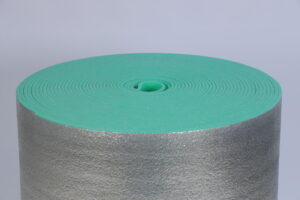
Polyethylene foam is lightweight, flexible, and resistant to moisture, making it suitable for a range of flooring applications when the appropriate product and thickness are selected for the flooring system. In parquet and vinyl applications, foam can serve as an underlay that improves walking comfort, helps reduce certain vibrations, and creates a separation layer between the finished flooring and the subfloor. United Insulation’s product information describes its parquet underlay as suitable beneath parquet and vinyl and lists properties including water resistance and the ability to absorb shocks and vibrations. Actual performance varies according to the complete floor assembly, so the product should be evaluated within its intended application rather than based on a single property.
Parquet Underlay: When Is It the Right Choice?
If the finished floor is parquet or vinyl and the project requires an underlay that supports the flooring system, helps reduce certain vibrations, and provides moisture-related protection, a
polyethylene foam parquet underlay can be a suitable option to evaluate. United Insulation offers thickness options of 1, 2, and 3 mm, with a published width of 1 meter and length of 50 meters or according to customer requirements.
Before Approving the Product, Ask for These Details
For residential, commercial, and hospitality projects, it is useful to request the following information from the supplier:
- Material type and structure.
- Available thicknesses.
- Density.
- Compression performance data.
- Water absorption resistance.
- Dimensions and supply options.
- Compatibility with the selected flooring.
- Available test data relevant to the intended application.
This information allows engineers, contractors, and procurement teams to compare products using clear criteria rather than relying only on price or thickness.
How Can You Reduce Inter-Floor Noise in Existing Buildings?
Yes, acoustic performance can sometimes be improved in
existing buildings, particularly when replacing the flooring or installing a new floor system. However, the achievable improvement depends on the noise source, building construction, and transmission paths. If the noise is clearly caused by footsteps from the floor above, treating the flooring at the source may be more directly relevant than simply adding an acoustic layer to the ceiling below. Where the existing floor cannot be modified, alternative solutions can be evaluated based on the building conditions.
Floor Underlay Selection Checklist
Before approving a
floor underlay for your project, use the following checklist:
1. Identify the Noise Source
Is it footsteps, friction, dropped objects, speech, or music?
2. Identify the Flooring Type
Parquet, vinyl, carpet, or another flooring system.
3. Check Available Thickness
Make sure the selected thickness does not create issues with doors, thresholds, or finished floor levels.
4. Review Density and Mechanical Performance
Do not evaluate the product based on thickness alone.
5. Check Moisture Resistance
Especially where additional moisture protection is required.
6. Confirm Installation Quality
Even a good product requires installation appropriate to the flooring system.
7. Request Product Data
Review technical specifications and available test results before final approval.
When Should You Consult the Supplier or an Engineer?
For large or multi-story projects, or projects with defined acoustic performance requirements, the decision should not rely solely on selecting a commercial underlay. The complete flooring assembly should be evaluated, and testing or acoustic calculations may be required depending on project requirements. This is particularly important in hotels, offices, and residential developments, where user comfort depends not simply on having an underlay, but on how effectively the complete system controls noise and vibration.
Request the Right Floor Underlay Thickness for Your Project
Choosing the right
floor underlay starts with understanding the flooring type, noise source, and project conditions. If your project uses parquet or vinyl and requires a polyethylene foam underlay, you can compare available thicknesses and technical properties to identify the solution that best fits the application.
United Insulation (UCI) provides polyethylene foam solutions and flooring underlay products for residential, commercial, and hospitality applications, with different thickness and dimensional options based on product specifications and customer requirements.
Conclusion: Choosing the Right Floor Underlay Starts With the Noise Source
Acoustic insulation between floors is more than simply adding a foam layer beneath the flooring. It is part of a complete system that begins with identifying the noise source and understanding how it travels. If the main problem is footsteps, furniture movement, or impact, selecting an appropriate underlay can play an important role in improving flooring performance and reducing vibration transmission. When comparing a
parquet underlay or other flooring underlay, do not make price or thickness your only decision factors. Evaluate the material, density, compression performance, moisture resistance, flooring compatibility, installation method, and available technical data. For projects with specific acoustic requirements, remember that the best results come from evaluating the
complete flooring assembly, rather than treating one underlay as an isolated solution. If you are looking for a floor underlay for parquet or vinyl, review the specifications of
United Insulation’s parquet underlay and compare the available thicknesses, dimensions, and technical properties before approving the product for your project.
United Insulation | Integrated Insulation and Packaging Solutions Frequently Asked Questions
−Does a Floor Underlay Completely Block Sound?
No. A floor underlay does not mean that sound will be blocked by 100%. Its effectiveness depends on the material, flooring assembly, installation method, and noise source. It can help reduce certain vibrations and impact noise, but overall performance depends on the complete floor and building system.
−What Is the Best Underlay for Parquet Flooring?
The best parquet underlay is one that is compatible with the flooring type, installation method, and project requirements. Polyethylene foam is one option used beneath parquet and vinyl, but the appropriate thickness and density should be selected based on the application rather than thickness alone.
−Is Underlay Suitable for Existing Buildings?
Yes, a floor underlay can be used in certain existing buildings, particularly during floor replacement or new flooring installation. However, the existing subfloor condition, available floor height, installation method, and noise source should be evaluated first.
−Does a Thicker Underlay Always Mean Better Acoustic Insulation?
Not necessarily. Thickness is only one factor. Density, resilience, compression performance, flooring compatibility, and installation method also matter. A specific thickness may perform better for a particular application than a thicker product that is unsuitable for the flooring system.
−Can Polyethylene Foam Be Used Under Vinyl Flooring?
Certain polyethylene foam products can be used beneath vinyl flooring when they are designed and compatible with the selected flooring system. United Insulation’s parquet underlay product information specifies use beneath both parquet and vinyl flooring.
−Can a Floor Underlay Help Reduce Furniture-Movement Noise?
A suitable flooring system can help reduce certain vibrations caused by furniture movement and friction, but the result depends on the flooring, underlay, installation method, and the nature of the furniture movement.
−Can a Floor Underlay Provide Both Acoustic and Thermal Insulation?
Some foam underlays can provide both acoustic and thermal insulation properties. However, performance in each area depends on the product characteristics, flooring assembly, and final application, so technical data should be reviewed before selection.
−How Do I Know Which Underlay Thickness Is Right for My Project?
Start with the flooring type, installation method, available floor height, and project requirements, then review the product’s technical specifications. For commercial or multi-story projects, it is preferable to involve the supplier or engineer rather than applying one thickness to every area.

 How Does Floor Underlay Affect Sound Insulation Between Floors?
  Carpet Underlay – The Difference Between Commercial and Standard Quality in Flooring
  Acoustic Insulation in Buildings: Practical Solutions for Noise Reduction
  Floor Insulation Supply for Projects: How to Choose the Right Supplier with Guaranteed Quality