Noise is no longer simply an inconvenience inside buildings. It can affect comfort, concentration, privacy, and everyday quality of life. This is why
acoustic insulation has become an important consideration in residential buildings, commercial properties, offices, and industrial facilities. Acoustic insulation aims to reduce the transmission of unwanted sound from one space to another, whether the noise originates outdoors, in an adjacent room, or on another floor. The effectiveness of the solution depends on the noise source, the transmission path, the building element, and the material used. It is important to distinguish between
blocking sound transmission and
absorbing sound. These are different functions, and a project may require a combination of both to achieve a more comfortable acoustic environment.
How Noise Affects Comfort and Productivity
Continuous noise can directly affect the experience of using a building. In homes, sounds coming from neighboring apartments, corridors, or other floors can reduce privacy and comfort. In offices, excessive noise can interfere with concentration and communication.
Noise insulation becomes particularly important in environments that require quiet and concentration, such as bedrooms, offices, meeting rooms, hotels, and educational facilities. Reducing unwanted noise can also improve the overall user experience in shared spaces. Sound can travel directly through the wall separating two rooms, particularly when building assemblies are lightweight or contain untreated openings and weak points. Sound does not always travel through the building element where the problem appears to originate. Impact vibrations caused by footsteps or moving furniture can travel through the floor structure and become audible on the floor below. For this reason, floor treatments need to consider both
airborne sound and
impact noise, rather than relying on a single material for every type of acoustic problem.
What Is the Difference Between Sound Insulation and Sound Absorption?
Sound insulation primarily aims to reduce sound transmission between spaces, while
sound absorption reduces sound reflections within the same space. The appropriate solution depends on the specific acoustic problem the project needs to address.
| Comparison | Sound Insulation | Sound Absorption |
| Main purpose | Reduce sound transmission between spaces | Reduce sound reflections within a space |
| Example | Limiting sound transfer between apartments | Reducing echo inside a room |
| Applications | Walls, floors, ceilings | Ceilings, acoustic panels, interior walls |
| Main problem addressed | Sound coming from another space | Reflected sound within the room |
If employees can clearly hear conversations from an adjacent office, the issue involves sound transmission between spaces and may require treatment of the wall, partitions, and openings. If the office itself has excessive reverberation that makes meetings and calls difficult to understand, the issue may be related to sound reflections within the room. In this case, sound absorption becomes an important part of the solution.
In simple terms: insulation helps prevent sound from passing between spaces, while absorption helps control sound within a space.
Where Can Acoustic Insulation Be Applied in Buildings?
Acoustic insulation can be applied to many parts of a building, but the appropriate method and material depend on the type of noise, its source, and its transmission path. Common areas that may require acoustic solutions include:
- Internal and external walls.
- Ceilings and floor-to-floor assemblies.
- Floors.
- Meeting rooms and offices.
- Bedrooms and residential spaces.
- Hotels, apartments, and residential developments.
- Commercial and industrial spaces.
Acoustic Insulation for Walls and Ceilings
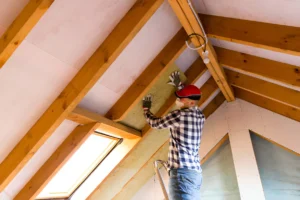
Walls are among the most important paths through which sound travels between rooms and different units. The entire wall assembly should therefore be considered rather than focusing on the insulation material alone. Factors that can influence wall acoustic performance include:
- Wall type and mass.
- Number of layers.
- Gaps and openings.
- Installation quality.
- Flanking transmission paths.
- Properties of the materials used within the assembly.
Simply adding an insulation material inside a wall may not deliver the expected result if gaps remain around doors, windows, electrical outlets, or mechanical services. This is why
wall and floor sound insulation should be considered as part of an integrated system that addresses all possible sound transmission paths.
Acoustic Insulation for Floors and Between Floors
Floors are particularly important when dealing with footsteps, furniture movement, and dropped objects. This type of noise is commonly referred to as
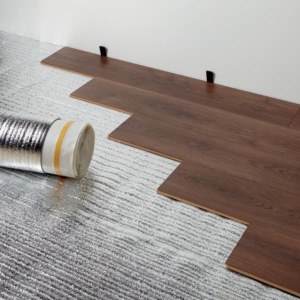
impact noise. Using an appropriate underlay beneath flooring, such as a
parquet underlay or suitable foam layer, can help reduce the transmission of vibrations generated by everyday floor use. Not necessarily. A floor underlay designed to reduce impact noise can help limit footsteps and vibration, but it does not necessarily block all airborne sound between floors. The type of noise should therefore be identified first before selecting the
best acoustic insulation materials for the project.
The Role of Polyethylene Foam in Noise Reduction
Low-density polyethylene foam (LDPE Foam) is used in applications that require properties such as flexibility, cushioning, and protection. Depending on the system design and end use, it can also be incorporated into flooring and other applications where vibration and impact control are relevant. It is important not to consider foam alone as a universal solution for every acoustic insulation requirement. Overall acoustic performance depends on the complete system, installation method, layer thickness, and the properties of the other materials used. When an appropriate foam layer is installed beneath certain flooring systems, it can act as an intermediate layer that helps reduce the transmission of vibrations and impact between the floor finish and structural layers. This makes it a relevant component when designing flooring systems intended to improve comfort and reduce noise generated by everyday use.
How to Choose the Right Thickness and Density for Acoustic Insulation
There is no single thickness suitable for every project. The appropriate
acoustic insulation thickness and density depend on the application, floor or wall construction, type of noise being addressed, and project requirements. Start by identifying the source of the noise. Is it coming from outside, an adjacent room, an upper floor, or from footsteps and furniture movement? Identifying the source helps determine the appropriate system instead of selecting an insulation material without first diagnosing the problem. Noise can be broadly classified into:
- Airborne sound: such as speech, music, and equipment noise.
- Impact sound: such as footsteps, dropped objects, and furniture movement.
- Structure-borne vibration: vibrations transmitted through building structures.
Greater thickness does not automatically mean better acoustic performance in every application. Material density, flexibility, and the complete system design must also be considered. Even high-quality acoustic insulation materials may not deliver their expected performance if they are installed incorrectly. Therefore, attention should be given to:
- Sealing gaps.
- Treating joints and interfaces.
- Minimizing flanking transmission.
- Following manufacturer installation requirements.
- Selecting compatible layers within the system.
How to Choose the Best Acoustic Insulation Materials for Your Project
Choosing the right material does not begin by asking for a product name alone. It starts by understanding the acoustic problem and the project’s requirements. Before making a decision, consider:
- Type of noise.
- Source of the sound.
- Building element through which the sound travels.
- Intended use.
- Available thickness.
- Installation conditions.
- Required technical specifications.
- Project performance and durability requirements.
This is where working with a specialized foam and insulation manufacturer becomes valuable, because product selection should be based on the application rather than considered in isolation.
Common Acoustic Insulation Mistakes
Using sound-absorbing panels inside a room does not necessarily prevent external noise from entering the room. Small gaps around doors, windows, and service penetrations can become significant paths for sound transmission. Thickness is important, but it is not the only factor. Material properties, system design, and installation method must also be evaluated. In some cases, sound may travel through walls, ceilings, or structural elements. Treating the floor alone may therefore not be sufficient.
Acoustic Insulation in Residential Buildings and Offices
In residential buildings, the need for
acoustic insulation is often associated with privacy and reducing noise between units and floors. Practical solutions may include suitable flooring underlays to reduce impact noise, treatment of shared walls between units, and careful attention to joints, doors, and windows. In offices, the goal may be to reduce speech transmission between meeting rooms or improve privacy in administrative spaces. Here again, it is important to distinguish between
preventing sound transmission and
improving sound quality within a room, as each objective requires different solutions.
Acoustic Insulation and Flooring: Why Floors Deserve Special Attention
A floor is more than a finishing layer. It is part of a building system that is exposed daily to footsteps, movement, dropped objects, and furniture activity. This is why suitable underlay systems can play a role in improving floor performance against impact noise and vibration. Requirements vary between wood flooring, parquet, carpet, and other flooring systems. The
floor underlay should therefore be selected according to the flooring type and project requirements. You can also explore
polyethylene foam solutions used across different applications and select the option that matches the project’s requirements.
How to Start an Acoustic Insulation Project Correctly
The best starting point is not purchasing an insulation material, but
accurately identifying the acoustic problem. A practical process includes:
- Identifying the noise source.
- Determining the likely transmission path.
- Classifying the sound as airborne, impact, or vibration.
- Identifying the building element requiring treatment.
- Reviewing available thickness and space.
- Selecting the appropriate material or system.
- Confirming installation requirements.
- Reviewing the expected performance against project specifications.
Why Manufacturing Quality Matters in Insulation Solutions
The success of insulation solutions depends not only on the material itself, but also on manufacturing quality, consistency of properties, and compliance with required specifications. Quality management systems are an important part of manufacturing because they help control processes and maintain consistency and quality throughout production. At
United Insulation Company (UCI), manufacturing is supported by a quality-focused approach to product development and technical requirements across different applications, with
ISO 9001 certification for its quality management system. The company specializes in manufacturing
low-density polyethylene foam (LDPE Foam) products for a range of applications requiring protection, insulation, and cushioning performance according to product specifications and intended use.
Parquet Underlay and Its Role in Noise Reduction
A
parquet underlay is installed beneath certain flooring systems to help improve floor performance and reduce the transmission of vibrations and impact, depending on the system design and product specifications. Its value lies partly in creating an intermediate layer within the flooring system, which can contribute to improved comfort, particularly in spaces subject to frequent movement. Selecting the right
parquet underlay should therefore take into account the flooring type, project requirements, thickness, and material properties.
Get Expert Guidance for the Right Acoustic Insulation Solution
Choosing the right
acoustic insulation solution starts with understanding the project and the source of the noise. If you are working on a residential, commercial, or industrial project and need a suitable solution for floors, walls, or foam applications, the United Insulation team can help identify the appropriate product based on your project requirements.
Get expert guidance to choose the right acoustic insulation solution for your project. Conclusion
Acoustic insulation is an important part of designing buildings that provide greater comfort and privacy. Achieving effective performance, however, depends on more than simply selecting an insulation material. It requires understanding the source and transmission path of the noise and choosing the right overall system. It is essential to distinguish between
sound insulation, which reduces sound transmission between spaces, and
sound absorption, which helps control sound reflections within a space. For flooring applications, suitable layers such as
parquet underlay can form part of a system designed to reduce impact noise and vibration while improving comfort during everyday use. By selecting materials according to the project’s requirements, paying close attention to installation quality, and working with a specialized manufacturer, it becomes possible to develop acoustic solutions better suited to residential, commercial, and industrial buildings.
United Insulation Company (UCI) specializes in manufacturing
low-density polyethylene foam (LDPE Foam) products for a range of applications based on foam properties and specific end-use requirements.
Need help selecting the right solution for your project? Get expert guidance on choosing an acoustic insulation solution that matches your project requirements. Frequently Asked Questions
−What is the best material for sound insulation?
There is no single material that is best for every application. The right choice depends on the type and source of noise, the building element being treated, and the overall system design. Solutions for walls may differ from those used for floors, while airborne and impact noise require different approaches.
−Can acoustic insulation be installed in an existing building?
Yes. Many acoustic insulation solutions can be implemented in existing buildings. However, the appropriate approach depends on the source of the problem, available space, and access to walls, floors, or ceilings.
−Does parquet underlay reduce noise between floors?
A suitable parquet underlay can help reduce impact noise and vibrations caused by footsteps and furniture movement. However, performance depends on the product, flooring assembly, and overall building structure. It does not necessarily block every type of sound between floors.
−What is the difference between sound insulation and sound absorption?
Sound insulation aims to reduce sound transmission from one space to another, while sound absorption aims to reduce sound reflections within the same space.
−Does increasing foam thickness always mean better sound insulation?
Not necessarily. Thickness is an important factor, but it works together with density, flexibility, system design, installation method, and the type of noise being addressed.
−Can polyethylene foam be used in flooring applications?
Polyethylene foam can be used in various flooring applications depending on the product, system design, and project requirements. The product should be selected for its intended application and installed according to the manufacturer’s recommendations.
−Does acoustic insulation block 100% of noise?
No single solution can guarantee that all sound will be completely eliminated under every condition. Noise reduction depends on the sound source, transmission path, building construction, installation quality, and overall system design.
−How do I choose the right acoustic insulation for my project?
Start by identifying the noise source and type, then determine the building element through which it travels, such as a wall, floor, or ceiling. The appropriate solution can then be selected based on thickness, density, material properties, and installation requirements.