Expansion joints are essential engineering details in buildings and concrete structures. They allow structural elements to accommodate natural movements caused by temperature changes, shrinkage, expansion, and operational conditions. However, joint performance depends not only on proper design but also on correct preparation and the selection of suitable sealing materials. This is where Backer Rod, also known as foam backing rod, plays an important role. It is installed inside a joint before applying sealant to control the sealant depth, establish the correct joint profile, and prevent unwanted adhesion to the bottom of the joint where required. Although it may appear simple compared with other insulation and sealing materials, a Backer Rod has a significant impact on joint performance. It helps optimize sealant consumption and reduce the risk of premature failure caused by continuous movement. This guide explains the purpose of Backer Rod, its applications, how to select the correct diameter, proper installation procedures, and common mistakes to avoid for more reliable joint sealing.
What Is a Backer Rod?
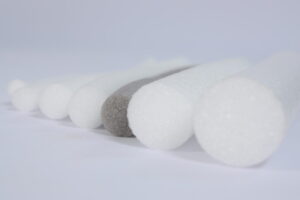
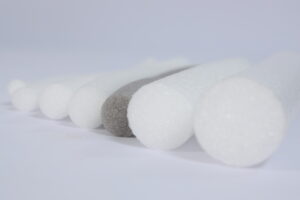
A Backer Rod is a flexible foam cord or cylindrical backing material, commonly manufactured from polyethylene foam. It is installed inside expansion and construction joints before applying flexible sealants. It is available in various diameters and can be slightly compressed to fit securely inside the joint at the required depth. Its primary purpose is to provide backing for the sealant, control material consumption, and establish the correct sealant depth and geometry. It also acts as a bond breaker, preventing the sealant from adhering to three surfaces simultaneously when this separation is required by the joint design.
What Is Backer Rod Made Of?
Backer Rod products are manufactured from different foam materials depending on the application and project requirements. The most common types include: Closed-Cell Polyethylene Foam: Offers low moisture absorption, flexibility, and better resistance to water penetration compared with open-cell materials. Open-Cell Polyurethane Foam: Provides greater flexibility in certain applications and can accommodate irregular joints, although it may absorb more moisture. Bi-Cellular Foam: Combines characteristics of both open-cell and closed-cell structures and is used where specific compression and recovery properties are required. Closed-cell polyethylene foam is a common choice for concrete expansion joint applications, particularly when moisture resistance and backing stability are important requirements. ASTM C1330 classifies cylindrical backing materials used with cold-applied liquid sealants into three main types: Type C, Type O, and Type B, based on their cellular structure.
What Is the Difference Between Backer Rod and Sealant?
Although Backer Rod and sealant are used together within the same joint, they perform different functions. They are not interchangeable because each serves a complementary purpose within the joint sealing system. Comparison Backer Rod Sealant Function Provides backing and controls depth Seals the joint against water and air, depending on the product Position Installed inside the joint behind the sealant Forms the exposed sealing layer Flexibility Compressible foam material Expands and contracts according to its formulation Material consumption Reduces the amount of sealant required Forms the actual sealing bead Adhesion Acts as a bond breaker where required Normally bonds to the joint sidewalls In simple terms, the Backer Rod provides the necessary backing and geometry, while the sealant performs the actual sealing function and accommodates movement according to its specifications.
How Does a Backer Rod Work Inside a Joint?
When the foam rod is inserted into the joint, it is compressed appropriately to hold it in position without damaging or excessively deforming its structure. Sealant is then applied above it to form a sealing layer with a controlled depth. This process provides three important benefits: Depth Control: Prevents the sealant from filling the entire joint and establishes the required thickness according to the joint design. Prevention of Three-Sided Adhesion: Helps ensure that the sealant bonds to the two joint sidewalls rather than bonding to the bottom and both sides simultaneously. Improved Movement Capability: Allows the sealant to accommodate expansion and contraction without unnecessary restraint caused by unwanted adhesion. These functions help reduce stress within the sealant and improve its ability to accommodate repeated joint movement.
Where Is Backer Rod Used in Expansion Joints?
Backer Rod is used in various construction applications where controlling sealant depth and providing suitable backing are necessary. Its suitability depends on joint design, sealant type, expected movement, and exposure to water, temperature changes, and environmental conditions. Some of its most common applications include:
Expansion Joints in Concrete Floors
Concrete floors in factories, warehouses, commercial buildings, and parking facilities are exposed to continuous temperature variations and operational loads. These factors may cause joint widths to change over time. Backer Rod is used in selected joint details to control sealant depth, reduce material consumption, and allow the sealant to accommodate the expected movement. In these applications, mechanical loads, equipment movement, and vehicle traffic must be considered. Some floors require specialized heavy-duty joint sealing systems rather than conventional construction sealants.
Wall and Façade Joints
External walls and architectural façades require flexible joints to accommodate movement caused by direct sunlight and temperature differences between day and night. Backer Rod can be installed behind sealants in horizontal and vertical joints to help control sealant depth and achieve the required joint profile. It is particularly relevant to precast concrete façades, curtain wall systems, and joints between different building panels, provided that the selected backing material is compatible with the sealant and the overall system requirements.
Precast Concrete Joints
Precast concrete elements are widely used in residential, commercial, and industrial projects. Their installation creates joints between adjacent concrete panels and structural units. These joints require careful treatment to prevent water penetration and accommodate the movement that may occur between the elements. Backer Rod helps prepare the joint before sealant application by providing the appropriate depth and reducing material consumption. Correct installation also contributes to a more uniform sealant profile.
Road, Bridge, and Infrastructure Joints
Road and bridge joints are exposed to demanding operating conditions, including temperature fluctuations, vibration, traffic loads, and repeated movement. Backer Rod may be used in selected joint sealing details where permitted by the system specifications. Its role is to control sealant depth and provide suitable backing. However, it is important to distinguish between foam backing rods and mechanical or elastomeric bridge expansion joint systems designed to accommodate large movements and heavy traffic loads. A Backer Rod is not a substitute for these specialized systems.
Door, Window, and Glazing Joints
Joints around windows, doors, and glazing systems require sealants capable of accommodating minor movements caused by temperature variations and differences in the thermal expansion of frame and wall materials. Backer Rod is used in selected applications to control sealant depth and prevent adhesion to the backing surface, helping achieve better sealing performance when the correct materials are selected.
How to Choose the Correct Backer Rod Diameter
Selecting the correct Backer Rod diameter is one of the most important installation steps. The rod should be slightly larger than the joint width so that it remains securely in place through compression without being subjected to excessive pressure that could damage its structure. Common technical guidance recommends selecting a diameter approximately 25% larger than the joint width. However, the manufacturer’s sizing chart, product instructions, and sealant recommendations must always be considered.
The Basic Rule for Calculating Backer Rod Diameter
The following formula can be used as an initial selection guideline: Backer Rod Diameter = Joint Width × 1.25 For example, if the joint width is 20 mm, the indicative Backer Rod diameter would be: 20 × 1.25 = 25 mm. This selection provides initial compression that helps secure the rod inside the joint. However, the formula should not be applied automatically to every situation, as different products and sealant systems may require different compression ratios.
Backer Rod Diameter Selection Table
The following table provides indicative sizing examples based on the 25% diameter increase guideline: Joint Width Indicative Backer Rod Diameter 8 mm 10 mm 10 mm 13 mm 12 mm 15 mm 15 mm 19 mm 20 mm 25 mm 25 mm 32 mm 30 mm 38 mm 40 mm 50 mm These values provide an initial reference for selecting the appropriate size. However, they do not replace actual joint measurements or the manufacturer’s recommendations. UCI Backer Rod Guide+1
Why Should You Avoid Using a Rod Smaller Than the Joint Width?
When the Backer Rod diameter is smaller than the joint width, the rod may not remain securely in position. It can move or sink during sealant application. This may result in: Uneven sealant depth. Increased sealant consumption. Difficulty achieving the required joint geometry. Potential voids behind the sealing layer. Reduced installation quality if the issue is not corrected. The selected diameter should therefore provide sufficient compression to keep the rod in place without requiring unsuitable fixing methods.
Risks of Selecting an Oversized Backer Rod
Selecting a larger foam rod does not always provide better retention. Excessive compression may deform the rod or tear its outer surface during installation, making insertion difficult. Potential risks include: Damage to the rod’s outer skin. Excessive compression that affects its cross-sectional shape. Inconsistent final sealant depth. Difficulty controlling rod positioning. Reduced backing performance if the foam structure is damaged. The preferred approach is to achieve sufficient compression to maintain stability and shape while avoiding excessive pressure and sharp installation tools.
Backer Rod Installation Steps Before Applying Sealant
Successful Backer Rod installation depends on more than selecting the correct diameter. It requires a series of carefully executed steps to ensure proper positioning and consistent sealant depth. The process begins with inspecting and cleaning the joint, followed by selecting the appropriate size and installation depth, inserting the rod, and finally applying the sealant according to the manufacturer’s instructions.
Step 1: Inspect and Measure the Joint
Before installation, inspect the joint to ensure it is free from obstructions, damage, and unusual variations in width or depth. Measure the joint at several points along its length rather than relying on a single measurement. Concrete joints may vary slightly due to installation conditions or surface irregularities. The inspection should include: Measuring the joint width at the beginning, middle, and end. Determining the available joint depth. Inspecting the edges for loose or damaged sections. Checking for moisture, standing water, or contaminants. Confirming that the joint is suitable for the selected sealant. This inspection helps determine the correct rod size and prevents problems that may arise after sealant application.
Step 2: Clean and Prepare the Joint
Joint cleanliness is essential for successful sealing. Dust, debris, concrete residues, oils, and other contaminants must be removed because they may interfere with the adhesion of the sealant to the joint sidewalls. Suitable cleaning methods may include industrial brushes, compressed air, or specialized cleaning equipment, depending on project conditions. After cleaning, inspect the joint and verify that its moisture condition meets the sealant manufacturer’s requirements. Some sealants require completely dry surfaces, while others allow application under specified damp conditions.
Step 3: Select the Correct Backer Rod Diameter
After measuring the joint width, select the appropriate Backer Rod diameter according to the compression ratio recommended by the manufacturer. The rod should be slightly larger than the joint width so that it fits securely without excessive pressure that could damage its surface or cellular structure. The foam type must also be compatible with the selected sealant, particularly in applications requiring resistance to moisture, temperature variations, or chemicals.
Step 4: Insert the Rod at the Required Depth
Insert the Backer Rod into the joint using a suitable blunt installation tool, applying even pressure along its length. Avoid screwdrivers or sharp tools that may puncture the foam or tear its outer surface, as damage may affect its performance inside the joint. The rod should also not be excessively stretched during installation, as longitudinal stretching may cause dimensional changes after insertion. Ensure that the rod remains stable at the specified depth and maintains a consistent position throughout the joint.
Step 5: Verify Sealant Depth and Joint Geometry
After positioning the rod, verify that the remaining space between the rod surface and the joint opening provides the required sealant thickness. Do not assume that every joint requires the same width-to-depth ratio. The sealant profile depends on the product formulation, joint width, expected movement, and manufacturer’s instructions. In many flexible sealing systems, the sealant bead is wider than it is deep. However, the exact ratio must be determined from the technical data sheet of the selected sealant. Correctly controlling these dimensions helps provide sufficient movement capability and reduces stresses that could affect sealant performance.
Step 6: Apply Sealant and Inspect the Finished Joint
Once the Backer Rod is stable and the required depth has been established, apply the appropriate sealant using the recommended application equipment. Distribute the sealant evenly and ensure proper adhesion to both joint sidewalls without gaps or interruptions. After application, inspect the finished joint to verify: Uniform sealant coverage. No visible bubbles or voids. No contamination or separation from the joint edges. Compliance with the approved width and depth details. Observance of the specified curing time before exposing the joint to loads or water.
Common Backer Rod Installation Mistakes and How to Avoid Them
Some seemingly minor Backer Rod installation mistakes can affect the performance of the entire joint sealing system. These issues are not always related to product quality; they may result from incorrect sizing, improper installation, or incompatibility between the backing rod and the sealant. The following are some of the most common installation mistakes that engineers, contractors, and technicians should avoid.
Mistake 1: Selecting the Wrong Diameter
Selecting a rod that is too small may result in poor retention inside the joint, while choosing an excessively large diameter can cause over-compression and foam deformation. How to avoid this mistake: Measure the joint width at multiple points. Refer to the technical sizing chart. Follow the recommended compression ratio. Avoid relying on visual estimation alone.
Mistake 2: Using Sharp Tools During Installation
Using sharp tools during installation may puncture or tear the foam surface, affecting its uniformity and ability to perform its backing function. How to avoid this mistake: Use blunt installation tools suitable for the rod diameter. Apply balanced pressure and avoid forcing the foam aggressively into the joint.
Mistake 3: Stretching the Backer Rod During Installation
Stretching the rod lengthwise during installation may change its dimensions or cause instability after insertion, resulting in inconsistent depth or gaps between rod sections. How to avoid this mistake: Insert the rod without stretching it, cut it to the required length, and maintain its natural shape during installation.
Mistake 4: Failing to Clean the Joint Before Installation
Dust, concrete residues, and oils can prevent proper joint preparation and interfere with sealant adhesion to the joint sidewalls. Even when the Backer Rod is installed correctly, neglecting surface cleaning may compromise the performance of the sealing system. How to avoid this mistake: Clean the joint thoroughly, remove all contaminants, and verify that the surfaces are ready before inserting the rod and applying the sealant.
Mistake 5: Installing the Rod at the Wrong Depth
Installing the Backer Rod too deep or too close to the surface can change the sealant thickness from the designed dimensions, potentially affecting its ability to accommodate movement. If the rod is positioned too deep, more sealant may be required. If it is placed too close to the surface, there may not be enough space to form the required sealing layer. How to avoid this mistake: Determine the installation depth before starting, use tools that maintain consistent positioning, and follow the approved joint details.
Mistake 6: Ignoring Backer Rod and Sealant Compatibility
Not every foam type is suitable for every sealant. Materials may differ in chemical composition, temperature resistance, curing methods, and compatibility with the backing material. Certain applications may require a specific backing rod or a compatibility test before installation. How to avoid this mistake: Review the sealant technical data sheet. Confirm compatibility with the selected backing material. Follow the manufacturer’s recommendations. Conduct a compatibility test when necessary.
Mistake 7: Ignoring Three-Sided Adhesion
One important technical mistake is allowing the sealant to bond to the bottom and both sidewalls of the joint simultaneously in applications designed for two-sided adhesion. This condition may restrict sealant movement and increase internal stress, raising the risk of tearing or debonding under repeated movement. How to avoid this mistake: Use a suitable Backer Rod or an approved bond-breaking system to achieve two-sided adhesion. Verify that the backing material performs the required separation function without reacting with the sealant.
Mistake 8: Using Backer Rod in an Unsuitable Application
Conventional Backer Rod may not be suitable for applications involving high temperatures, hot-applied sealants, or significant structural movement. For example, the rod should not be used with hot-applied sealants without confirming its temperature suitability, as certain foam products have thermal limitations that prevent exposure to application temperatures. How to avoid this mistake: Identify the intended application before ordering the product and review the temperature limits and approved uses in the technical data. For unusual operating conditions, obtain specialized technical guidance.
Mistake 9: Failing to Inspect the Joint After Installation
Failing to perform a final inspection may allow defects to go unnoticed, including uneven rod positioning, inconsistent sealant depth, or gaps at connection points. How to avoid this mistake: Conduct visual and technical inspections both before and after sealant application, ensuring that all dimensions comply with project requirements.
When Do You Need a Customized Backer Rod Solution?
Not all projects require the same standard Backer Rod dimensions. In certain applications, joint sizes, operating conditions, and material requirements may differ, making a customized solution more suitable than relying on a standard size. A customized solution becomes important when project requirements involve specific technical characteristics that are not covered by conventional dimensions.
Joints With Non-Standard Dimensions
Some projects may involve joints with varying widths or depths, particularly in large structures and precast concrete elements. In such cases, different diameters or customized sizes may be required to suit the installation details and ensure proper rod retention and sealant depth control.
Projects With Specialized Technical Requirements
Certain projects may require specific Backer Rod properties, such as moisture resistance, chemical resistance, or performance under particular environmental conditions. Some applications may also require specific density, compression, or recovery characteristics. For this reason, technical requirements should be established before product selection. Diameter alone should never be considered the only selection criterion.
Large Projects and Multi-Site Applications
Large-scale projects require consistent product availability and compliance with installation requirements across multiple locations. Such projects may require substantial quantities of Backer Rod in different diameters while maintaining consistent specifications and reliable supply. Early planning of technical requirements and material quantities helps reduce delays and improve material management throughout construction.
What Information Is Required to Specify the Right Backer Rod?
To identify the most suitable product, it is recommended to provide the technical team with the following information: Actual joint width in millimeters. Available joint depth. Joint type and location within the structure. Type of sealant being used. Expected joint movement. Exposure conditions, including moisture, water, heat, and chemicals. Required quantities and delivery locations. Any technical specifications or project requirements. Providing these details allows the project requirements to be assessed more accurately and helps determine the appropriate Backer Rod type and diameter.
Backer Rod Specifications by United Insulations Co.
United Insulations Co. (UCI) offers specialized low-density polyethylene foam (LDPE Foam) solutions, including Backer Rod manufactured from closed-cell polyethylene foam for expansion joints and construction joint sealing applications. The product is designed to provide flexibility and ease of installation. It helps control sealant depth, reduce material consumption, and provide suitable backing for concrete and structural joint applications. Key product characteristics include: Closed-Cell Polyethylene Foam: Provides a suitable structure for joint backing applications. Moisture Resistance: Offers low water absorption compared with open-cell materials. Flexibility: Helps accommodate joint dimensions when properly installed. Easy Installation: Lightweight and convenient to handle on construction sites. Sealant Consumption Control: Helps reduce the required sealant quantity by controlling application depth. Multiple Sizes: Offers different diameter options to support various project requirements.
Available Backer Rod Sizes
According to the published product information, United Insulations Co. offers the following standard Backer Rod sizes: Diameter Standard Packaging 6 mm 800 meters/bag 10 mm 800 meters/bag 15 mm 360 meters/bag 20 mm 200 meters/bag 30 mm 100 meters/bag 40 mm 100 meters/bag 50 mm 100 meters/bag Each project has different requirements depending on joint width, joint quantity, and installation depth. Therefore, the required sizes and quantities should be determined after reviewing the actual joint dimensions. For more information about the product and its specifications, visit the Backer Rod – United Insulations Co. Product Page.
Why Choose Backer Rod from United Insulations Co.?
Selecting the right backing material is an important part of successful joint sealing. The decision should not be based solely on price or diameter; material quality, performance characteristics, and compatibility with project requirements must also be considered. United Insulations Co. brings its manufacturing experience in low-density foam products, together with multiple sizing options designed to support residential, commercial, and industrial projects. The company also operates under an ISO 9001-certified quality management system, reinforcing its commitment to process management and continuous quality improvement.
How to Ensure Long-Term Expansion Joint Sealing Performance
Effective joint sealing cannot be achieved simply by selecting a high-quality Backer Rod. It depends on several integrated factors, starting with joint design and ending with installation quality inspections. The following practices help maintain long-term joint performance: Follow the Joint Design: Joint width, depth, and expected movement must be determined according to the project’s engineering requirements. Select Compatible Materials: Ensure compatibility between the Backer Rod, sealant, and surrounding construction materials. Install Correctly: Position the rod at the specified depth without puncturing, stretching, or excessively compressing it. Prepare the Surfaces: Clean the joint and remove contaminants that may affect sealant adhesion. Follow Application Instructions: Apply the sealant according to the manufacturer’s recommendations, including temperature requirements and curing time. Perform Periodic Inspections: Inspect joints exposed to continuous movement or harsh environmental conditions, and repair any damage or separation using the approved system. It is important to understand that Backer Rod is not a complete waterproofing system on its own. It is a supporting component within a system that includes proper joint design, suitable backing material, compatible sealant, and correct installation.
Conclusion
Backer Rod is an important component in many expansion joint applications. It helps control sealant depth, reduce material consumption, and improve the sealant’s ability to accommodate joint movement when correctly selected and installed. Successful Backer Rod application begins with choosing the appropriate material and diameter, followed by proper joint preparation, cleaning, accurate rod positioning, and the application of a compatible sealant. Ignoring installation details, such as excessive compression, incorrect sizing, or material incompatibility, can compromise the entire sealing system, even when high-quality products are used. Selecting the right Backer Rod is therefore more than an installation step. It is an important technical decision that contributes to better construction quality and long-term joint reliability. United Insulations Co. provides Backer Rod solutions manufactured from closed-cell polyethylene foam, with multiple sizes designed to meet different construction project requirements. Contact our technical team to identify the right diameter based on your joint dimensions and project specifications.
Frequently Asked Questions About Backer Rod
What Is the Function of Backer Rod in Expansion Joints?
Backer Rod is used as a backing material inside joints to control sealant depth and reduce material consumption. It also helps prevent three-sided adhesion and provides the correct sealant profile, allowing the sealant to accommodate movement according to the joint design.
How Do I Determine the Correct Backer Rod Diameter?
The correct diameter is determined by the joint width and the compression ratio recommended by the manufacturer. As a common guideline, the rod diameter may be approximately 25% larger than the joint width. For example, a 20 mm joint may require a 25 mm rod, subject to product and sealant recommendations.
Can Backer Rod Be Used With All Types of Sealants?
No. Backer Rod must be compatible with the selected sealant. Some sealants require backing materials with specific characteristics, while hot-applied sealants and high-temperature applications may require specially designed heat-resistant products.
What Is the Difference Between Backer Rod and Foam Expansion Joint Fillers?
Backer Rod is a cylindrical foam cord installed behind sealant to control its depth. Foam expansion joint fillers are generally flexible sheets or boards used to fill or separate spaces between structural elements. Their applications differ according to joint design and project requirements.
Does Backer Rod Prevent Water Leakage on Its Own?
No. Backer Rod is not a final sealing material and should not be relied upon alone to prevent water leakage. It provides backing and helps control sealant depth. Waterproofing performance depends on the combination of a suitable rod, compatible sealant, proper installation, and appropriate waterproofing details.
Can Backer Rod Be Used in External Concrete Joints?
Yes. Suitable Backer Rod products can be used in external concrete joints, provided that their specifications meet the requirements for moisture exposure, sunlight, temperature variations, and sealant compatibility. Project specifications and product technical data must always be reviewed.
Does Backer Rod Diameter Affect Sealant Service Life?
Yes. The selected diameter can affect sealant performance and service life. An incorrect diameter may result in inconsistent depth, poor rod retention, or foam deformation, affecting the sealant profile and its ability to accommodate movement.
What Backer Rod Sizes Are Available from United Insulations Co.?
United Insulations Co. offers multiple Backer Rod sizes, including 6, 10, 15, 20, 30, 40, and 50 mm, according to the published product range. Contact the team to determine the suitable diameter and required quantities for your project.
Can Backer Rod Be Cut to Match the Joint Length?
Yes. Backer Rod can be cut to the required length using a suitable cutting tool. Avoid stretching or tearing the material during preparation. Adjacent sections should fit properly without gaps that could allow sealant to flow into the deeper part of the joint.
Does Backer Rod Installation Require a Skilled Technician?
This depends on project size, joint complexity, and system requirements. Simple applications can be installed by technicians trained in the relevant procedures, while joints involving significant movement or specialized specifications require technical and engineering supervision to ensure appropriate material and dimension selection.
Contact United Insulations Co. for the Right Backer Rod
60mm X 100m Backer Rod in UAE — Trade Pricing | Fepy fepy.com Working on a construction project and need the right backing material for your expansion joints? United Insulations Co. offers closed-cell polyethylene foam Backer Rod in multiple sizes to support construction, insulation, and joint sealing applications. Contact our technical team for assistance in selecting the appropriate diameter and quantities based on your joint dimensions and project requirements. Explore Backer Rod Products