Successful insulation is not determined by material quality alone. Long-term performance depends on four interconnected factors:
the right material, proper design, correct installation, and adequate protection after installation. This is why insulation problems or system failures can occur even when high-quality insulation materials are used, particularly when installation is carried out incorrectly or without considering moisture, movement, expansion, and surface conditions. This guide explains the most common
insulation installation mistakes that can affect system performance and service life. It also provides practical steps to help engineers, contractors, developers, and project owners reduce failure risks and improve installation quality.
Why Does Insulation Fail Despite High-Quality Materials?
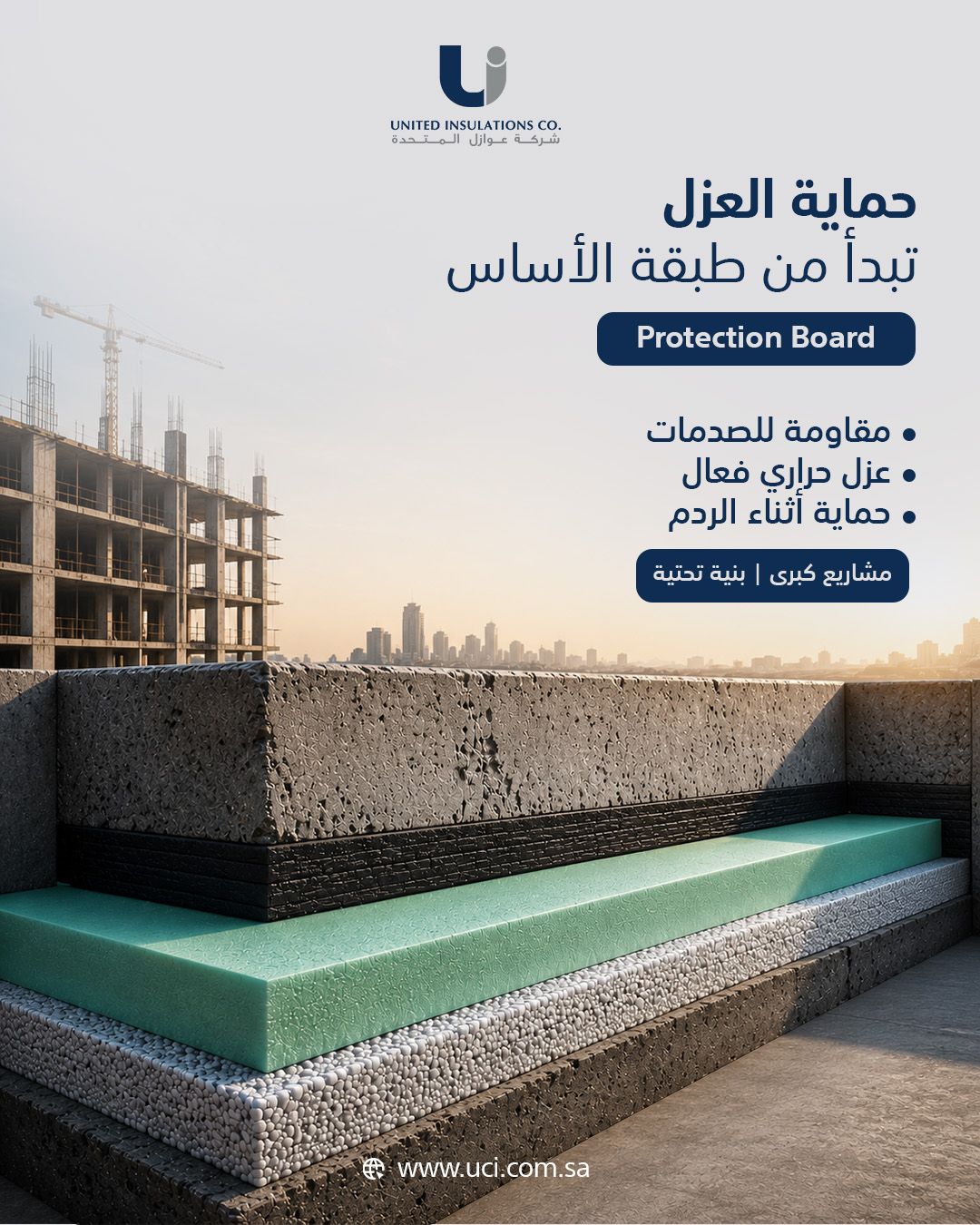
An insulation system can fail even when a high-quality material is used because final performance is not determined by the material alone. Insulation is a complete system, and problems in design, surface preparation, installation, joints, or final protection can reduce its effectiveness.
High-Quality Material Cannot Compensate for Poor Installation
One of the most common misconceptions is that purchasing a premium insulation material automatically guarantees superior results. In reality, the material must be suitable for the application, temperature conditions, moisture exposure, loads, installation method, and surrounding environment. For example, selecting an unsuitable thickness may result in insufficient thermal performance, while poor fitting or gaps between insulation sections can create weak points that allow heat or sound transmission.
Insulation Is a System, Not a Standalone Product
To achieve long-term performance, insulation should be treated as an integrated system that begins with understanding the project requirements and ends with inspection and protection after installation. The system includes:
- Defining the project’s thermal or acoustic requirements.
- Selecting the appropriate insulation material for the application.
- Determining the appropriate thickness and dimensions.
- Preparing the surface before installation.
- Properly treating joints, edges, and intersections.
- Accounting for moisture and movement or expansion joints where required.
- Protecting the insulation layer from damage after installation.
Insulation Material and Thickness Selection Mistakes
Insulation selection should begin with the project’s requirements rather than price or thickness alone. One of the major
insulation installation mistakes is selecting a product that is unsuitable for the intended application or assuming that one thickness will work for every situation without evaluating the required performance.
Choosing Insulation Based Only on Price
Reducing material costs may appear economical initially, but it can lead to additional expenses later due to poor performance, repairs, maintenance, or replacement. A proper comparison should consider more than the price per square meter. It should include:
- Material type and composition.
- Required performance characteristics.
- Appropriate thickness.
- Operating conditions.
- Installation method.
- Expected service life.
- Protection and maintenance requirements.
Choosing Thickness Without Proper Assessment
Thickness is not simply a number selected at random. It is part of the system design and should be determined based on the insulation objective, material properties, and application conditions. In some applications, greater thickness may help achieve a specific performance level. However, thicker insulation is not automatically the best solution for every project. The priority is selecting a thickness that meets the actual technical requirements.
Ignoring Material Compatibility With the Application
One insulation selection mistake is using a material designed for one application in a different environment without verifying its suitability. Factors to assess include:
- Temperature exposure.
- Moisture exposure.
- Exposure to water or vapor.
- Pressure and loads.
- Friction and movement.
- Ultraviolet exposure in exposed applications.
- Surrounding chemicals.
- Installation and protection method.
Surface Preparation and Installation Mistakes
Surface preparation is one of the most important stages of insulation installation because the material cannot perform properly when installed over a dirty, uneven, wet, or otherwise unsuitable surface.
Installing Over a Dirty Surface
Dust, debris, or construction residue between the insulation layer and the substrate can affect adhesion or mechanical fixing and may create gaps or instability within the system. Before installation, the surface should be cleaned and checked to ensure that debris or irregularities will not interfere with the installation process.
Ignoring Uneven Surfaces
Uneven substrates can create voids behind insulation or uneven pressure on the material, depending on the system and installation method. Surface defects should therefore be addressed according to the system requirements before insulation is installed.
Leaving Gaps Between Insulation Sections
One common installation mistake is leaving unintended gaps between insulation sections. These gaps can reduce insulation continuity and create pathways for heat or sound transmission. Insulation sections should therefore be properly sized and fitted, with joints treated according to the approved installation method for the material and system.
Poor Treatment of Edges and Corners
Edges, corners, and intersections require particular attention because they can be more vulnerable to separation, damage, and gaps. These areas should not be treated as minor details. They should be included in the installation plan and final inspection process.
Using Inappropriate Tools or Installation Methods
Even high-quality insulation can be damaged if it is cut, fixed, or handled using methods that are incompatible with its properties. Installation teams should therefore understand the manufacturer’s instructions and the appropriate installation method for each product.
Ignoring Moisture and Expansion Joints
Moisture and movement are important factors to consider when designing and installing many insulation systems. Ignoring them can contribute to performance problems or damage to system components over time.
How Does Moisture Affect an Insulation System?
The way insulation responds to moisture depends on the material, application, and system design. Therefore, there is no single moisture rule that applies to every insulation product. However, allowing moisture into areas that are not designed for moisture exposure may contribute to problems such as:
- Material degradation.
- Weakening of system components.
- Odors or microbial growth under certain conditions.
- Reduced performance in moisture-sensitive systems.
Moisture should therefore be addressed as part of system design rather than treated as a problem to solve after it appears.
Failing to Account for Expansion and Movement Joints
Many building and structural components experience movement due to temperature changes, expansion and contraction, structural movement, or operational conditions. If insulation is installed in a way that restricts required movement or ignores designed joints, stresses, cracking, or separation may develop in parts of the system.
Expansion joints and relevant structural details should therefore be reviewed before installation, with the insulation treatment around them designed according to the project specifications.
Hiding the Problem Instead of Addressing Its Cause
A common mistake is treating the visible effect of moisture or movement by adding another layer without identifying the underlying cause. If leakage, movement, or a defect in an earlier layer exists, adding new material over the problem may not address the root cause. The better approach is to diagnose the condition first and then determine the appropriate corrective action.
Failing to Protect the Insulation Layer After Installation
One of the often-overlooked
insulation problems is that the material may be in good condition immediately after installation but become damaged later by construction activities, traffic, storage, loads, or environmental exposure.
Why Does Insulation Need Protection?
Insulation is not necessarily the final exposed layer in every application. Many systems require protective layers or components to shield the insulation from conditions that could affect its performance. The required protection varies by application and may include:
- Mechanical protection layers.
- Finishing layers.
- Protection from movement or abrasion.
- Environmental protection.
- Controlling worker and equipment traffic over completed areas.
Allowing Other Construction Work Over Unprotected Insulation
Insulation can be damaged by foot traffic, heavy materials, or equipment being moved across the installed layer. Construction sequencing should therefore be coordinated so that protective layers are installed at the appropriate stage.
Storing Materials Over Insulation
Storing materials and equipment over insulated areas can cause unintended compression or localized damage. Storage areas should be planned in advance, and insulation should not be used as a storage surface unless the system is specifically designed for such loading.
Neglecting Post-Installation Inspection
A final inspection helps identify defects before system layers are covered or the project is handed over. The inspection should ideally include:
- Verification of insulation continuity.
- Inspection of joints.
- Inspection of edges and corners.
- Checking for damage or deformation.
- Verifying protective layers.
- Documenting observations and corrective actions.
How Can You Avoid Insulation Installation Mistakes?
Preventing insulation installation mistakes begins before the material arrives at the project site. Advance planning, specification review, material suitability checks, and clearly defined installation and inspection responsibilities all help reduce the risk of failure.
1. Start With the Project Requirements
First, define the purpose of the insulation. Is the goal to reduce heat transfer, control sound transmission, protect a product during transportation, manage thermal or moisture exposure, or meet several requirements simultaneously? Answering this question helps determine the appropriate material and system.
2. Select the Material Based on the Application
Do not rely solely on the product name or thickness. Review the material properties and confirm compatibility with the application and installation method.
3. Prepare the Surface Before Installation
The surface should be cleaned and inspected, and any defects that could affect fixing or insulation continuity should be addressed.
4. Treat Joints Carefully
Joints are not merely cosmetic details. System continuity depends significantly on their proper execution.
5. Review Joints and Intersections
The treatment of joints, corners, penetrations, and intersections should be defined before installation begins rather than after problems appear.
6. Protect Insulation From Subsequent Construction Activities
Coordination between the insulation team and other project teams is essential to prevent damage after installation.
7. Document and Inspect the Installation
Documenting installation stages, observations, and corrective actions improves quality control and makes it easier to identify and resolve issues.
Insulation System Pre-Handover Checklist
Before handing over the project, it is not enough to confirm that insulation has been installed. The system should be checked against the design and specifications, inspected for damage, and reviewed for all related details.
Essential Inspection Checklist
Questions to Ask Before Handover
What Is the Relationship Between Quality Management and Insulation Installation?
Product quality is an essential part of insulation performance, but quality does not stop at the product itself. A structured quality management system helps organizations control processes, monitor performance, improve procedures, and address nonconformities.
ISO 9001 is a globally recognized quality management system standard designed to help organizations establish, maintain, and continually improve their quality management systems, with a focus on meeting customer requirements and improving performance.
ISO 9001:2026 is the current edition of the standard as of September 2026. When evaluating a manufacturer or supplier, it is important not to rely on certification alone. The organization’s ability to implement quality processes, control operations, and meet the required technical specifications should also be considered.
For more information about quality and certification: Can Insulation Failure Be Repaired After Installation?
Yes, some insulation failures can be repaired after installation, but the appropriate repair method depends on the cause of the problem, material type, system design, and extent of damage. There is therefore no single repair method suitable for every situation. Before repair, the underlying cause should be identified:
- Are there gaps?
- Has the material been damaged?
- Is there a moisture problem?
- Is there movement or expansion that was not properly addressed?
- Was an unsuitable material or thickness selected?
- Was the insulation damaged during subsequent construction work?
Repairing the visible symptom without addressing the root cause may allow the problem to recur.
How Can You Verify Insulation Installation Quality?
The best way to verify insulation installation quality is to combine
technical review, visual inspection, specification verification, and documentation. The following should be verified:
- Material compliance with specifications.
- Correct thickness and dimensions.
- Proper substrate preparation.
- Joint quality.
- Proper treatment of edges and intersections.
- Absence of visible damage.
- Proper installation of required protection.
- Documentation of inspections and corrective actions.
Common Insulation Installation Mistakes to Avoid
The following are some of the most common mistakes that can affect long-term insulation performance:
1. Selecting the Material Before Understanding the Application
Solution: Define the technical and environmental requirements first, then select the appropriate material.
2. Focusing Only on Price
Solution: Compare performance, quality, expected service life, and installation requirements—not just purchase price.
3. Ignoring Surface Preparation
Solution: Inspect and clean the substrate and correct relevant defects before installation.
4. Leaving Gaps in the Insulation Layer
Solution: Ensure proper fitting and joint treatment to maintain system continuity.
5. Ignoring Moisture
Solution: Identify potential moisture sources and determine how they will be managed before the system is closed.
6. Ignoring Expansion Joints
Solution: Review the design details and define how insulation will be treated around joints.
7. Failing to Protect Installed Insulation
Solution: Coordinate construction activities and install protective layers at the appropriate stage.
8. Skipping the Final Inspection
Solution: Use a clear inspection checklist before closing the system or handing over the project.
How Can a Technical Review Before Installation Help?
An early technical review can identify potential problems before they become additional costs or difficult-to-correct defects after construction is complete. A technical review may include:
- Reviewing the application.
- Assessing insulation requirements.
- Reviewing material selection.
- Reviewing thickness and dimensions.
- Reviewing installation details.
- Identifying potential weak points.
- Reviewing required protection.
- Establishing inspection points before handover.
The earlier a problem is identified during design or planning, the clearer and generally less complicated it is to address compared with discovering it after system layers have already been closed.
United Insulation’s Role in Foam and Insulation Solutions
United Insulation (UCI) is a Saudi company specializing in the manufacturing of
low-density polyethylene foam (LDPE Foam) products, providing solutions for insulation, protection, packaging, and related applications. Its product applications include foam solutions used for:
- Insulation.
- Protection.
- Packaging.
- Underlay applications.
- Shock absorption in selected applications.
Achieving the intended performance depends on selecting the appropriate product for the application and installing and protecting it in accordance with project requirements.
Conclusion: Successful Insulation Starts Before Installation
The biggest mistake when approaching insulation is treating it as a material that is simply placed into position and then considered complete. Long-term performance requires an integrated process that begins with
proper material selection and system design, followed by surface preparation, accurate installation, moisture and movement management, and finally insulation protection and inspection. When evaluating an insulation system, do not ask only:
What material is being used? Also ask: Is it suitable for the application? Was the system properly designed? Was the substrate prepared correctly? Were joints and movement details properly executed? And was the insulation protected after installation? These questions can help reduce
insulation problems, insulation failure, and installation mistakes, while supporting more consistent long-term system performance.
Request a Technical Review Before Installing Your Insulation System
If you are working on a new project or experiencing an issue with an existing insulation system, a technical review before installation can help you understand the requirements, identify potential weak points, and determine a solution suited to the application.
Contact United Insulation to discuss your project requirements and suitable foam and insulation solutions. Is Material Quality Alone Enough to Ensure Insulation Performance?
No. Material quality is important, but it is not enough by itself. Final performance depends on material selection, system design, thickness, surface preparation, installation quality, joint treatment, movement considerations, and protection after installation.
Can Insulation Be Repaired After Installation?
Yes, some insulation failures can be repaired, but the appropriate solution depends on the cause, material type, system design, and extent of damage. The underlying problem should be diagnosed before selecting a repair method.
How Can I Verify Insulation Installation Quality?
Installation quality can be verified by reviewing specifications, inspecting the substrate, joints and edges, confirming thickness and dimensions, checking the installed insulation, verifying required protection, and documenting inspection findings.
What Are the Most Common Insulation Installation Mistakes?
Common mistakes include selecting an unsuitable material, using an inappropriate thickness, inadequate surface preparation, leaving gaps between insulation sections, poor joint treatment, ignoring moisture and expansion joints, and failing to protect insulation after installation.
Does Thicker Insulation Always Mean Better Performance?
Not necessarily. Thickness should be part of the system design and should match the application requirements, material characteristics, and environmental conditions. Increasing thickness without a technical basis is not a substitute for proper design and installation.
Why Do Insulation Problems Appear After Installation?
Problems may appear later because of damage during subsequent construction activities, moisture, movement or expansion, gaps, unsuitable material selection, or inadequate protection after installation.
Does Moisture Affect All Types of Insulation in the Same Way?
No. Materials respond differently to moisture depending on their composition, application, and system design. Moisture conditions should therefore be evaluated before selecting the material and installation method.
When Should the Final Insulation Inspection Be Performed?
The final inspection should ideally be performed after insulation installation and before covering the system or handing over the area, allowing defects to be identified and corrected before repairs become more difficult.
Are Expansion Joints Important When Installing Insulation?
Yes. When movement or expansion is part of the building or structure’s design, it must be considered when installing the insulation system. Ignoring these details can contribute to stress or damage in parts of the system.

 Common Mistakes in Parquet Underlay Installation That Affect Floor Longevity
  Expansion Joint Sheet for Multi-Storey Car Parks: The Engineering Solution for Long-Term Structural Protection
  Before supplying projects: How do you test the quality of packaging foam and ensure that it conforms to specifications?