Choosing parquet or vinyl flooring is not only about color, design, and appearance. An often-overlooked layer beneath the finished floor can have a direct impact on comfort, stability, insulation, and long-term floor protection. This is where parquet underlay or flooring underlay plays an important role. It is a foam layer installed between the subfloor and the finished flooring surface.
In residential and commercial projects, this layer may seem unimportant because it is hidden after installation. However, it performs several important functions, including helping reduce vibration and noise, limiting moisture transfer, improving underfoot comfort, and protecting the finished floor from certain effects of daily use. United Insulations Co. specifies its parquet underlay for parquet and vinyl flooring, with available thicknesses of 1, 2, and 3 mm.
For this reason, selecting the right flooring underlay should be considered part of the flooring design and installation decision rather than an afterthought once the parquet has already been selected.
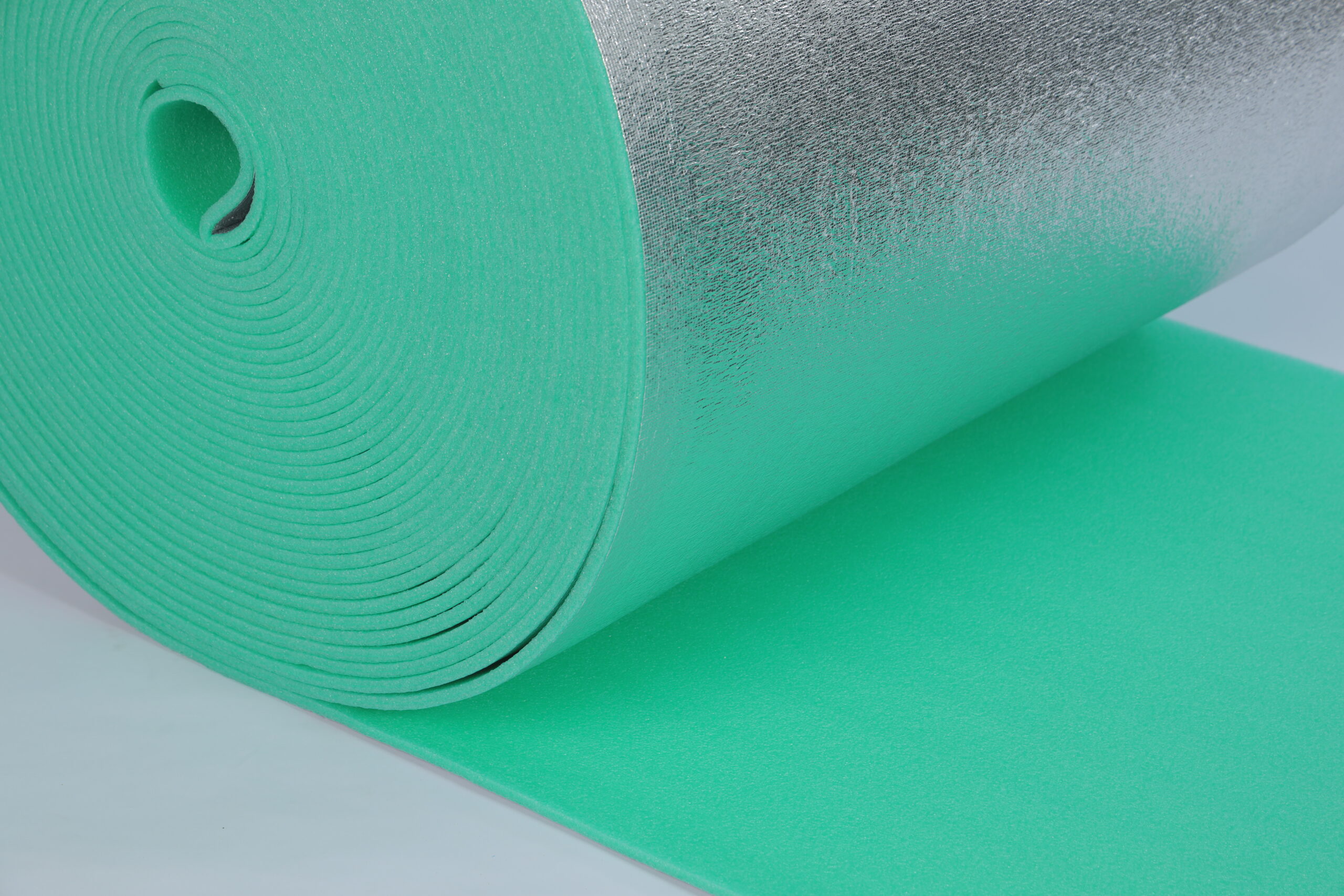
Parquet underlay is a foam layer installed beneath parquet and certain flooring systems such as vinyl. It creates a separation layer between the subfloor and the finished surface. Its purpose goes beyond sound insulation. Depending on the product and installation conditions, it can help improve comfort, reduce vibration, limit moisture transfer, protect the flooring, and enhance overall floor performance when correctly selected and installed.
In floating flooring systems, a separation layer is installed between the subfloor and the finished flooring. Foam under flooring creates an intermediate layer between the two surfaces rather than leaving the finished flooring in direct contact with the subfloor.
This layer can improve the interaction between flooring components, particularly when the flooring is designed as a floating system. However, underlay cannot compensate for major subfloor defects. The surface must therefore be properly prepared, level, and dry according to the flooring system requirements before the underlay is installed.
Floors are continuously exposed to vibration caused by walking, moving furniture, dropped objects, and everyday activity. A suitable resilient underlay can absorb part of these vibrations, improving underfoot comfort and helping reduce the transmission of some vibration into the subfloor.
United Insulations Co.’s parquet underlay specifications identify properties related to shock absorption, thermal and acoustic insulation, and resistance to water absorption, making the foam suitable for a range of flooring applications.
Moisture is an important factor to consider when installing flooring, particularly when the flooring is installed over concrete or in areas where moisture control is required.
A suitable parquet underlay can help limit moisture transfer depending on the product characteristics and flooring system. However, underlay should not be considered a substitute for testing subfloor moisture or correcting an actual moisture problem.
Flooring underlay can help reduce certain sounds and vibrations generated by movement by creating a resilient layer between the finished flooring and the subfloor. When a person walks across the floor, movement forces travel through the flooring layers, and an appropriate underlay can absorb part of the resulting energy.
It is important to distinguish between different types of noise. Footsteps and impact sounds are forms of impact noise, while speech, television, and music are transmitted differently through air and building structures.
Therefore, foam under parquet can help reduce movement-related noise and vibration, but it does not mean that the floor will become completely soundproof. Actual performance depends on the flooring type, underlay thickness and density, installation method, and the building structure itself.
Clicking, rubbing, or movement sounds can occur when there are problems within the overall flooring system, such as an uneven subfloor, gaps, an unsuitable underlay, or installation errors.
For this reason, underlay should not be treated as a standalone solution to every flooring noise problem. Better results come from combining a properly prepared subfloor, a suitable underlay, compatible flooring, and professional installation.
One important function of parquet underlay is to create an intermediate layer between the subfloor and the finished flooring. This can help accommodate minor surface variations, provided that the subfloor remains within the flatness and preparation limits specified by the flooring manufacturer.
No. This is one of the most important points for contractors and homeowners to understand before installation. Underlay is not a floor-leveling material and should not be used to hide major unevenness, depressions, or surface defects.
If the subfloor is significantly uneven, movement, gaps, or noise may still appear after the underlay is installed. Proper installation should therefore begin with inspecting the subfloor, correcting defects, and then installing the underlay.
When the appropriate thickness and density are selected for the flooring system, the underlay can help distribute pressure and reduce some vibration generated during everyday use. Performance depends on the flooring design, underlay properties, and installation method.
United Insulations Co.’s product data includes defined density as well as technical properties such as compression resistance, tensile strength, and elongation. These are relevant indicators when evaluating foam performance in flooring applications.
Choosing underlay thickness does not mean that the thickest option is always the best. The correct decision depends on the flooring type, installation system, project requirements, desired performance, and flooring manufacturer’s recommendations.
United Insulations Co. offers parquet underlay in 1 mm, 2 mm, and 3 mm thicknesses, with a width of 1 meter and a standard length of 50 meters, or according to customer requirements.
Thickness
Potential Application
Selection Note
1 mm
Flooring systems requiring a thin underlay
Suitable where system requirements limit underlay thickness
2 mm
Parquet and flooring applications requiring a balance between insulation and floor height
A practical option for many projects when compatible with the system
3 mm
Applications where a thicker underlay is permitted
Compatibility with the flooring and installation system should be confirmed
Important: Thickness should not be selected based on a general rule alone. The flooring specifications and installation system should be reviewed before approving the final thickness.
Parquet underlay is designed for parquet flooring systems, and the product specifications also identify vinyl flooring as an application.
However, compatibility with vinyl depends on the specific vinyl flooring system. Some vinyl products, particularly those with an integrated backing or underlay, may not require an additional layer or may require a specific type of underlay.
Designers and contractors should therefore verify the vinyl manufacturer’s installation requirements before installing foam under flooring, as an unsuitable additional layer may affect stability, floor height, or system performance.
Floating floors are flooring systems in which the flooring is not mechanically fixed to the subfloor in the traditional manner. Instead, the boards are installed as an integrated layer above the subfloor.
In such systems, the parquet underlay becomes an important component because it separates the flooring from the subfloor while helping improve comfort and reduce certain movement-related vibrations.
However, not every foam product is automatically suitable for every floating floor. Manufacturer requirements should be reviewed, particularly regarding thickness, density, and whether a vapor barrier or additional protective layer is required.
If you are a designer, contractor, or homeowner, do not select an underlay based on thickness alone. Use a simple checklist before approving the parquet underlay.
Selection Factor
Why Does It Matter?
Thickness
Affects finished floor height and system characteristics
Density
Influences foam behavior under compression
Water absorption resistance
Important for limiting moisture transfer
Vibration absorption
Helps improve comfort and reduce certain noises
Flooring compatibility
Helps prevent installation and performance issues
Ease of cutting and installation
Saves installation time and effort
Consistent quality
Important for large projects and continuous supply
Even a high-quality product may fail to deliver its expected performance if installed incorrectly. Installation quality is therefore just as important as material quality.
Installing underlay over a surface containing dust, moisture, or major irregularities can lead to flooring problems later.
Solution: Prepare, clean, level, and address moisture issues in the subfloor before installing the underlay.
A thicker underlay is not always better. An unsuitable thickness can affect finished floor height, door clearances, or compatibility with the installation system.
Solution: Select thickness based on the flooring specifications and installation system.
Joints and edges should be handled systematically according to the installation method, avoiding unnecessary overlaps or gaps.
This is one of the most common mistakes. Flooring underlay is not a leveling compound.
If the subfloor has significant defects, they should be corrected first using the appropriate preparation method.
Not all vinyl flooring systems are the same. Installation instructions should therefore be checked before adding a separate underlay.
United Insulations Co. (UCI) provides low-density polyethylene LDPE Foam solutions for flooring applications, including parquet underlay designed for use beneath parquet and vinyl flooring.
The product is available in multiple thickness options, while its technical data includes properties related to density, thermal conductivity, compression resistance, water absorption, tensile strength, and elongation.
The company also identifies the product as suitable for homes, offices, hotels, and commercial buildings, with sizing options according to customer requirements, making it a practical solution for projects that require organized supply and flooring-specific specifications.
United Insulations Co. operates under an ISO 9001 quality management framework, supporting its focus on controlled manufacturing processes, quality management, and products designed for a range of project applications.
For designers, underlay selection is not only about the final appearance. It is also about details that influence the user experience after project handover. A floor that looks excellent on day one should continue to perform comfortably and reliably over time.
For contractors, selecting a suitable product from the beginning can help reduce the likelihood of issues related to noise, movement, moisture, and incompatibility, particularly in large projects where rework can be costly and disruptive.
For homeowners, the ultimate goal is a comfortable, quiet, stable floor that maintains its appearance for as long as possible. The hidden layer beneath the finished floor can therefore be one of the details that has a meaningful impact on everyday comfort.
Parquet underlay is an appropriate choice when the flooring system requires an underlayer that can improve comfort, reduce vibration, limit moisture transfer, and support acoustic performance, provided that the product is compatible with the flooring type and installation method.
Applications that may benefit from this type of underlay include:
Homes and villas.
Offices.
Hotels.
Multi-unit residential developments.
Commercial buildings.
Projects using parquet or vinyl flooring where the installation system allows and requires compatible underlay.
Parquet underlay may not be visible in the finished floor, but it can play an important role in the system’s everyday performance. A suitable underlay can help reduce certain footstep sounds and vibrations, improve walking comfort, limit moisture transfer, and protect the flooring when used within a compatible installation system.
The right choice is not based on thickness alone. It begins with understanding the flooring type, inspecting the subfloor, reviewing the flooring manufacturer’s requirements, and then selecting the appropriate thickness, density, and technical properties for the project.
If you are working on a new project or need to select the right flooring underlay for parquet or vinyl, reviewing the product specifications before installation can help you make a more informed decision and avoid problems that may appear after installation.
To learn more about available thicknesses, sizes, and suitable specifications, contact United Insulations Co. and request a sample or technical specification based on your flooring type and project requirements.
Parquet Underlay Polyethylene Foam for Flooring | United Insulations Co.
Not necessarily for every flooring system, but parquet underlay can be important when the installation system requires an underlayer to improve comfort, reduce vibration, or help limit moisture transfer. The flooring manufacturer’s requirements should always be followed before installation.
Yes. A suitable parquet underlay can help reduce certain footstep sounds and vibrations by absorbing part of the energy generated by movement. However, the level of noise reduction depends on the flooring type, underlay, thickness, density, installation method, and building structure.
Parquet underlay can be used with certain vinyl flooring systems, and United Insulations Co.’s product specifications identify vinyl flooring as an application. However, the vinyl manufacturer’s instructions should be checked because some systems have an integrated backing or require a specific type of underlay.
The appropriate thickness depends on the flooring type, installation system, and project requirements. United Insulations Co. offers parquet underlay in 1, 2, and 3 mm thicknesses, with the final selection determined by the flooring and installation specifications.
Certain parquet underlays can help limit moisture transfer. United Insulations Co.’s product specifications identify resistance to water absorption and its use as a protective layer beneath flooring. However, underlay does not replace proper moisture testing or correction of an actual moisture problem in the subfloor.
No. Flooring underlay is not a substitute for floor-leveling materials. Major unevenness and surface defects should be corrected before the underlay and parquet are installed.
Not always. Thickness should be compatible with the flooring system and installation requirements. Choosing a thicker underlay than recommended can affect floor stability or finished floor height.
Parquet underlay is a specialized type of flooring underlay intended for parquet and certain other flooring systems. The broader term flooring underlay refers to a wider category of products installed beneath different flooring types for purposes such as acoustic insulation, thermal insulation, comfort, or moisture protection.
Start by identifying the flooring type, then review the manufacturer’s requirements, inspect the subfloor, define the purpose of the underlay, and select the appropriate thickness, density, and technical properties. For larger projects, requesting a technical specification and product sample before final approval is recommended.
 HVAC & Mechanical Room Insulation: A Guide to Reducing Noise and Vibration in Buildings
 How Does Floor Underlay Affect Sound Insulation Between Floors?
 Acoustic Floor Insulation Between Floors: How to Choose the Right Floor Underlay?
 Parquet Underlay – The Best Insulation for Parquet Flooring in Saudi Arabia