Table of Contents
ToggleWhen furniture is shipped within the local market, the distance is often relatively short, and the product may reach the customer after a limited number of handling stages. International furniture exports are different. The shipment may pass through road transportation, storage facilities, ports, container loading, sea or air freight, customs clearance, and final delivery to a warehouse or customer.
For this reason, furniture export packing foam should not be viewed simply as an extra wrapping layer. It is part of an integrated protection system designed to reduce the effects of friction, impact, movement, and handling throughout a long international journey.
Furniture shipments may remain inside a container for an extended period before reaching their final destination, particularly in sea freight. During this time, protecting the product from the initial impact is not enough. The packaging system must continue to protect the furniture throughout the entire journey.
A suitable Packing Sheet creates a protective layer between the furniture and other packaging materials or products, helping reduce direct contact and scratches caused by movement.
Furniture’s journey does not end when it leaves the factory. The shipment may undergo loading, unloading, transportation, storage, and handling at multiple locations. Each additional stage increases the possibility of friction or impact if the packaging system is not properly designed.
This is why exporters should consider furniture protection during international shipping from the moment the product leaves the production line until it reaches the final customer.
A furniture item may be in perfect condition when it leaves the factory, but international transportation presents conditions that differ significantly from factory or showroom storage. Continuous movement, vibration, repeated handling, and changes in temperature and humidity must all be considered when selecting packaging materials.
Even when furniture is relatively stable inside a container, movement and vibration can create repeated friction between the product and packaging materials or between different parts of the product.
The resulting scratches may appear minor, but they can become a significant commercial issue when the furniture is premium, has a sensitive finish, or has been manufactured for an international customer who expects it to arrive in the same condition in which it left the factory.
Humidity and temperature conditions can change during shipping and storage, and condensation may occur inside containers under certain conditions. Packaging materials should therefore be selected according to the product, transit duration, shipping method, and expected environmental conditions.
Low-density polyethylene LDPE Foam offers properties that make it suitable for many protective packaging applications. However, the final packaging system should recognize that foam is not a substitute for moisture-control, ventilation, or other appropriate protective measures when they are required.
Damage to a single furniture item can involve more than the cost of repair or replacement. Exporters may also face return shipping, delays, remanufacturing, customer service expenses, and potential damage to the business relationship.
Therefore, the value of industrial packaging for shipping containers should not be measured only by the price of the packaging material. It should also be evaluated against the risks that an effective packaging system can help reduce.
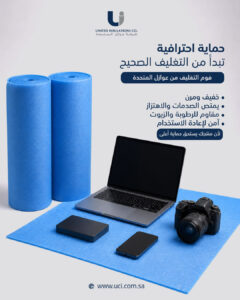
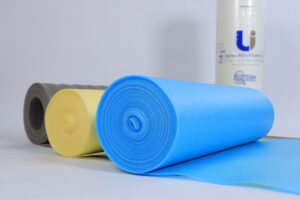
The Packing Sheet acts as a flexible protective layer between the furniture surface and surrounding packaging materials or surfaces. It is particularly useful for covering large areas that need protection against scratches and friction during transportation, storage, and handling.
A foam layer can help reduce the effects of friction and certain minor impacts that may occur during handling and transportation. It can also act as a separation layer that prevents direct contact with the finished furniture surface.
However, thickness, density, and installation method should be selected according to the product. Glass, wood, metal, and furniture with sensitive finishes may require different specifications.
Large surfaces such as doors, tabletops, panels, and cabinet fronts are among the areas that require strong protection during export. Packing Sheet for export can be used to cover these areas before applying the outer packaging layers.
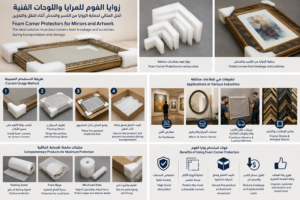
Protruding areas and corners typically require more specialized solutions such as Foam Corner, because a sheet alone may not provide sufficient protection for points that are more exposed to impact.
In the furniture industry, appearance is a major part of product value. Even small scratches or friction marks can make customers feel that the product was not handled carefully.
A properly designed multi-layer protection system helps reduce these risks and increases the likelihood that the furniture will reach the customer in the same condition in which it left the factory.
The best packaging results generally do not depend on a single product. Instead, protection should be distributed according to the vulnerable areas of the furniture. An integrated system may combine sheets, corners, rolls, and bags where necessary.
Packing Sheet is used to cover large surfaces such as panels, tables, doors, and cabinet fronts. Its main function is to provide a separation layer between the product and the outer packaging materials.
When selecting the product, exporters should consider roll or sheet width, appropriate thickness, cutting and application methods, furniture dimensions, transit duration, and how the packaging will be secured.
Corners are more exposed to direct impacts during loading and unloading. Combining Packing Sheet with Foam Corner can therefore protect large surfaces while providing additional cushioning at vulnerable points.
This approach creates a more complete protection system rather than relying on a single layer for every part of the product.
Some furniture components are difficult to protect with a large sheet alone, including handles, protruding parts, separators, and smaller edges.
Mini Foam Rolls can be used in these areas to provide a flexible protective layer that can be cut and applied according to the size of the component.
There is no single packaging method that is ideal for every shipment. Sea freight often involves longer transit times and changing environmental conditions, while air freight places greater emphasis on package weight, dimensions, and transportation cost.
When selecting furniture export packing foam for sea freight, the material should be evaluated for expected humidity and condensation conditions. Foam can be a practical solution for protective and separation applications, but the overall packaging system must also account for the type of wood, fabric, coating, ventilation, and moisture-control materials when required.
In air freight, every increase in weight and package volume can affect shipping costs. Lightweight foam materials can therefore be useful when they provide the required protection without adding unnecessary weight.
However, material selection should not be based on weight alone. The objective is to balance the required protection, weight, package dimensions, and shipping cost.
Shipments may experience temperature changes between the factory, warehouse, port, transportation vehicle, and final destination. Packaging materials should therefore be selected according to the expected operating conditions and evaluated for compatibility with the product and securing method.
A practical test on a sample shipment is also recommended before adopting the packaging solution for large commercial quantities.
Good packaging cannot eliminate every logistics risk, but it can help reduce preventable damage through proper design. When friction- and handling-related damage is reduced, the likelihood of returns and claims related to product condition may also decrease.
Some shipments may need to be opened or inspected during customs procedures. Inspection requirements vary depending on the country, authorities, and shipment type.
For this reason, packaging should ideally be designed so that it can be securely resealed after inspection while maintaining protection for surfaces and corners.
In international trade, product quality alone is not enough. Customers also evaluate the delivery experience, packaging quality, and condition of the product upon arrival.
When a shipment arrives properly organized and undamaged, it reflects the manufacturer’s attention to detail and can strengthen trust in the supplier, particularly for repeat orders and large-volume purchases.
Using foam does not automatically reduce insurance premiums, as insurance costs and coverage terms depend on the insurer, cargo type, shipping route, and risk profile.
However, improving packaging and reducing the likelihood of damage can help exporters manage shipping risks more effectively, particularly when packaging procedures and pre-shipment tests are properly documented.
If your factory regularly exports furniture, packaging should ideally be transformed from an improvised procedure into a documented system with consistent specifications. This makes it easier to train production and packing teams and maintain consistency between shipments.
Before purchasing large quantities of Packing Sheet for export, test the solution on a limited number of furniture pieces. Check the condition of the furniture after transportation, ease of unpacking, and any signs of friction or pressure.
It is useful to document the results and adjust thickness, securing methods, or protection layers based on actual findings.
Taking photos before closing the shipment creates a visual record of the product and packaging condition before it leaves the factory. This can be useful when investigating any issue regarding the shipment’s condition upon arrival.
It is also advisable to document the shipment number, furniture pieces, loading arrangement, and key protection stages.
Packaging materials alone cannot compensate for poor loading practices. The exporter should coordinate the container loading method, prevent excessive movement, use space efficiently, and avoid pressure that could damage the products.
Furniture components are not equally exposed to risk. Large surfaces may require Packing Sheet, while corners may need Foam Corner, and small details may require Mini Foam Rolls or other suitable solutions.
The lowest-cost thickness is not necessarily the most efficient option, and a thicker material is not automatically better. Specifications should be based on furniture weight, surface characteristics, transportation method, and required protection level.
If the foam moves out of position during handling, part of its protective function may be lost. The securing method should therefore be appropriate, should not damage the finished surface, and should be tested before implementation.
One common mistake is applying a packaging material to all shipments without testing. A better approach is to test the solution, evaluate the results, and then scale it up.
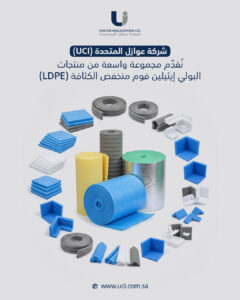
United Insulation Company (UCI) provides low-density LDPE Foam solutions for protective and industrial packaging applications. The company focuses on supplying practical products for factories and projects that require consistent-quality insulation and protective materials suitable for their applications.
Packing Sheet is a practical solution for covering and protecting large surfaces during storage, transportation, and packaging. Industrial foam solutions can be selected according to application requirements and specifications.
For furniture manufacturers, required dimensions and quantities can be evaluated according to production volume, product characteristics, and the factory’s packaging system.
Packaging material selection should not be made independently of how the material will be used. It is important to identify vulnerable areas, securing methods, transit duration, and shipment characteristics before finalizing the solution.
Furniture manufacturers can evaluate their specific needs and develop a system that combines Packing Sheet with other protective solutions when necessary.
For businesses with regular foam consumption, organized industrial supply can improve inventory management and reduce the risk of packaging operations being interrupted by material shortages.
Furniture manufacturers and exporters can also evaluate their annual or periodic requirements to develop a supply plan that better matches their production volume.
United Insulation Company (UCI) is a Saudi manufacturer specializing in low-density LDPE Foam products and operates under quality management systems that include ISO 9001 certification.
The company combines manufacturing expertise, an understanding of project requirements, and the ability to supply products for different insulation, protection, and packaging applications.
UCI supports local manufacturing and the development of industrial solutions that help businesses and factories improve operational efficiency. The company also focuses on quality throughout its production processes and provides products designed to meet different customer requirements.
Before purchasing Packing Sheet, it is useful to answer several practical questions:
The clearer these answers are, the easier it becomes to select a packaging system that matches the product instead of using the same solution for every shipment.
If you are a furniture manufacturer or an exporter serving international markets, packaging should not be treated as an afterthought. Choosing the right furniture export packing foam can be an important part of your product protection and shipping-risk management strategy.
Order Packing Sheet in industrial quantities for your furniture factory.
Contact us to design an integrated export packaging system.
Request a special quotation for furniture exporters.
Furniture export does not end when the products are loaded into a container. That is when the real test of the product’s ability to reach the final customer safely begins. Investing in furniture export packing foam and a well-designed protection system can help manufacturers and exporters reduce scratches, friction, and handling-related damage while improving the customer experience.
A successful system does not depend on foam alone. It requires the right thickness and specifications, an appropriate securing method, protection for corners and details, proper product arrangement inside the container, as well as testing and documentation before shipment.
When packaging becomes part of the production process rather than an afterthought, exporters can build a more consistent and professional operation and improve the likelihood that their furniture will reach international markets in the condition and quality expected by customers.
Packing Sheet
Foam solutions designed to cover large surfaces and help protect them from friction and scratches during storage and transportation.
Foam Corner
Protective solutions for corners and edges exposed to impact during handling and shipping.
Mini Foam Rolls
Small foam rolls suitable for details and components requiring flexible and easy-to-apply protection.
Foam Bags
Foam solutions suitable for individually protecting certain components within a complete packaging system.
United Insulation Company (UCI) is a Saudi company specializing in the manufacture of insulation products and low-density LDPE Foam, providing solutions for various industrial applications, including insulation, protection, and packaging.
The company is committed to supplying high-quality products through appropriate production systems and standards and holds ISO 9001 quality management certification, while focusing on local industrial development and supporting the needs of projects and manufacturing facilities.
Key application areas include:
Your factory deserves packaging that protects product quality from the production line to the final customer.
If you are looking for furniture export packing foam for sea or air shipments, contact United Insulation Company to discuss your requirements and identify a foam solution suited to your production volume and furniture characteristics.
Order Packing Sheet in industrial quantities for your furniture factory.
Contact us to design an integrated export packaging system.
Request a special quotation for furniture exporters.
United Insulations Company (UCI) is a leading Saudi company specialized in manufacturing and supplying thermal and acoustic insulation solutions, as well as low-density foam products. The company is committed to the highest standards of quality and sustainability to support construction and industrial projects within the Kingdom and beyond.
Third Industrial City, P.O. Box: 22766 Jeddah-6838, Saudi Arabia
Sunday - Thursday 8AM : 5PM