Today, businesses face increasing challenges in maintaining product integrity during transportation and shipping, especially when dealing with high-value products where even minor damage can result in significant financial losses or operational disruptions. As a result, protecting high-value products during shipping has become a critical component of modern risk management and supply chain strategies.
Whether the shipment consists of electronic devices, precision industrial equipment, sensitive medical products, or luxury goods, successful transportation depends not only on the carrier but also on selecting the right packaging and protection system.
The higher the product value, the greater the importance of protecting it during transit. Shipments worth thousands or even millions of dollars cannot be handled using the same packaging methods as ordinary products.
In many cases, the cost of damage exceeds the product’s value due to replacement expenses, production delays, reshipping costs, and customer dissatisfaction.
A small scratch or corner impact may appear insignificant, but it can lead to:
Standard Products | High-Value Products |
|---|---|
Lower replacement cost | High replacement cost |
Less sensitive to impact | Highly sensitive to impact |
Basic packaging | Professional multi-layer packaging |
Limited operational risk | Significant operational risk |
Packaging is the first line of defense against damage. Even the best logistics providers cannot completely eliminate impacts, vibrations, or handling errors if products are not adequately protected.
High-value products are items whose damage, breakage, or scratches can cause significant financial or operational losses.
These include servers, communication systems, industrial computers, controllers, and advanced electronic systems.
These products are particularly vulnerable to shocks and vibrations during transportation and export.
Medical equipment requires superior protection to maintain precision and operational reliability.
Even minor scratches or cracks can significantly reduce the product’s value.
These include measuring instruments, control systems, and machinery with delicate components.
Protection requirements depend on:

Loading and unloading activities are among the leading causes of shipment damage.
Products may be dropped or impacted during warehouse handling and distribution processes.
Trucks, ships, and aircraft generate continuous vibrations that can affect sensitive products.
During storage and transportation, shipments may be stacked, creating pressure that increases the likelihood of damage.
Humidity and temperature fluctuations can negatively affect many sensitive products.
Improper handling can result in breakage, deformation, or functional damage.
International shipments go through multiple stages, including:
Each additional touchpoint increases the risk of impacts and handling-related damage.
When companies think about product protection during transportation, they often focus on packaging costs while overlooking the actual financial impact of damaged shipments. In reality, professional protection solutions cost far less than the losses resulting from a single damaged high-value product.
Replacement and Repair Costs
The first direct loss businesses face is the cost of repairing or replacing damaged products. These losses become significantly higher when dealing with electronics, industrial equipment, or sensitive medical devices.
In some cases, repair costs may exceed 50% of the product value, making full replacement the only viable option.
Reshipping Expenses
The loss does not stop at the product itself; it also extends to additional shipping expenses.
These expenses include:
* Returning damaged shipments.
* Repackaging costs.
* Reshipping charges.
* Additional insurance fees.
Loss of Customers and Business Trust
Customers who receive damaged products may never give the supplier a second chance.
In today’s competitive markets, customer experience plays a crucial role in building long-term loyalty and trust.
Project Delivery Delays
When equipment or materials arrive damaged, entire projects may be delayed.
Such delays can lead to:
* Contractual penalties.
* Operational disruptions.
* Missed business opportunities.
How Do Logistics Losses Affect Annual Profitability?
Industrial experience shows that even a small percentage of damaged shipments can consume a significant portion of annual profit margins, especially in industries handling high-value products.
How Does Packaging Foam Protect Sensitive Shipments?
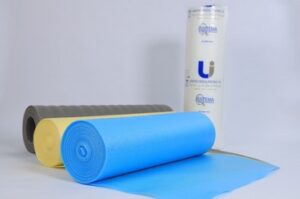
Packaging foam is one of the most effective protection solutions in the logistics industry, providing a specialized barrier against impacts, vibrations, and external factors.
Shock and Vibration Absorption
The primary advantage of packaging foam is its ability to absorb impact energy.
When a package is dropped or impacted, foam disperses the force and minimizes its effect on the product.
Preventing Component Friction
During transportation, internal components may shift and rub against each other.
Foam helps secure products in place and significantly reduces internal movement.
Protecting Delicate Surfaces from Scratches
Some products are more vulnerable to scratches than impacts, including:
* Glass products.
* Electronic displays.
* Luxury furniture.
* Painted surfaces.
Providing an Additional Safety Layer During Transit
Packaging foam not only protects the product but also creates an additional safety layer that minimizes transportation risks.
Why Do Leading Companies Rely on Packaging Foam?
Because it combines:
* Lightweight properties.
* High protection performance.
* Ease of application.
* Lower costs compared to potential losses.
The Role of Foam Corners in Protecting High-Value Products
Corners and edges are the most vulnerable parts of a product during transit, making foam corner protectors an essential component of professional packaging systems.
Protecting the Most Vulnerable Edges and Corners
Foam corners absorb direct impacts affecting the most exposed parts of a product.
Reducing the Impact of Accidental Drops
When a package is dropped, corners are typically the first points of impact.
Foam corner protectors distribute impact forces and reduce the likelihood of breakage.
Protecting Glass and Metal Products
Glass and metal products are among the biggest beneficiaries of foam corner protection.
Supporting Heavy Shipments During Stacking
During stacking, foam corners help distribute weight more effectively and reduce stress concentrations.
Practical Comparison: Before and After Foam Corner Protection
| ——————- | ————– |
| Without Foam Corners | With Foam Corners |
| ————————— | ————————– |
| Higher damage risk | Better protection |
| Edge breakage risk | Impact absorption |
| Frequent losses | Reduced damage |
| Lower customer satisfaction | Better customer experience |
—
How to Choose the Right Protection System for Domestic Shipping
Selecting the right protection system is not just about choosing packaging materials—it requires understanding the product and transportation conditions.
—
Product Characteristics
You should evaluate:
* Weight.
* Dimensions.
* Sensitivity level.
* Product value.
Transportation Duration
The longer the transit duration, the higher the exposure to risks.
Number of Handling Stages
Shipments involving multiple handling stages require enhanced protection.
Transportation Method
Protection requirements vary between:
* Ground transportation.
* Ocean freight.
* Air freight.
When Is Basic Protection Enough?
Basic protection may be sufficient when:
* Transit distances are short.
* Products are not highly sensitive.
* Handling frequency is limited.
—
The longer the transportation distance, the greater the exposure to vibrations, impacts, and environmental changes.
For this reason, global companies rely on multi-layer packaging systems that combine protective foam with internal securing materials.
International shipments experience significantly more loading and unloading operations than domestic shipments.
Every additional handling stage increases the risk of damage if proper protection materials are not used.
A shipment may move from a hot desert environment to a cold or humid climate within a matter of days.
These environmental changes can directly impact many sensitive products.
Some shipments may be opened for customs inspection, requiring packaging systems that maintain protection even after resealing.
Because they are exposed to:
Having packaging alone is not enough. The packaging system must be designed according to the product’s characteristics and shipping conditions.
Using foam that is too thin significantly reduces protection performance.
Conversely, excessive foam thickness may increase costs without delivering proportional benefits.
Many businesses focus on wrapping the main body of the product while neglecting the areas most vulnerable to impacts.
Low-quality packaging materials may lose their protective performance during transportation or storage.
Even when premium materials are used, poor placement inside the package may leave vulnerable areas exposed.
With the rapid industrial and commercial growth in Saudi Arabia, shipment protection has become a key factor in improving operational efficiency and reducing losses.
Leading companies develop customized packaging standards for each product instead of applying a one-size-fits-all approach.
Successful businesses rely on:
Employee training reduces operational mistakes and improves shipment protection standards.
Effective protection starts in the warehouse and continues through final delivery.
Many Saudi manufacturers have significantly reduced shipment damage rates by implementing professional foam-based packaging systems.
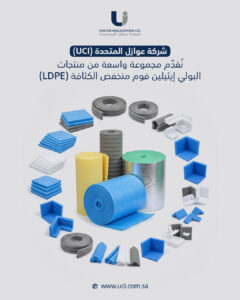
United Insulation Company (UCI) provides a comprehensive range of packaging and protection solutions designed to meet the needs of industrial and commercial sectors.
LDPE foam products are manufactured according to strict quality standards to ensure reliable shock absorption and vibration reduction.
Foam corners provide effective protection for edges and corners that are vulnerable during transportation and storage.
UCI understands that protection requirements vary from one product to another, which is why customized solutions are offered for each project.
The expert team assists customers in selecting:
Because it helps:
The best approach is to use a professional packaging system that combines packaging foam, foam corners, and internal securing materials based on the product’s requirements.
Yes. Packaging foam is one of the most widely used protection solutions in international shipping due to its excellent shock absorption and vibration control properties.
Foam corners are recommended when shipping products with exposed edges and corners, such as electronics, furniture, and glass products.
By selecting high-quality protection materials, implementing suitable packaging systems, and training packaging teams.
Professional packaging is engineered around product characteristics and transportation risks, whereas standard packaging uses general-purpose methods that may not provide adequate protection.
Yes. Foam protection solutions can be customized according to product dimensions, sensitivity levels, and shipping requirements.
Successful shipping is not determined solely by the logistics provider. It begins with selecting the right protection system for the product.
Every dollar invested in professional packaging can save many times its value by preventing damage, delays, and customer loss.
Because it reduces operational costs while maintaining product quality and customer satisfaction.
Receiving products in perfect condition strengthens customer trust and increases repeat business opportunities.
The return comes from reduced damage rates, lower costs, stronger brand reputation, and sustainable growth.
If you are looking for effective ways to protect high-value products during transportation and export, selecting the right protection materials is the first step toward reducing risks and achieving maximum operational efficiency.
 Foam Corner for Protecting Mirrors, Artwork, and Picture Frames During Shipping and Storage
  Protecting Electrical Equipment During Transportation: Why Do Power Companies Require Extra Protective Packaging?
  Benefits of Packaging Foam in Protecting Industrial Products
  Electronic Device Foam Packaging: Protection Against Shipping Damage