Table of Contents
ToggleIn industrial, food, and logistics projects, cold storage rooms are essential. However, many systems fail to achieve optimal efficiency. The issue is not always the cooling equipment itself but rather poor or missing thermal insulation.
One of the most common mistakes is relying solely on cooling machines without proper insulation. This leads to continuous cold air leakage and excessive system load.
In Saudi Arabia’s hot climate, high temperatures make any insulation weakness a direct cause of cooling inefficiency and system failure.
Poor insulation results in higher electricity bills, frequent maintenance, and product quality losses.
Uninsulated cold rooms face serious operational problems affecting performance, quality, and operating costs.
Cold air leakage forces the system to run continuously to compensate for losses, reducing efficiency.
Poor insulation increases the load on cooling systems, significantly raising energy bills.
Temperature fluctuations can damage sensitive products such as food and pharmaceuticals.
Every unstable temperature leads to direct losses in stored product quality and safety.
Insulation is not an optional feature; it is the foundation of the entire cooling system efficiency.
Insulation significantly reduces external heat penetration into cold storage rooms.
Better insulation reduces system load and extends equipment lifespan.
Insulation ensures a stable internal environment, essential for sensitive products.
Higher insulation quality directly leads to lower energy consumption.
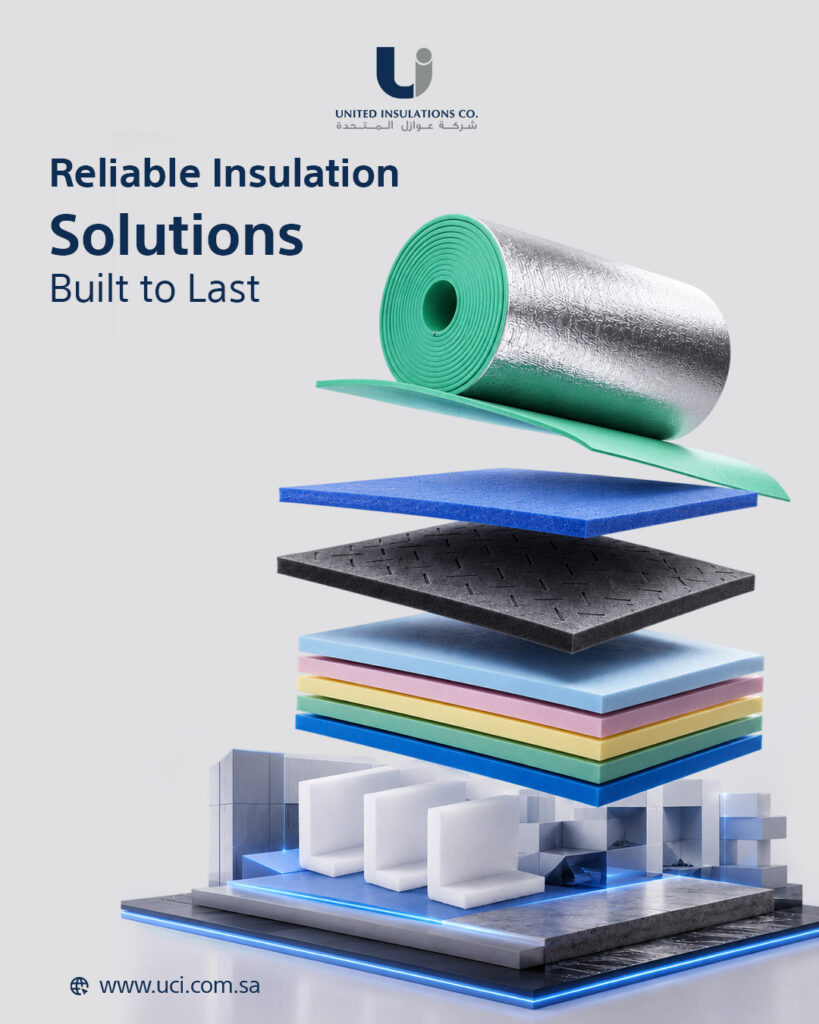
Foam panels for cold room insulation are among the most efficient solutions in modern industrial projects.
Foam panels have excellent thermal resistance, minimizing heat transfer.
They prevent moisture absorption that could reduce insulation performance over time.
They are lightweight and easy to install, reducing project execution time.
Foam outperforms traditional materials like mineral wool in efficiency and durability.
Foam panels directly reduce energy loss and improve system performance.
They prevent cold air leakage and maintain thermal balance.
They allow cooling systems to operate more efficiently with less strain.
Lower heat loss results in reduced electricity consumption.
Significant improvement in performance and long-term operational cost reduction.
Foam panels are widely used in critical industrial projects requiring cooling and insulation.
Essential for food and pharmaceutical storage.
Maintains product quality during storage and transportation.
Essential for maintaining safety and quality standards.
Demand is growing due to hot climate and expansion of food storage sector.
Choosing insulation depends on several critical operational factors.
Thickness determines insulation performance.
Density varies depending on storage type and required temperature.
Humidity and external temperatures must be considered.
Low-quality or incorrect thickness selection leads to system failure.
Foam is more efficient and less moisture absorbent.
Foam provides better insulation and higher durability.
It combines high performance with lower operational cost.
Good insulation reduces continuous cooling operation.
It reduces equipment stress and breakdowns.
It extends system efficiency lifespan.
Proper insulation delivers fast ROI through reduced operational costs.
United Insulation (UCI) provides advanced foam insulation solutions for warehouses according to global standards.
Locally manufactured with ISO 9001 standards.
Products designed for Saudi climate conditions.
Customized solutions for industrial and logistics projects.
Expert team providing tailored project consultation.
The best solution is foam panels due to high thermal resistance and suitability for hot climates.
Yes, they significantly reduce heat loss and cooling system load.
It depends on storage type, temperature requirements, and room size.
Yes, it is highly suitable for industrial warehouses requiring stable insulation.
It can last 15–25 years with proper installation and maintenance.
Because poor insulation leads to continuous operational losses.
Start with high-quality insulation panels to ensure long-term efficiency.
United Insulations Company (UCI) is a leading Saudi company specialized in manufacturing and supplying thermal and acoustic insulation solutions, as well as low-density foam products. The company is committed to the highest standards of quality and sustainability to support construction and industrial projects within the Kingdom and beyond.
Third Industrial City, P.O. Box: 22766 Jeddah-6838, Saudi Arabia
Sunday - Thursday 8AM : 5PM