Table of Contents
ToggleElectrical cables and equipment face major risks during transportation and storage, especially in large-scale projects that involve constant movement between warehouses and job sites. Corners and edges are the most vulnerable parts exposed to impact, scratches, and direct damage
That is why foam corners for cables have become one of the most trusted protective solutions used by electrical companies and contractors to reduce losses and improve delivery quality
Electrical equipment is often transported over long distances with repeated loading and unloading, increasing the risk of vibration and impact damage
Large projects also require temporary storage in warehouses or construction sites, which further increases the risk of damaged corners and cable edges
Electrical cables and transformers are among the most sensitive components in industrial and electrical projects. Even minor scratches or excessive pressure can affect performance and cause future failures
This is why companies rely on foam corner protection to provide shock absorption that keeps equipment safe during transportation
Damage to cables or equipment does not only mean losing the product itself, but can also lead to:
Electrical and contracting companies face repeated challenges when transporting heavy equipment and cables, especially when packaging solutions are inadequate
Cable ends are exposed to direct pressure during transportation, which can deform or damage the outer layer
Using foam corners for cables helps distribute impact and reduce friction.
Electrical equipment often includes coated metal structures that require protection from scratches during shipping and storage
Corners are the most exposed points because they absorb most direct impacts.
That is why industrial foam packaging is specifically designed to protect sensitive edges and corners
The issue becomes a real project loss when damage results in:
Corners absorb most impacts caused by drops or friction during transportation, making them the first area to suffer damage
When a product falls or experiences vibration, the force is transferred directly to the corners.
Traditional cardboard or plastic wrapping does not provide sufficient shock absorption
Meanwhile, foam corner protectors for equipment effectively safeguard edges due to their high flexibility
Any visible damage directly affects the customer’s impression and overall delivery quality.
Foam corners are protective pieces made from low-density polyethylene foam, installed on equipment and cable edges to protect them during transportation and storage
Polyethylene foam is lightweight, flexible, and highly effective at absorbing impact.
It is also resistant to moisture and environmental conditions.
Foam corners distribute pressure and reduce the effect of direct impacts on sensitive corners
| Hard Plastic | Cardboard | Foam Corners | Comparison |
|---|---|---|---|
| Moderate | Weak | Excellent | Shock Absorption |
| High | Low | High | Moisture Resistance |
| Yes | Limited | Yes | Reusability |
| Moderate | Moderate | Very High | Corner Protection |
Foam corners for cables are widely used in industrial and electrical applications to protect products during shipping
Foam corners help stabilize heavy cables and prevent friction during transportation.
Companies use foam protection for electrical transformers to reduce the risk of breakage and scratches during shipping
Foam corners can be installed on metal or wooden boxes to strengthen protection during transport
Electrical companies and contractors use foam corners in:
Large companies rely on industrial foam packaging because it directly reduces operational losses
Shock absorption minimizes the possibility of damaging cables or sensitive equipment.
The lower the damage rate, the fewer returns and customer complaints.
Professional packaging reflects the company’s quality and attention to detail.
Companies that use effective protective solutions maintain their reputation and gain greater customer trust
Choosing the wrong size or density can reduce protection efficiency.
The foam corner size must match the dimensions of the product or cable.
The heavier the product, the higher the density required for impact resistance.
Heavy equipment requires thicker foam compared to lightweight cables.
Common mistakes include:
Cardboard is cheaper but cannot withstand strong impacts or moisture.
Hard plastic may transfer impacts instead of absorbing them.
Because foam corner protection combines:
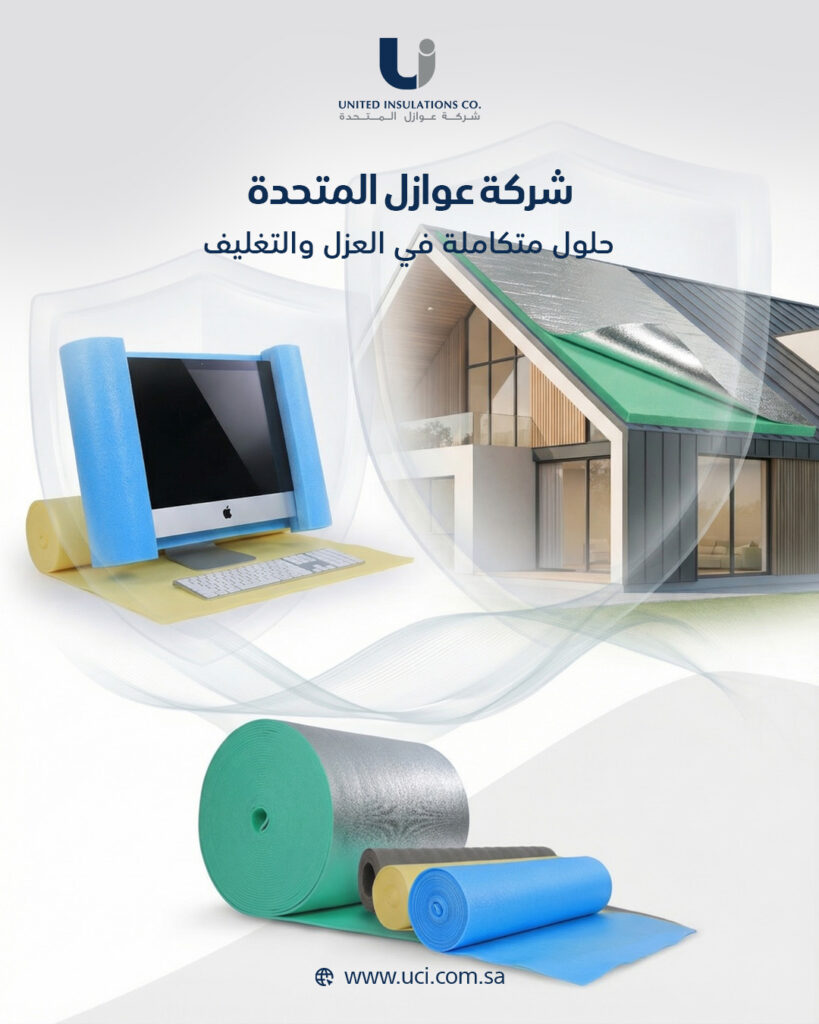
United Insulation Company (UCI) provides advanced solutions in foam corners for cables and industrial equipment protection
The company uses high-quality raw materials and precise manufacturing standards to ensure superior protection performance
United Insulation offers multiple options suitable for all types of cables and electrical equipment
The company supports infrastructure and industrial contracting projects with large-scale supply and consistent quality
United Insulation provides technical consultation to help clients choose the most suitable industrial packaging solutions
Yes, foam corners reduce impact and friction while protecting cable edges during transportation and storage
The ideal size depends on the product dimensions, weight, and shipping method.
Yes, when the correct density and thickness are selected, foam corners can effectively support heavy equipment
Absolutely, foam corners can be reused multiple times without losing effectiveness.
Yes, because they reduce damage and returns while improving delivery quality, directly impacting project costs and company reputation
In electrical and industrial projects, packaging is not just an extra step; it is a critical factor in preserving equipment quality and minimizing losses
That is why foam corners for cables have become an essential solution for companies seeking professional protection during transportation and storage
Because most impacts begin at the edges and corners, and any damage there can affect the entire product
Choose a trusted supplier that offers:
Yes, foam corners provide effective protection against impact and scratches during transportation and storage
Low-density polyethylene foam is an excellent choice due to its flexibility and superior shock absorption
It depends on the product weight, dimensions, and shipping method.
Yes, because foam provides better shock absorption and superior moisture resistance.
Absolutely, they reduce damage rates, returns, and maintain product quality during transportation
Yes, they are widely used with sensitive electrical and electronic equipment to reduce vibration and impact
Some polyethylene foam products are recyclable depending on manufacturing specifications and usage conditions
United Insulations Company (UCI) is a leading Saudi company specialized in manufacturing and supplying thermal and acoustic insulation solutions, as well as low-density foam products. The company is committed to the highest standards of quality and sustainability to support construction and industrial projects within the Kingdom and beyond.
Third Industrial City, P.O. Box: 22766 Jeddah-6838, Saudi Arabia
Sunday - Thursday 8AM : 5PM