When discussing thickness and density in parquet underlay, many contractors assume that greater thickness alone guarantees better performance.
In reality, true performance depends on precise technical specifications that balance both thickness and density.
A poor choice can lead to:
Costly maintenance issues
Thickness without strength leads to failure over time.
Density determines long-term resistance and stability.
Because thickness without density results in permanent compression.
Understanding thickness and density in parquet underlay requires separating the two concepts technically.
Thickness affects sound absorption, walking comfort, and minor surface leveling.
Density controls compression resistance, durability, and lifespan.
High-quality underlay recovers; poor density collapses.
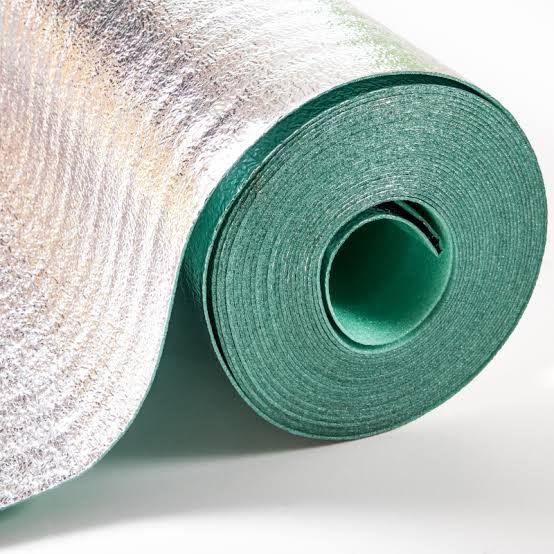
Proper thickness improves acoustic insulation.
Balanced thickness enhances comfort without instability.Proper thickness improves acoustic insulation.
Excess thickness with low density causes movement.Balanced thickness enhances comfort without instability.Proper thickness improves acoustic insulation.
When density cannot support the load.
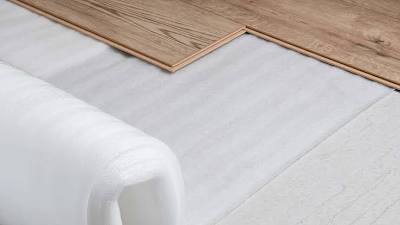
Higher density maintains performance under heavy use.
Correct density reduces maintenance and replacement costs.
Each requires different density levels.
Choose density based on usage, not price.
Medium thickness + balanced density.
Engineered thickness + higher density.
Precision balance for comfort and acoustics.
Over-thickness, ignoring usage, price-based decisions.
Look beyond thickness.
Testing reduces returns.
A professional supplier guides, not oversells.
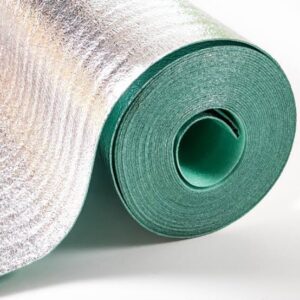
At United Insulation Company (UCI), we manufacture LDPE Foam Parquet Underlay engineered to precise thickness-density balances.
Suitable for residential, commercial, and hospitality projects.
We help define the right specification.
Correct specs mean successful projects.

Does greater thickness mean better performance?
Not always.
Ideal density for residential projects?
Balanced density for daily use.
How does density affect squeaking?
Proper density prevents voids.
Do specifications vary by parquet type?
Yes.
The biggest mistake in choosing thickness?
Ignoring density.
Can one underlay fit all projects?
No.
Because thickness and density in parquet underlay determine long-term success.
 Common Mistakes in Parquet Underlay Installation That Affect Floor Longevity
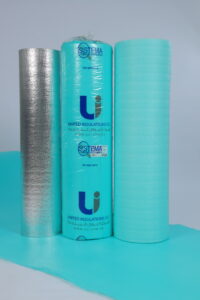 Parquet Underlay – The Hidden Factor That Defines the Quality of Modern Flooring Projects
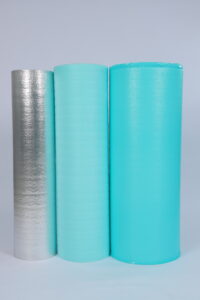 Parquet Underlay in Real Estate Projects – A Small Decision with a Big Return
 How Does an Engineer Choose the Right Parquet and Carpet Underlay for a Project?