The performance of a sports surface depends on more than the visible top layer. Artificial turf or the final flooring finish is only one part of a complete system. In many applications, a
Shock Pad plays an important role beneath the surface by providing impact absorption, improving underfoot comfort, and supporting the overall performance and consistency of the sports flooring system. However, there is no single Shock Pad specification that is automatically suitable for every project. A solution designed for an artificial turf field may differ from one required for another sports application. Usage intensity, expected loads, flooring construction, and project requirements should all be considered before selecting the appropriate solution. The more useful question is not simply,
“Do we need a Shock Pad?” Instead, project teams should ask:
“What Shock Pad thickness, properties, and configuration are appropriate for the flooring system and actual conditions of this project?” This guide from
United Insulations Company (UCI) explains what a
Shock Pad for sports flooring is, which performance challenges it helps address, what factors should be evaluated during selection, and which questions should be answered before procurement.
What Is a Shock Pad and Why Is It Important in Sports Flooring Systems?
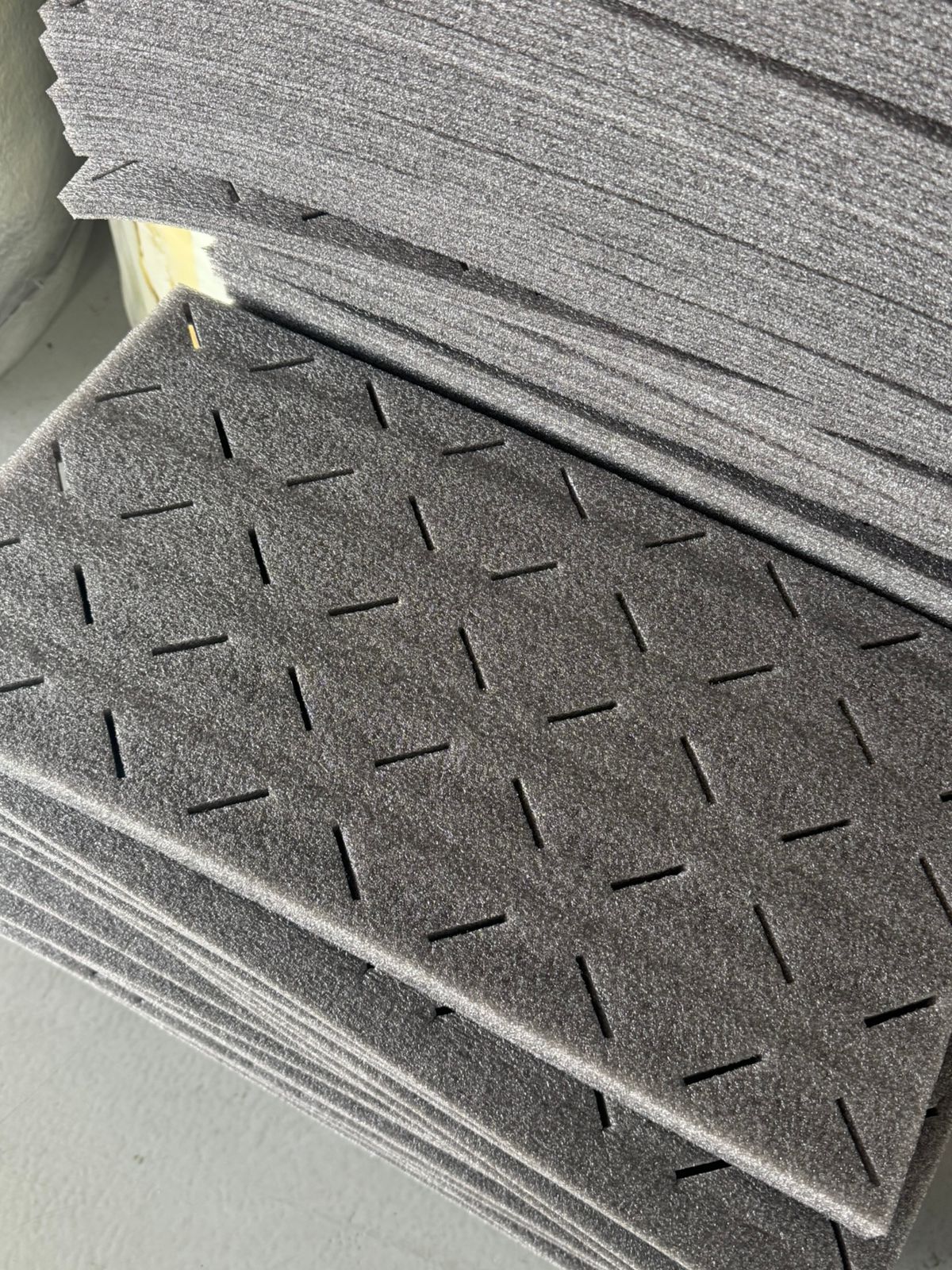
A
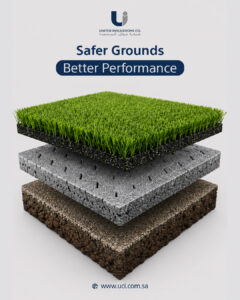
Shock Pad is a resilient impact-absorbing layer installed beneath selected sports flooring systems, particularly artificial turf, to help reduce impact forces, improve comfort, and support the overall performance of the flooring system. A sports surface does not operate as an isolated layer. Depending on the project design, the complete construction may include a structural base, leveling or drainage components, a Shock Pad, and finally the selected artificial turf or sports surface.
What Does an Impact-Absorbing Layer Do?
The primary function of a
Shock Pad is to introduce a resilient layer between the sports surface and the harder construction beneath it. This resilience helps manage part of the impact energy generated during running, jumping, landing, and falls. Depending on the flooring design and specified performance requirements, the layer can contribute to:
- Impact absorption and reduction of harsh impact response.
- Improved underfoot comfort during sports activities.
- More consistent performance across the playing area.
- An additional functional layer beneath artificial turf or other compatible sports surfaces.
- Support for targeted system performance when properly specified and evaluated as part of the complete flooring construction.
An important point is that a
Shock Pad should not be evaluated in isolation from the complete flooring system. Final performance depends on how the pad interacts with the surface, base construction, thickness, density, installation method, and project-specific requirements.
What Problems Does a Shock Pad Address in Sports Flooring?
A
Shock Pad helps address one of the key challenges in sports flooring design:
balancing the stability required from the playing surface with the resilience needed to manage impacts and athletic movement. An excessively hard flooring construction can transmit more impact, while a properly selected resilient layer can help improve the system’s response underfoot.
1. Managing Impact During Sports Movement
Running, sudden stops, jumping, landing, and rapid changes of direction all generate forces between the athlete and the playing surface. A
Shock Pad forms part of the flooring system that helps manage these impacts. This becomes particularly relevant for sports facilities exposed to frequent activity or high levels of use.
2. Improving Underfoot Comfort
Comfort in
sports flooring is not determined by surface softness alone. It also depends on how the entire flooring system responds to movement and pressure. A suitable impact-absorbing layer can provide a more resilient response compared with installing a surface directly over a harder base, depending on the flooring system.
3. Supporting Consistent Surface Performance
For sports fields, good performance in one area is not enough. The objective is to achieve consistent behavior across the usable playing surface. When the correct Shock Pad is installed properly, it becomes part of a system designed to provide more consistent performance across the field, while base quality, installation, and other flooring components remain equally important.
4. Supporting the Overall Sports Flooring Design
A common mistake is treating
sports flooring underlayers or protective layers as secondary additions that can be selected at the end of the project. A better approach is to define the function of every layer during the design stage. If the project requires specific impact absorption, comfort, or performance characteristics, these requirements should guide the selection of both the Shock Pad and the final sports surface.
Key Factors When Choosing the Right Shock Pad for Sports Flooring
Choosing the right Shock Pad depends on the actual application, sports surface, expected loads, thickness and density, and required system performance—not simply on price or thickness alone. Before procurement, project teams should prepare a clear list of requirements and discuss them with the supplier or manufacturer.
Type of Sports Activity
The type of sport is the starting point because movement patterns and surface demands vary between activities.
Artificial Turf Fields
In artificial turf systems, a
Shock Pad can be installed beneath the turf according to the project design, helping provide the required level of resilience and impact absorption. However, selection should not be based simply on a product being described as “suitable for artificial turf.” The turf specification, base construction, sports application, and technical performance requirements should all be reviewed.
Indoor Sports and Training Areas
Indoor sports and training areas vary considerably depending on the activity and flooring type. Some systems require specific resilient underlayers, while others use entirely different constructions. For this reason, a Shock Pad designed for artificial turf should not automatically be assumed to suit every indoor sports flooring application.
Expected Loads and Usage Intensity
The second major consideration is
how intensively the sports surface will be used. A field used for only a few hours each week faces different demands from a sports or training facility operating every day with a high number of users. Consider:
- Daily operating hours.
- Expected number of users.
- Type and intensity of movement.
- Additional equipment or loads.
- Whether the facility is dedicated to sports or hosts multiple activities.
- Whether usage is light, moderate, or intensive.
The more demanding the operating conditions, the more important it becomes to evaluate whether the flooring system can maintain its functional characteristics throughout its intended service period.
Shock Pad Thickness
Thickness is one of the first specifications buyers compare, but it is
not the only factor that determines performance.
United Insulations Company (UCI) offers high-density polyethylene foam Shock Pad options in
10 mm, 15 mm, and 20 mm thicknesses, providing different choices according to project requirements and the selected flooring system.
Does a Thicker Shock Pad Always Mean Better Performance?
No. A thicker Shock Pad does not automatically mean it is the better solution for a particular project. Performance depends on several interconnected factors, including thickness, density, material properties, surface type, installation, and system requirements. For this reason, comparing a
10 mm,
15 mm, or
20 mm solution should be done within the context of the complete system rather than by thickness alone.
Material Density and Properties
Along with thickness,
density is an important factor influencing how foam behaves under load. However, density alone should not be used as a universal measure of Shock Pad quality. Two products with similar thickness can behave differently because of their material properties, compression response, and interaction with the overall flooring system.
A Useful Rule When Comparing Options
Do not compare products only like this:
20 mm is better than 15 mm because it is thicker. Instead, compare them based on:
Material type + thickness + density + performance characteristics + surface compatibility + project requirements. How Do You Choose Between 10 mm, 15 mm, and 20 mm?
There is no single thickness that can be considered the best option for every sports field. The appropriate thickness should be selected after reviewing the complete sports flooring system. The table above is not an engineering recommendation assigning a specific thickness to a specific sports field. Instead, it illustrates the correct selection principle:
technical requirements should determine thickness—not the assumption that thicker is always better. Shock Pad Compatibility with Different Flooring Systems
Compatibility between the Shock Pad and the final sports surface is essential to successful system performance. A well-made pad may still be unsuitable if it does not integrate correctly with the other flooring components.
Shock Pad Under Artificial Turf
Artificial turf is one of the main applications for
Shock Pads. The pad is installed beneath the turf system according to the approved project design. When selecting a Shock Pad for artificial turf, check:
- Artificial turf type and specification.
- Intended sports application.
- Base construction beneath the system.
- Required thickness and density.
- Impact absorption and performance requirements.
- Installation and operating conditions.
- Consultant or project specification requirements.
What About Other Sports Flooring Types?
Not every sports flooring system requires the same type of underlayer. Product compatibility should therefore be confirmed before using a Shock Pad beneath a different surface. For multi-purpose halls, training areas, or specialized sports applications, it is advisable to provide the supplier with the flooring details and technical requirements before approving the product.
Shock Pad vs. Installing the Surface Directly on the Base
The decision depends on the flooring design and required performance. Installing turf or another sports surface directly over a hard base may form part of certain systems, while other systems require or benefit from an
impact-absorbing layer beneath the surface. A Shock Pad can provide a dedicated functional layer that helps manage resilience and impact absorption within the flooring construction. The final decision should always be based on project requirements and technical specifications rather than a universal rule applied to every installation.
7 Factors to Compare Before Buying a Shock Pad
If you are comparing multiple products or suppliers, price should not be the only item on your evaluation sheet. Compare the available options based on the following factors:
- Material: What is the Shock Pad made from?
- Thickness: Is it compatible with the flooring design?
- Density: How is the material expected to behave under the intended conditions?
- Compatibility: Is it suitable for the specified turf or flooring system?
- Required performance: What impact absorption and resilience characteristics are required?
- Manufacturing quality: Is the product manufactured under a defined quality management system?
- Technical support: Can the supplier help evaluate the product against the actual project requirements?
This approach gives project and procurement teams a much clearer basis for decision-making than simply comparing price per square meter.
Important Questions to Ask Before Shock Pad Procurement
Before placing an order or issuing a purchase order, collect the essential project information.
What Type of Sports Facility Is It?
Specify whether the project is an artificial turf field, training facility, indoor hall, or another sports application. This helps the supplier understand the actual operating environment instead of recommending a product based solely on thickness.
What Is the Final Sports Surface?
Provide the specification of the artificial turf or flooring that will be installed above the Shock Pad. The more accurate the information, the easier it becomes to assess compatibility.
What Is the Expected Usage Level?
Indicate whether usage will be occasional, daily, or intensive, and whether the facility is dedicated to one sport or used for multiple activities.
Are There Technical or Consultant Requirements?
Professional projects may include defined requirements within the technical specifications. Share these requirements with the supplier before approving the product, thickness, or density.
What Is the Project Area and Required Quantity?
Knowing the total area supports quantity planning, procurement, and installation preparation.
Common Shock Pad Selection Mistakes and How to Avoid Them
Mistake 1: Selecting Based on Price Alone
The lowest price does not necessarily mean the lowest overall project cost, and the highest price does not automatically guarantee the best performance.
Solution: Compare specifications, compatibility, quality, and price together.
Mistake 2: Automatically Choosing the Thickest Option
Assuming that
20 mm is always better than 15 mm or 10 mm is an oversimplification.
Solution: Select thickness according to system design and performance requirements.
Mistake 3: Ignoring the Turf or Flooring Specification
A Shock Pad works as part of a system, so its compatibility with the final surface must be confirmed.
Solution: Provide the surface specification to the supplier before product approval.
Mistake 4: Failing to Explain Actual Usage
Simply saying “we need a Shock Pad for a sports field” does not provide enough information for a well-informed recommendation.
Solution: Specify the sport, surface type, area, usage intensity, and technical requirements.
Mistake 5: Evaluating the Pad in Isolation
A product may have suitable individual properties, but final flooring performance depends on all system components and installation quality.
Solution: Evaluate the Shock Pad as part of the
complete sports flooring system.
Practical Example: How to Compare Shock Pad Options for a Sports Field
Suppose you are working on an artificial turf sports field and need to compare several Shock Pad options. Instead of sending a request that simply says:
“Please send us your Shock Pad price.” Make the request more specific by including:
- Project and sport type.
- Field area.
- Artificial turf specification.
- Base construction.
- Required thickness, if already specified.
- Technical performance requirements.
- Consultant specifications, if applicable.
- Project location.
- Expected procurement schedule.
This gives the supplier enough information to assess the application more effectively and allows the project team to compare quotations on both a
technical and commercial basis, rather than price alone.
Why Does Shock Pad Manufacturing Quality Matter?
Because a Shock Pad becomes part of a flooring system expected to provide consistent performance,
manufacturing consistency and specification control are important considerations when evaluating a supplier. Uncontrolled variations in thickness or material characteristics can affect product consistency. Quality should therefore be treated as part of the purchasing decision rather than a secondary consideration.
UCI Shock Pad Solutions
United Insulations Company (UCI) provides
high-density polyethylene (HD PE) foam Shock Pad solutions for use beneath artificial turf, available in
10 mm, 15 mm, and 20 mm thicknesses, offering multiple options that can be evaluated according to project and flooring-system requirements. These solutions build on UCI’s experience in manufacturing foam products and insulation, protection, and packaging solutions, with a focus on material quality and manufacturing consistency.
United Insulations Company also operates under an
ISO 9001-certified quality management system, supporting structured process control and continuous improvement across manufacturing operations. For project teams, contractors, and procurement professionals, the most important step is to share the application details before product selection so that available options can be evaluated against the project’s actual requirements.
How to Make a Better Purchasing Decision
If you are currently comparing suppliers, follow one simple principle:
do not buy thickness alone; buy a solution that fits the system. Start by defining the project requirements, compare the technical specifications, and then evaluate technical documentation and commercial pricing.
Quick Pre-Approval Checklist
Before approving a Shock Pad, confirm the following:
- Sports activity is defined.
- Turf or flooring type is specified.
- Base construction is known.
- Usage intensity has been identified.
- Required thickness has been evaluated.
- Density and material properties have been reviewed.
- Performance requirements are clear.
- Compatibility with the flooring system has been checked.
- Technical product information is available.
- Quantity, area, and procurement schedule are defined.
If some of this information is missing, it is better to obtain it before making the final procurement decision.
Conclusion: The Best Shock Pad Is the Right Fit for the System, Not Simply the Thickest
A
Shock Pad is an important component in many
sports flooring and artificial turf systems, providing a resilient layer that helps absorb impacts, improve comfort, and support the functional performance of the flooring construction. However, proper selection should never be based on a single parameter.
Sport type, flooring system, thickness, density, loads, usage intensity, and performance requirements should be considered together. For this reason, the procurement question should not simply be:
“How much does a 20 mm Shock Pad cost?” A better question is:
“Which Shock Pad specification is best suited to this sports field, flooring system, and performance requirement?” Starting with this question makes product and supplier comparisons more meaningful and reduces the risk of selecting a solution that does not match the project requirements.
Planning a Sports Field or Sports Facility?
Send UCI your sports field or facility type and flooring specifications to receive an initial recommendation for a suitable Shock Pad solution. You can also explore the
Shock Pad solution, browse other
products, review available
catalogues, or
contact us to discuss your project requirements.
What Does a Shock Pad Do?
A Shock Pad is a resilient layer installed beneath selected sports flooring systems to help absorb impacts, improve comfort, and support overall system performance. It is commonly used beneath artificial turf systems where specified by the project design.
Is a Shock Pad Suitable for Every Type of Sports Field?
Not necessarily. Suitability depends on the
sport, surface type, flooring construction, and required performance. Compatibility should be confirmed before procurement or installation.
How Do Shock Pad Thickness and Density Differ?
Thickness, density, and material properties collectively influence how the foam layer responds to loads and impacts. A product should therefore not be selected based on thickness or density alone.
Is a 20 mm Shock Pad Better Than a 10 mm Shock Pad?
Not necessarily. The correct thickness is the one that matches the flooring design, project requirements, and targeted performance. A thicker pad does not automatically perform better in every application.
Where Is a Shock Pad Installed?
A Shock Pad is installed
beneath the compatible sports surface, such as selected artificial turf systems, and above the underlying base layers according to the project design.
What Information Is Needed to Select the Right Shock Pad?
Ideally, provide the
sport type, surface specification, project area, base construction, usage intensity, required performance, and specified thickness if already defined in the project documents.
Does a Shock Pad Help Absorb Impact?
Yes.
Impact absorption is one of the primary functions of a Shock Pad within sports flooring systems designed to use one. Final performance, however, depends on the pad properties and its interaction with the complete flooring system.
Can a Shock Pad Be Selected Based on Price Alone?
It is not recommended. A better purchasing decision considers
material, thickness, density, compatibility, performance requirements, manufacturing quality, technical support, and price.
What UCI Shock Pad Thicknesses Are Available?
UCI Shock Pad solutions are available in
10 mm, 15 mm, and 20 mm thicknesses, with the appropriate option selected according to the project requirements and flooring system.
Why Should a Shock Pad Be Evaluated as Part of the Complete Flooring System?
Because sports flooring performance is not determined by a single layer. It depends on the interaction between the
base, Shock Pad, sports surface, system materials, and installation method.
United Insulations Company (UCI) is a Saudi manufacturer specializing in insulation and foam products, providing polyethylene-based solutions for construction, industrial, packaging, and project applications. The company is committed to reliable product quality, local industrial development, and supporting the objectives of
Saudi Vision 2030 through local manufacturing and solutions designed to serve diverse projects and markets. UCI’s product portfolio includes
thermal insulation solutions, polyethylene foam products, protection and packaging materials, and Shock Pad solutions for artificial turf, among other specialized products.
For sports projects: Send the field or facility type, area, surface specification, and technical requirements to receive an initial recommendation for a suitable solution.

 Shock Resistant Sports Flooring – How to Choose the Right Pad?
 Artificial Grass & Shock Pad – The Complete Solution for Sports Fields & Landscaping
 How to Choose the Right Shock Pad for Playgrounds and Sports Fields? A Professional Project Guide
 Why Has Shock Pad Become a Key Standard in Modern Sports Fields Design?