Table of Contents
TogglePadel has experienced remarkable growth across Saudi Arabia in recent years. New courts are now being developed in sports clubs, residential communities, hotels, resorts, and recreational destinations. As the number of players and daily matches increases, court quality is no longer determined only by appearance or the type of artificial turf. What lies beneath the playing surface has become an essential part of the overall playing experience.
For contractors and investors planning a new court, selecting the right Shock Pad for padel courts should not be treated as a minor detail. The shock-absorbing layer can influence player comfort, underfoot feel, load distribution, and the long-term performance of the complete flooring system.
Padel courts are no longer limited to dedicated sports clubs. Today, they can be found in private commercial projects, hotels, resorts, residential developments, and community facilities. This expansion has increased competition between venues, making court quality an important factor in player satisfaction and repeat visits.
When dozens of players use a court every day, the flooring system is exposed to repeated loads, rapid movements, jumps, and sudden stops. For this reason, the court should be viewed as a complete flooring system that starts with the base and ends with the visible playing surface—not simply as a layer of turf or a finished top surface.
Flooring quality directly influences how players feel while moving. A well-designed system helps create a balance between stability and comfort, while poorly selected layers may result in an excessively hard surface or a system that does not perform appropriately for its intended level of use.
For this reason, the selection of impact-absorbing foam for sports courts should begin during the project design stage rather than after the base has already been completed and the turf installation is about to begin.
Padel and tennis involve frequent, fast movements in multiple directions. A player may sprint forward, stop suddenly, move sideways, jump, and land within just a few seconds. All of these movements create repeated forces between the player’s body and the court surface.
Jumping, landing, and sudden stopping are fundamental movements in court sports. As these movements are repeated, the underfoot feel of the surface and its ability to manage part of the impact force become increasingly important to the playing experience.
This does not mean that a Shock Pad can prevent every injury or replace proper training and appropriate sports footwear. However, it can form part of a court design that places greater emphasis on player comfort and the management of repeated impacts.
Players who use a court regularly are exposed to repeated movement and loading. When the surface is excessively hard or the flooring system is poorly designed, extended playing sessions may become less comfortable, particularly for frequent and competitive players.
It is important to distinguish medical claims from engineering performance. A Shock Pad should not be presented as a medical treatment. Instead, it is an engineered layer designed to help manage part of the impact generated by movement and landing as part of a complete sports flooring system.
A hard surface generally transfers a greater proportion of impact force directly through the flooring system. A system that includes an appropriate shock-absorbing layer may help moderate part of the impact sensation, depending on the design, material density, thickness, and the type of final playing surface.
In simple terms:
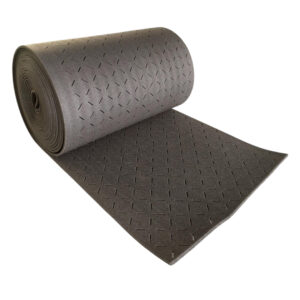
A Shock Pad functions as an intermediate layer between the structural base and the final playing surface in certain sports flooring systems. Its main purpose is to introduce controlled resilience into the system, so player movement is not influenced solely by the hardness of the underlying base.
When a player runs or lands after a jump, the flooring system experiences an instantaneous load. The resilient properties of the material can help manage part of that load according to its design and specifications, after which the material recovers to varying degrees depending on the foam type and density.
The objective is not to make the court excessively soft, as too much flexibility can affect stability. The goal is to achieve an appropriate engineering balance between resilient response and the stability required for athletic movement.
A properly designed underlay may help distribute certain loads through the flooring system rather than concentrating the perceived pressure in a single location. The actual result will vary according to the material, flooring design, and installation method.
For this reason, a Shock Pad for padel courts should be selected as part of the project’s complete specification—not based on price or thickness alone.
Depending on the system design, a resilient layer may also help reduce part of the vibration transmitted from player movement to the underlying layers. This can be particularly relevant in certain multi-use projects or locations where a more balanced and comfortable flooring system is required.
The key benefits of shock absorption for padel courts relate to improving the comfort and underfoot response of the complete flooring system. These benefits become increasingly important in courts that experience frequent use or aim to provide a more professional playing experience.
A flooring system with appropriate shock-absorbing properties may help reduce the harsh underfoot feel experienced during repeated use compared with certain harder systems. Actual performance depends on the complete court design rather than the Shock Pad alone.
It is important to avoid absolute claims such as “prevents knee injuries.” A more accurate engineering description is that a shock-absorbing layer may help improve impact management and underfoot comfort as part of an appropriately designed flooring system.
Stability does not come from hardness alone. A well-designed system requires compatibility between its different layers so that the underlay does not move undesirably and does not become so flexible that it negatively affects player response.
For this reason, the relationship between the following components should be considered:
In commercial venues and sports clubs, the customer experience is not limited to the first ten minutes of play. Comfort during an extended match can influence the overall perception of court quality, especially among customers who play regularly.
This is where padel court flooring becomes more than a construction element—it becomes part of the customer experience and the value offered by the facility.
Not every foam product is suitable for installation beneath sports flooring. The material should be selected according to its technical characteristics and compatibility with the project, as using a product not designed for the intended application may lead to inconsistent performance or a shorter service life.
Density and resilience are among the most important characteristics to evaluate. A product that is too soft may not provide the desired stability, while a product that is too rigid may fail to deliver the intended shock-management benefits.
The optimal selection depends on supplier specifications, system design, and the intended use, whether the project involves:
Climate is an important consideration for sports court projects in Saudi Arabia. The suitability of the material for expected environmental conditions should be evaluated, particularly for outdoor installations exposed to high temperatures and seasonal climate variations.
A product being effective in one environment does not automatically mean it is suitable for another. Its specifications and installation method should be assessed in relation to the project’s actual operating conditions.
Commercial courts may operate for long hours every day. Therefore, the underlying layer should be capable of supporting repeated use within the limits of its product specifications. Material quality and correct installation work together to maintain system performance over time.
A Shock Pad should not be selected independently of the final playing surface. Compatibility between artificial turf and the Shock Pad, or any other synthetic flooring system, should form part of the supplier’s and contractor’s technical assessment.
Correct installation is just as important as product quality. Even a high-quality sports impact absorption foam may fail to perform as intended if it is installed over an uneven base or using a method incompatible with the flooring system.
The base should first be inspected and prepared according to the flooring project’s requirements. This stage typically involves checking surface evenness, cleanliness, drainage, and addressing defects that could affect the installation of subsequent layers.
Before installation, make sure that:
Shock Pad sections should be installed consistently across the playing area, with careful attention to joints and edges. Unmanaged overlaps or gaps should be avoided, as small installation details can affect the uniformity of the final playing surface.
Once the underlying layer has been prepared, the final flooring system is installed according to the court type and approved specifications, such as artificial turf or other sports surface systems. The recommended fixing method should be followed for all selected components.
Some mistakes may appear minor during construction, yet they can affect project costs and court performance later.
Price is an important consideration, but it is not enough to make a technical decision. Selecting a lower-cost product without reviewing its characteristics may result in poor compatibility with the intended use or flooring system.
The solution: Request technical specifications and discuss the actual requirements of your project before purchasing.
Thickness alone does not determine performance quality. Density, resilience, material properties, and the final playing surface must all be evaluated.
The solution: Select the system based on complete technical requirements rather than thickness alone.
A resilient layer cannot solve every structural problem in the base. If the base is uneven or has drainage issues, those problems may eventually affect the complete flooring system.
The solution: Resolve base-related issues before installing any layer above it.
A material may be of good quality in itself but still be unsuitable for the turf or fixing method used in the project.
The solution: Review compatibility between all layers of the system before procurement and installation.
Shock Pad systems for tennis and padel courts can be used across a wide range of projects. However, the appropriate specifications may vary from one project to another, making it important to define the intended use before approving a product.
Private clubs require systems capable of supporting frequent use while delivering a comfortable player experience. Flooring quality can also become part of the club’s commercial reputation, particularly in a competitive market where player satisfaction matters.
In hotels and resorts, court quality is connected to the overall guest experience. The objective is therefore not purely athletic—it also includes appearance, comfort, reliability, and the ability to integrate the court effectively into the wider property.
Sports courts can add value to residential developments and multi-use projects. The selection of protective underlay systems for multi-purpose courts should reflect the expected number of users and level of activity.
Schools and educational facilities need to consider usage intensity, age groups, and how the court will be managed. Such projects may require different solutions from those used in professional sports clubs.
United Insulation Company (UCI) provides foam-based solutions that can be incorporated into multi-purpose flooring systems according to project requirements and approved technical specifications. This includes assessing projects that require protective or shock-management layers beneath selected types of sports surfaces.
The appropriate thickness and specifications should be determined according to the nature of the project rather than assuming that every court requires the same solution. A high-traffic commercial court may have different needs from a recreational court within a resort or residential development.
Project assessment can help identify factors such as:
Successful projects require coordination between the contractor, supplier, and flooring system being used. Technical support can therefore help installation teams understand product specifications and how the material should be incorporated into the approved system.
Large-scale projects require a supplier capable of understanding procurement, quality, and continuity requirements. When selecting a solution for a major project, required quantities, delivery schedules, and technical specifications should be discussed before final procurement approval.
If you are searching for a Shock Pad for a padel court, do not begin by asking only about the price. Start by understanding your project.
Once this information is defined, comparing available options becomes more accurate. It also becomes easier to select a product suited to the project instead of purchasing a generic solution that may not deliver the intended performance.
In many projects, a Shock Pad does not function as an isolated product. Instead, it forms part of a complete system. For this reason, it can be connected with other products and solutions depending on the application.
Learn more through the Shock Pad page about impact-management underlays and available solution specifications for sports flooring projects.
In certain sports and recreational spaces, Foam Puzzle Mat systems can offer a different type of resilient flooring solution, particularly where modular sections and easy installation or replacement are required.
Compatibility between artificial turf and Shock Pad is an important consideration in the design of certain sports courts. The underlying layer should therefore be selected according to turf characteristics, fixing methods, and expected usage requirements.
A Protection Board may be used in applications requiring additional protective layers within the project system, depending on the flooring type, intended use, and approved specifications.
The turf may be the first thing a player notices, but the quality of a padel court does not begin with the visible surface alone. The layers beneath the playing area can influence system stability, comfort, responsiveness, and long-term performance under use.
Choosing a Shock Pad for padel courts should be a technical decision connected to the complete project design. The right product, with specifications and thickness appropriate for the intended use, can add meaningful value to the overall sports flooring system.
Whether you are a sports court contractor, a club investor, or developing a hotel, resort, or residential project, starting with an assessment of the underlying layers can help you make a more informed decision before installation begins.
Contact United Insulation Company to discuss your padel or tennis court project, request technical guidance for your flooring system, or obtain a quotation for Shock Pad supply based on your project’s requirements.
Shock Pad is not a universal requirement for every padel court. Its suitability depends on the flooring design, project requirements, playing surface, and expected level of use. In some systems, a shock-absorbing layer is an important part of the intended specification for improving underfoot comfort and surface response.
Shock Pad can help manage part of the impact generated by running, jumping, and landing, depending on the material properties and overall system design. However, it does not guarantee injury prevention and does not replace appropriate footwear, proper training, or other factors related to player health.
This depends on the specific product, its technical characteristics, installation quality, and actual usage intensity. The product should be selected according to expected traffic levels and supplier technical data rather than assuming that all foam materials are suitable for intensive commercial use.
Products designed for appropriate outdoor applications may be used in external projects, but the material characteristics, site conditions, and installation system should be evaluated carefully. Heat, moisture, and other environmental factors should form part of the product selection process.
System requirements may differ depending on the playing surface, movement characteristics, and technical specifications of the project. In some cases, the same material may be suitable for multiple sports, while other projects may require different properties or system designs.
Not necessarily. Thickness is only one factor. Density, resilience, material type, and the design of the complete flooring system also influence performance. The right approach is to select specifications that suit the project rather than relying on thickness alone.
No. The base must be suitable for the flooring system in terms of evenness, overall condition, and installation requirements. A Shock Pad is not a solution for concealing all structural defects in the underlying base.
Contractors can contact the United Insulation team to discuss project requirements, appropriate product specifications, and how the selected solution can be integrated into the flooring system according to the needs of the application.
For a more accurate quotation, prepare key project details such as the court type, required area, project location, playing surface type, and intended use. This information helps assess your needs and identify a suitable solution.
Discuss your project requirements, expected usage, and planned flooring system with our team before selecting a product.
United Insulations Company (UCI) is a leading Saudi company specialized in manufacturing and supplying thermal and acoustic insulation solutions, as well as low-density foam products. The company is committed to the highest standards of quality and sustainability to support construction and industrial projects within the Kingdom and beyond.
Third Industrial City, P.O. Box: 22766 Jeddah-6838, Saudi Arabia
Sunday - Thursday 8AM : 5PM