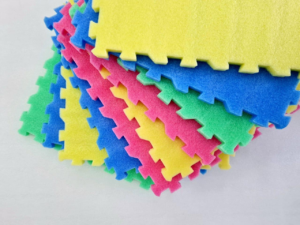
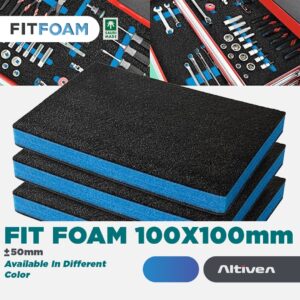
Polyethylene foam is a versatile material that combines lightweight construction, flexibility, cushioning, and insulation properties, making it suitable for a wide range of industrial, construction, and commercial applications. Its performance varies according to its formulation, density, thickness, and manufacturing process, which makes selecting the right foam specification an important part of achieving the desired result. In construction, polyethylene foam products can be used in applications such as flooring underlay, carpet and parquet underlay, protective layers, and selected thermal and acoustic insulation applications. In packaging, foam is used to protect products against scratches, impact, and vibration during transportation and storage. United Insulations Company (UCI) offers a range of low-density polyethylene (LDPE) foam solutions for flooring, packaging, protection, and other applications, with product specifications selected according to the intended use and project requirements. 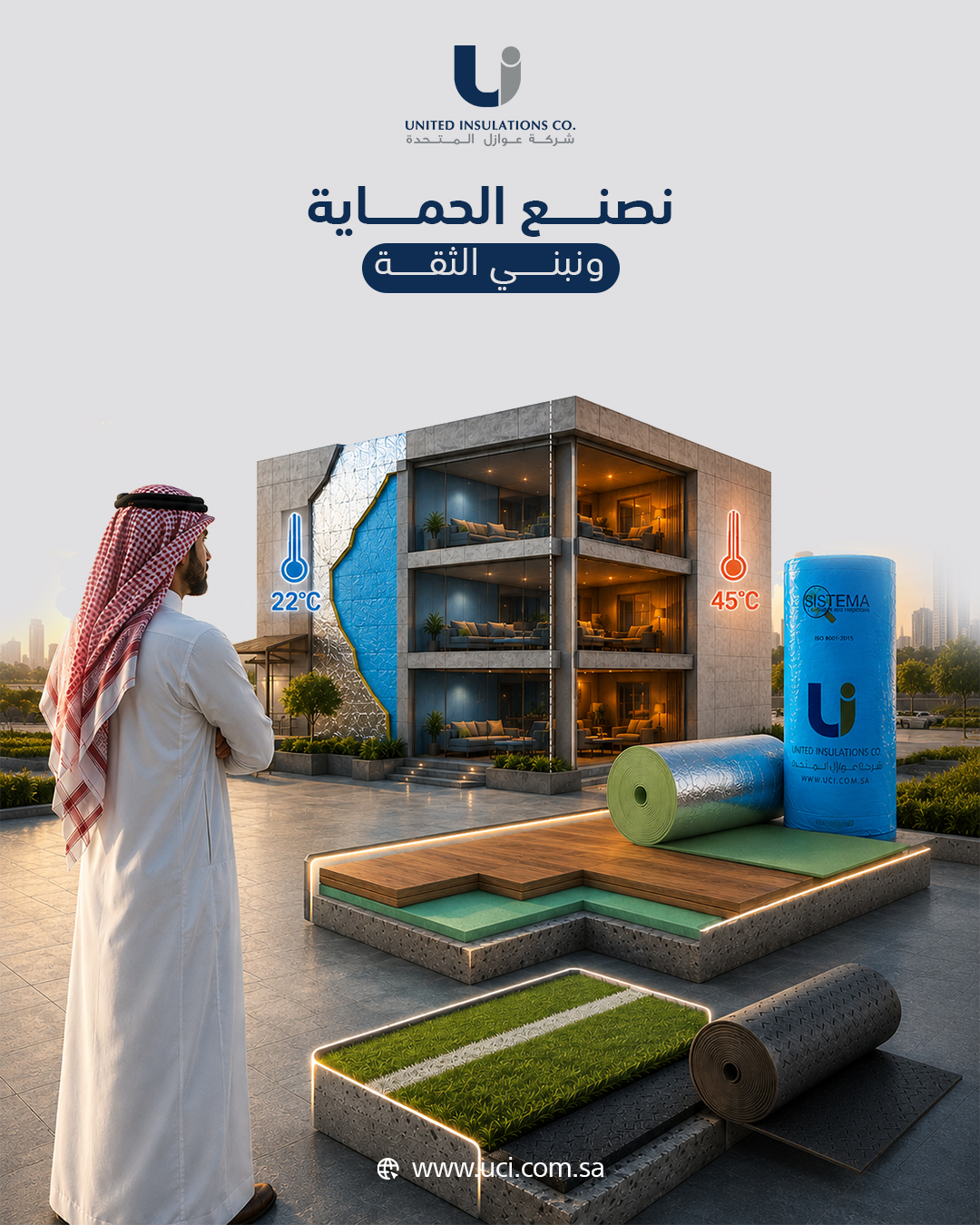 Foam products are not limited to packaging and flooring. Certain foam sheets and protective boards can be used in construction applications where insulation layers or surfaces need protection from impact, pressure, and moisture. UCI offers a Protection Board made from polyethylene foam for protecting waterproofing and thermal insulation layers in selected construction applications, including foundations and projects where insulation needs protection during construction. The published technical data for this product includes multiple thickness options as well as parameters such as density, thermal conductivity, compression performance, water absorption, and elongation, highlighting the importance of selecting the product according to specific engineering requirements.
What Is Polyethylene Foam?
Polyethylene foam is a cellular foam material made from polyethylene polymer. Its cellular structure gives it a combination of low weight, flexibility, and cushioning performance. The final properties of the foam depend on factors such as the polyethylene type, manufacturing process, density, thickness, and product design. The term LDPE Foam refers to foam made from low-density polyethylene. This type of foam is suitable for many applications that require a lightweight, flexible, and easy-to-handle material, particularly in packaging and selected insulation and protection applications. One of the main reasons for the widespread use of polyethylene foam is its ability to perform multiple functions within a product or project. Depending on its specification, it can serve as a protective layer, flooring underlay, a material that helps reduce heat and sound transmission, or a cushioning layer that reduces the effects of impact and vibration. UCI offers a range of polyethylene foam products, including carpet underlay, parquet underlay, packing sheets, foam bags, foam rolls, and protective boards, demonstrating how the material can be adapted across flooring, packaging, and construction-related applications.How Does the Cellular Structure of Polyethylene Foam Work?
The cellular structure of foam has a direct impact on its performance. The cells within the material help reduce weight and provide a degree of flexibility and compressibility, while cell structure, thickness, and density influence the level of insulation and protection that can be achieved. In packaging applications, this structure helps absorb part of the energy generated by impact and vibration instead of transferring it directly to the product. This is why protective foam is used for packaging electronics, glass, ceramics, furniture, and other sensitive products. In flooring applications, foam can act as an intermediate underlay beneath the finished floor. Depending on the product design and installation system, it can improve underfoot comfort and help reduce certain forms of sound and vibration transmission while providing an additional protective layer.Key Technical Properties of Polyethylene Foam
The exact technical properties vary from one polyethylene foam product to another. Therefore, a foam should not be evaluated based on its material name alone. Key factors include density, thickness, thermal conductivity, water absorption, compression performance, elongation, and recovery after compression, depending on the application. Technical data published for some UCI products, such as carpet underlay and foam bags, includes parameters such as density, thermal conductivity, compression recovery, water absorption, and elongation, highlighting the importance of reviewing product-specific technical data before selection.Lightweight Construction and Flexibility
One of the main advantages of polyethylene foam is its lightweight construction compared with many rigid protective and insulation materials. This makes it easier to handle, transport, cut, and install in many applications, particularly when large areas need to be covered without adding significant weight. Its flexibility also allows foam to conform to certain shapes and surfaces. Depending on the application, foam can be supplied as sheets, rolls, bags, or customized components. This is where selecting the appropriate thickness becomes important. Greater thickness does not automatically mean better performance for every application. Some packaging applications may require a thin and flexible layer, while certain protection or insulation applications may require greater thickness.Moisture Resistance and Impact Absorption
Many polyethylene foam products with suitable cellular structures provide good resistance to moisture and water compared with materials that readily absorb water. However, moisture resistance should not automatically be interpreted as a complete waterproofing system. Final performance depends on the specific product, installation method, and operating conditions. This property is particularly useful in flooring and packaging applications, where foam can help reduce moisture exposure to the product or layer it protects. UCI, for example, lists moisture-related resistance among the characteristics of products such as carpet underlay and foam bags. Impact absorption is related to the foam’s ability to compress and absorb part of the energy generated by pressure or impact. This makes protective foam useful for applications where the risk of scratches, impact, or vibration during shipping and storage needs to be reduced.Thermal Insulation and Heat Transfer Reduction
Polyethylene foam can be used in thermal insulation applications because of its cellular structure, which can help reduce heat transfer. Actual thermal performance depends on thermal conductivity, thickness, installation conditions, and the surrounding environment. Some UCI products publish thermal conductivity data, allowing engineers and buyers to evaluate the material against project requirements rather than relying solely on general product descriptions.Ease of Cutting, Shaping, and Installation
A practical advantage of foam is its ability to be converted into different shapes according to the application. It can be cut or shaped to required dimensions in many applications, helping manufacturers, contractors, and packaging companies adapt the material to the dimensions of a product or surface.Polyethylene Foam Applications in Thermal and Acoustic Insulation
Polyethylene foam is not limited to packaging. It is also used in a range of flooring, insulation, and protection solutions. Its primary function varies according to product design, which is why the material should be selected according to the project’s requirements rather than using one foam type for every application.Thermal Insulation Foam for Floors and Surfaces
Foam sheets or foam layers can be used in selected flooring and surface applications as a layer that helps improve the thermal performance of the overall system. This can be particularly relevant in environments exposed to significant temperature variations, where controlling heat transfer is part of the building or flooring design.Acoustic Insulation and Noise Reduction
Foam can help reduce certain forms of sound and vibration transmission, particularly when used as an underlay beneath flooring. UCI’s carpet and parquet underlay products, for example, are positioned for applications that support acoustic performance and reduce sound and vibration transmission. However, using foam alone does not mean that a building becomes fully soundproof. The final result depends on the complete building system, including floors, walls, ceilings, sound sources, and installation methods.Carpet and Parquet Underlay
Carpet underlay is used beneath carpet or vinyl flooring to improve comfort and help reduce sound and vibration transmission. Depending on the product, it can also provide additional protection and thermal insulation characteristics. UCI publishes carpet underlay options in multiple thicknesses ranging from 6 mm to 20 mm. Parquet underlay is installed beneath wooden flooring to help improve floor stability, reduce moisture-related exposure, and provide suitable thermal and acoustic properties within the flooring system.Polyethylene Foam Applications in Packaging and Protection
Industrial packaging foam is one of the major applications of polyethylene foam because it provides a lightweight and flexible layer between a product and potential sources of damage during transportation or storage. It can be used for a wide range of products, from electronics to glass, furniture, and ceramics. UCI identifies packaging foam sheets and foam bags for protecting electronics, glass, ceramics, furniture, and other products against scratches, impact, and vibration during transportation and storage.Industrial Packaging Foam for Electronics
Electronic products require packaging that minimizes the risk of scratches and impact throughout the supply chain. Foam sheets, bags, and customized components can be used as cushioning layers between the product and the outer packaging materials. Foam can provide a soft surface in many packaging applications, helping protect sensitive finishes from direct friction. UCI describes its Packing Sheet as a solution for protecting products such as electronics, computers, glassware, and furniture.Protective Foam for Glass and Ceramics
Glass and ceramic products are among the categories that require additional protection during shipping because of their sensitivity to impact and friction. Foam bags, sheets, and protective components can help reduce direct contact between items. For products with sensitive edges or corners, customized foam components can be used to protect vulnerable areas. This is another application where the primary objective is to reduce the risk of mechanical damage.Packaging Foam for Furniture and Sensitive Surfaces
Foam can provide a separation layer that protects surfaces against friction and scratches during transportation. This is particularly useful for painted furniture, glossy surfaces, and products where maintaining the finished appearance is important.Foam Bags for Packaging
Foam bags are convenient because the product can be placed directly inside the bag before being inserted into the outer package. This approach is suitable for products requiring protection against scratches, moisture, and friction without complex packaging. UCI offers foam bags in multiple sizes, with color options and custom printing capabilities according to the product information published on its website.Foam Sheets and Protective Boards in Construction Applications
Foam products are not limited to packaging and flooring. Certain foam sheets and protective boards can be used in construction applications where insulation layers or surfaces need protection from impact, pressure, and moisture. UCI offers a Protection Board made from polyethylene foam for protecting waterproofing and thermal insulation layers in selected construction applications, including foundations and projects where insulation needs protection during construction. The published technical data for this product includes multiple thickness options as well as parameters such as density, thermal conductivity, compression performance, water absorption, and elongation, highlighting the importance of selecting the product according to specific engineering requirements.