Table of Contents
ToggleIn many residential and commercial projects, premium parquet flooring is carefully selected and sourced from trusted suppliers. Yet, problems often emerge shortly after handover.
The issue is rarely the parquet itself—it’s usually an overlooked, invisible component: Parquet Underlay.
Parquet underlay is not an optional layer. It is the foundation that defines user comfort, floor longevity, and the number of post-delivery complaints.
In this guide, we explore the real value of Parquet Underlay from a professional B2B perspective, based on the expertise of United Insulators Company (UCI)—a Saudi leader in insulation solutions.
One of the most common complaints in delivered projects includes:
These issues are usually caused by using low-quality or unsuitable Parquet Underlay.
Any mistake in selecting the right Parquet Underlay directly results in:
Parquet Underlay is a foam layer installed between the subfloor and the parquet flooring, commonly made from high-quality Low-Density Polyethylene (LDPE Foam).
Its role goes beyond sound insulation, including:
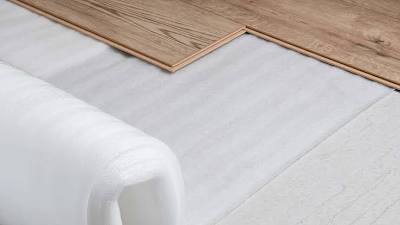
Professional Parquet Underlay functions as an integrated system, not a temporary fix.
Every millimeter of thickness and every density level directly affects final floor performance.
| Low-Grade Underlay | Professional Underlay |
|---|---|
| Uneven thickness | Consistent density |
| Rapid deterioration | Long-term performance |
| Higher returns | Fewer complaints |
High-quality Parquet Underlay can reduce impact noise by up to 30–40%, depending on thickness and density.
A good floor isn’t just quiet—it feels solid.
The right underlay enhances stability and comfort.
Proper underlay prevents micro-movements that cause squeaking and gaps over time.
Humidity is a major risk factor for flooring, especially in:
The Impact of Moisture on Parquet Flooring Without Proper Underlay
Moisture is one of the most damaging factors affecting parquet flooring, especially in projects where Parquet Underlay is neglected or replaced with low-quality alternatives. In such cases, invisible moisture becomes a direct cause of premature floor failure.
In high-humidity environments—such as ground floors, newly constructed buildings, and coastal regions in Saudi Arabia—moisture migrates from concrete subfloors into parquet planks through micro-capillaries. Without a proper Parquet Underlay, the flooring gradually loses its structural stability.
Key negative effects of moisture on parquet flooring without adequate underlay include:
In both residential and commercial projects, these issues go beyond cosmetic defects—they become operational risks that lead to customer complaints, delayed acceptance, and unplanned expenses. This is why using a professional Parquet Underlay made from LDPE Foam is essential, as it acts as a protective barrier that reduces moisture transfer and preserves flooring stability and performance over the long term.
How Parquet Underlay Helps Reduce Operational Risks
In residential and commercial projects, flooring quality is not judged solely by its appearance at handover, but by how well it performs over time. This is where Parquet Underlay plays a critical role in minimizing operational risks that often emerge during actual building use.
When a professional Parquet Underlay made from LDPE Foam is installed, it creates an intelligent buffer layer between the concrete subfloor and the parquet flooring, absorbing environmental variations and reducing their direct impact.
Parquet underlay helps reduce operational risks by:
For developers and contractors, this translates into fewer post-handover issues, an improved end-user experience, and a stronger project reputation. For traders and distributors, choosing the right Parquet Underlay directly leads to lower return rates and higher customer satisfaction.
Choosing the right Parquet Underlay from the start is a proactive decision that minimizes operational risks, preserves project quality, and avoids unplanned maintenance costs over the long term.
United Insulators Company (UCI) is a Saudi manufacturer of premium LDPE Foam, certified with ISO 9001 quality management standards.
The thickness depends on the type of project, and often ranges between 2–5 mm.
Yes, when choosing the thickness and the target.
Absolutely, it is a core component in high-quality projects.
Carpet underlay is designed for carpets, not for wooden flooring.
Consistent quality and density in every roll.
Clients may not see the Parquet Underlay, but they experience its impact every day.
Investing in high-quality underlay means investing in:
 Best Parquet & Vinyl Flooring Insulation
 Industrial Insulation in Saudi Arabia – Advanced Energy Efficiency Solutions for Modern Projects
 Foam Protection in Roads and Bridges Projects – The Role of Protection Layers in Modern Construction
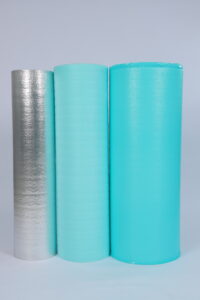 Parquet Underlay for Traders & Distributors – How to Choose the Most In-Demand Product?
United Insulations Company (UCI) is a leading Saudi company specialized in manufacturing and supplying thermal and acoustic insulation solutions, as well as low-density foam products. The company is committed to the highest standards of quality and sustainability to support construction and industrial projects within the Kingdom and beyond.
Third Industrial City, P.O. Box: 22766 Jeddah-6838, Saudi Arabia
Sunday - Thursday 8AM : 5PM