How Foam Boards Help Meet Energy Efficiency Requirements
Learn how foam boards improve energy efficiency and reduce electricity consumption in commercial, industrial, and warehouse buildings according to Saudi standards.
Today, energy costs have become one of the biggest challenges facing business owners in Saudi Arabia, especially in commercial and industrial sectors that heavily rely on air conditioning and cooling systems.
With rising electricity prices and increasing operational loads, it has become essential to find solutions that reduce consumption without affecting operational performance.
Saudi Arabia is witnessing a major shift toward sustainable buildings that rely on technologies reducing energy waste and improving operational efficiency.
This direction is driven by Saudi Vision 2030, which aims to improve energy consumption efficiency across all sectors.
Thermal insulation has become a fundamental element in modern projects as it helps reduce heat transfer between indoor and outdoor environments.
This is where insulating foam boards play a key role as an effective solution balancing thermal performance and operational cost.
Energy efficiency is no longer just an operational advantage; it has become a direct factor in increasing property and project value.
Energy-efficient buildings achieve:
Energy efficiency means using the minimum possible amount of energy to achieve the same level of performance or service within a building.
This includes reducing electricity consumption in air conditioning, lighting, and various operational systems.
There is an important distinction:
Building design plays a major role in controlling energy consumption, especially when insulation materials are integrated during the design stage.
The more efficient the design, the less reliance on expensive cooling systems.
Thermal insulation has become a mandatory requirement in many modern building codes because it:
Modern regulations in Saudi Arabia impose strict energy efficiency standards, and thermal insulation is one of the key compliance elements.
Using insulating foam boards is considered one of the approved solutions to meet these requirements.
Energy efficiency requirements include:
Insulation materials play a major role in controlling indoor temperature, reducing the need for continuous cooling.
Foam boards are among the most efficient materials in this field.
Energy regulations now influence:
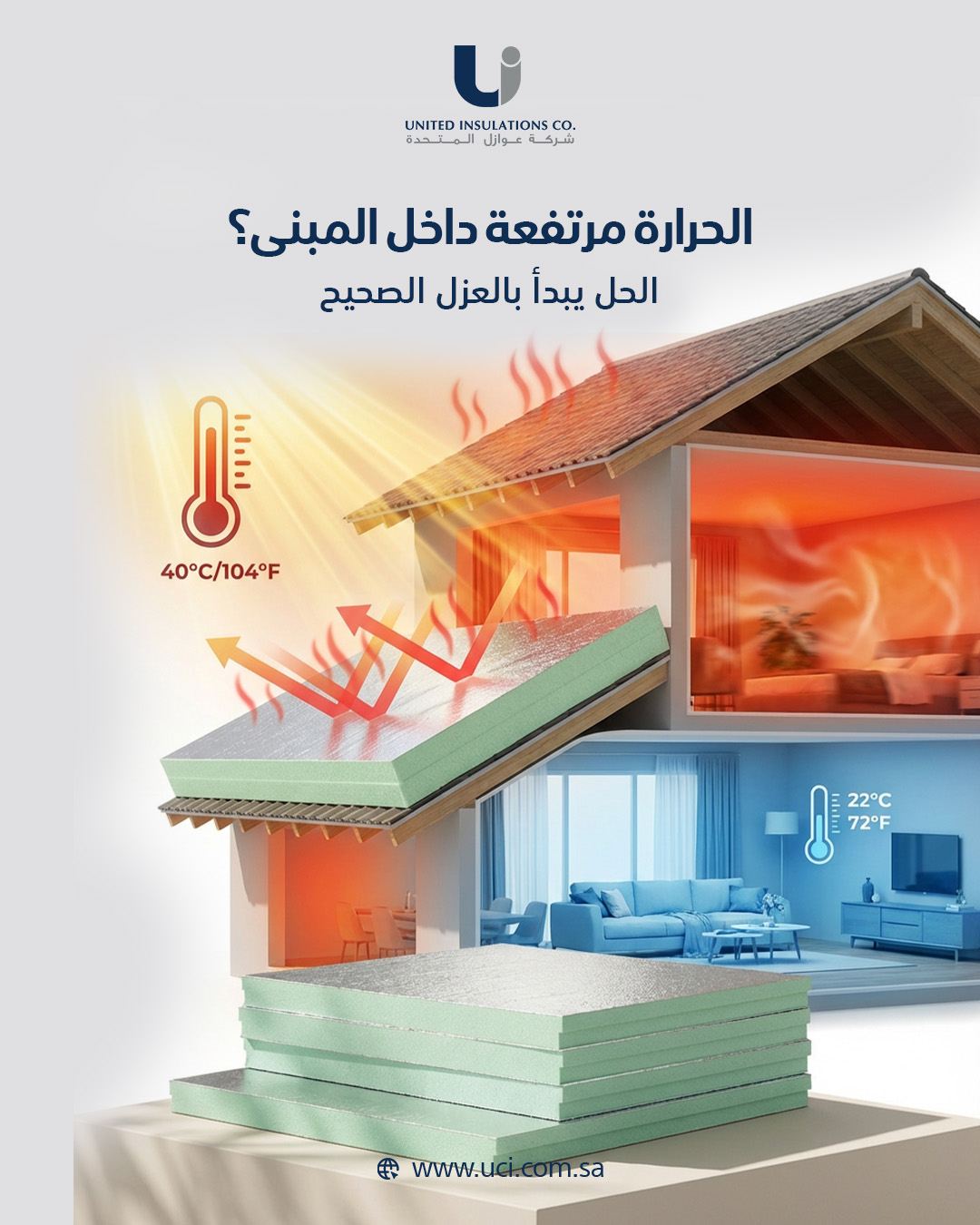
External heat is one of the main factors that increases energy consumption inside buildings in Saudi Arabia, as high temperatures lead to continuous reliance on air conditioning systems.
The more heat enters a building, the higher the load on cooling systems, which directly increases electricity consumption and operational costs.
The largest percentage of heat gain or loss occurs through roofs and walls, especially in poorly insulated buildings.
Foam insulation boards effectively reduce this heat transfer by forming a barrier that minimizes thermal conduction.
Saudi Arabia’s climate is characterized by prolonged high temperatures throughout the year, increasing thermal loads on commercial and industrial buildings.
This climate makes thermal insulation a necessity rather than an option, especially for warehouses, hangars, and large facilities.
The better the thermal insulation of a building, the less HVAC systems need to operate continuously to maintain indoor temperatures.
As a result, equipment efficiency improves, breakdowns decrease, and operating costs are significantly reduced.
The biggest energy losses occur in:
This is why insulation using foam boards is a critical step to eliminate these thermal gaps.
Foam insulation boards act as a thermal protection layer that reduces heat transfer between the interior and exterior of a building, directly improving energy efficiency.
Their effectiveness is based on the low thermal conductivity of foam material, making it one of the best insulation solutions used in modern buildings.
Foam boards reduce external heat penetration into buildings during summer, which is the main driver of high energy consumption.
This results in a more stable indoor environment without excessive air conditioning usage.
Foam insulation helps maintain stable indoor temperatures for longer periods, reducing thermal fluctuations inside the building.
This leads to higher comfort levels for occupants in both commercial and industrial facilities.
When heat transfer is reduced, air conditioning systems no longer need to operate at maximum capacity.
This reduces system strain and extends equipment lifespan.
Better insulation reduces HVAC operating hours, leading to a direct reduction in electricity bills.
This makes foam boards one of the most effective solutions for reducing operational costs.
Foam boards are ideal because they offer:
Foam boards are widely used in commercial and industrial projects due to their high thermal insulation efficiency and energy-saving performance.
Foam boards help maintain stable temperatures inside warehouses, protecting goods from heat damage.
They also reduce cooling system consumption in large logistics facilities.
Hangars are among the most heat-exposed structures, making foam insulation essential for reducing thermal loads.
This improves working conditions inside industrial facilities.
In commercial buildings, proper insulation reduces operational costs and improves comfort for employees and customers.
Foam boards play a critical role in maintaining low temperatures in cold storage rooms.
This improves energy efficiency and reduces cooling loss.
Foam thickness and type vary depending on:
Foam insulation boards are one of the most effective solutions for reducing operational costs in commercial and industrial buildings, as they directly reduce energy consumption from cooling and air conditioning systems.
As insulation performance improves, the need for long HVAC operating hours decreases, which is clearly reflected in lower electricity bills.
Using foam boards reduces thermal loads inside buildings, leading to a significant decrease in electricity consumption.
This effect is especially noticeable in large facilities such as warehouses, hangars, and commercial centers.
When heat transfer is reduced, cooling systems operate more efficiently and with less effort.
This not only reduces energy consumption but also decreases breakdowns caused by continuous operation.
With reduced load on HVAC systems, the need for frequent maintenance decreases.
Spare parts consumption also decreases, and overall system performance becomes more stable.
The lower the stress on HVAC systems, the longer their operational lifespan.
This means lower replacement costs in the long term, supporting the financial sustainability of the project.
Foam insulation is not just an operational expense; it is a long-term investment with continuous financial returns.
This happens through:
Calculating ROI from foam insulation helps project owners understand the real financial value of insulation compared to its initial cost.
ROI is calculated by comparing insulation installation costs with annual energy savings.
In most projects, savings significantly exceed costs within the first few years.
The payback period is the time required for the project to recover insulation costs through energy savings.
This period typically ranges from 1 to 3 years in industrial projects.
After cost recovery, insulation becomes a permanent source of savings in the operational budget.
This allows companies to reinvest resources into business development.
In many warehouses and industrial facilities in Saudi Arabia, foam boards have contributed to:
Despite the importance of foam boards, some selection or installation mistakes can significantly reduce their effectiveness.
Choosing insufficient thickness leads to poor thermal performance.
Excessive thickness without proper analysis may increase cost without real benefit.
Low-quality materials lose effectiveness quickly and fail to provide long-term insulation.
This leads to maintenance or replacement work.
Even the best materials lose efficiency if installed incorrectly.
Small gaps or sealing errors lead to heat leakage.
Failing to analyze thermal loads before selecting insulation results in unsuitable solutions.
This directly affects final energy efficiency.
You can avoid these issues by:
Large projects in Saudi Arabia, such as factories, warehouses, and logistics centers, rely on foam insulation boards because they provide an ideal balance between high thermal performance and low operating costs.
This reliance is not random; it is the result of years of engineering experience proving foam effectiveness in hot climates.
Foam boards are highly effective in reducing heat transfer, making them suitable for buildings exposed to heavy thermal loads.
This makes them ideal for industrial facilities operating 24/7.
Foam boards help reduce moisture and condensation issues inside buildings, especially in cold storage and warehouses.
This protects infrastructure and reduces moisture-related damage.
Foam boards are lightweight and easy to install, reducing project execution time and operational costs.
They also require minimal maintenance after installation.
Foam boards align with sustainability goals in Saudi Arabia by reducing energy consumption and lowering carbon emissions.
This makes them an important component of Vision 2030 projects.
Engineers prefer foam boards because they:
United Insulations Company (UCI) provides advanced foam solutions designed specifically to support energy efficiency in industrial and commercial projects.
The company relies on high-quality manufacturing under global standards to ensure reliable and sustainable thermal performance.
UCI manufactures low-density polyethylene (LDPE) foam boards with high quality standards.
These materials provide excellent thermal performance and long-term durability.
The company offers multiple options suitable for different projects such as:
UCI provides engineering support to help clients select the appropriate thickness and density for each project.
This ensures maximum energy efficiency.
The company delivers customized solutions based on project type and operational needs.
This makes it a trusted partner in major infrastructure projects.
Through:
This case study shows how foam boards can significantly reduce energy consumption in industrial facilities.
An industrial warehouse was suffering from:
LDPE foam boards were used to fully insulate roofs and walls.
With precise installation to eliminate thermal leaks.
After insulation:
Energy efficiency in buildings is not an optional feature but a key factor in the success of any commercial or industrial project in Saudi Arabia.
Choosing the right insulation system, especially foam boards, is the first step toward reducing operational costs and improving overall building performance.
Insulation does not only reduce current energy consumption but also delivers long-term savings over many years.
It also increases property value and makes operations more sustainable.
Foam boards help reduce operating costs by:
Choosing a reliable supplier like United Insulations (UCI) ensures access to globally compliant, high-quality manufactured products.
It also ensures technical support that helps achieve optimal insulation results.
If you are planning to reduce energy consumption in your commercial or industrial project, the right starting point is a professional insulation assessment.