Cold storage warehouse insulation is not simply an extra layer around a building. It is a critical part of the refrigeration and storage-protection system. A well-designed, continuous thermal envelope limits heat transfer from the surrounding environment and makes it easier to maintain stable storage temperatures. This becomes especially important in facilities storing food, frozen goods, raw materials, and temperature-sensitive industrial products. Poor insulation does more than increase energy demand; it can contribute to temperature fluctuations, condensation, higher refrigeration loads, and greater risks to stored-product quality. In simple terms,
effective insulation reduces unwanted heat, air, and moisture transfer into refrigerated spaces, helping the cooling system maintain more stable conditions. Performance, however, depends on more than the insulation material itself. Thickness, installation quality, vapor control, joints, doors, pipes, and thermal bridges all matter.
Where Do Cold Storage Warehouses Lose Cooling?
Cooling loss occurs when heat enters the refrigerated space or conditioned cold air escapes. Even when a warehouse appears tightly enclosed, heat can still move through walls, roofs, floors, poorly sealed joints, service penetrations, and open doors. A common mistake is to focus only on refrigeration capacity. Increasing cooling output does not necessarily solve the underlying problem. If the thermal envelope is weak or air leakage is continuous, refrigeration equipment may simply run longer to compensate for unwanted heat gain.
Main Cooling-Loss Points in Refrigerated Warehouses
Key areas to inspect include roofs, exterior walls, floors, loading doors, cold-room doors, corners, panel joints, pipe and cable penetrations, interfaces between different construction materials, and refrigeration lines with missing or damaged insulation. Not every leakage point has the same impact. A warehouse may be well insulated across most of its envelope, yet a poorly sealed joint or a door opened dozens of times per day can become a significant and recurring source of warm, humid air infiltration.
Heat Transfer Through the Warehouse Envelope
Heat naturally flows from warmer areas toward colder ones. When outdoor conditions are hot and the warehouse operates at a much lower temperature, this temperature difference creates a continuous driving force for heat to move through the building envelope. This is why thermal resistance matters. An insulation system designed with the appropriate thermal resistance—and installed with minimal gaps and thermal bridges—can significantly reduce heat transfer into the refrigerated space.
Air Infiltration Through Doors and Loading Areas
Every time a cold storage door opens, indoor and outdoor air can mix. Cold air escapes while warmer outside air enters, often bringing additional moisture into the refrigerated environment. The problem becomes more pronounced when doors remain open for long periods, seals are damaged, or loading traffic is frequent. Door management should therefore be treated as part of the cooling-retention strategy rather than as a separate operational issue.
Thermal Bridges and Joints
A thermal bridge is an area where heat can pass through the envelope more readily than through surrounding insulated sections. Common examples include metal connections, panel joints, fasteners, and roof-to-wall interfaces. Even high-quality insulation can underperform when these details are poorly addressed. For this reason,
cold storage warehouse insulation should be evaluated as a complete system rather than as a collection of individual insulation products.
How Cold Storage Insulation Supports Temperature Stability
Insulation does not generate cooling—the refrigeration system does. The role of insulation is to limit heat transfer between the refrigerated space and its surroundings, allowing the cooling system to maintain target conditions with fewer unwanted fluctuations. The more heat that enters the warehouse, the greater the cooling load that must be removed. An effective thermal envelope limits unwanted heat gain and supports more stable refrigeration-system operation.
Why Is Temperature Stability Important for Stored Products?
Required storage temperatures vary by product, but the principle remains the same: goods intended to remain within a defined temperature range benefit from a stable environment rather than repeated temperature fluctuations. For chilled and frozen food products, repeated temperature deviations can affect storage quality and shelf life. Insulation therefore supports cold-chain integrity indirectly by helping the mechanical refrigeration system maintain its designed storage conditions.
Walls and Roofs: A Major Barrier Against Heat Gain
Walls and roofs make up a large portion of the external warehouse envelope. They therefore require appropriate thermal resistance and, just as importantly, continuous insulation coverage. In metal warehouses, roof and wall insulation requires particular attention because metal surfaces respond quickly to external temperature changes. Insulating only selected areas is not enough; gaps and poorly sealed joints can reduce the performance of the entire system. United Insulations Company (UCI) provides polyethylene foam solutions for warehouses, hangars, and metal structures, with properties relevant to thermal insulation and moisture resistance. The required thickness and specification should always be selected according to actual project conditions and engineering requirements.
Why Is Insulation Continuity as Important as Coverage?
A thermal envelope behaves much like a chain: a weak point can affect overall performance even when most of the surface is well insulated. Roof-to-wall junctions, corners, mechanical penetrations, and fastening points therefore require careful inspection.
Doors and Joints: Small Areas That Can Create Repeated Cooling Loss
Doors are among the most sensitive components of a refrigerated warehouse—not necessarily because they lack insulation, but because they are moving components used repeatedly. Each opening can introduce a new heat and moisture load. Door seals, gaskets, closing speed, and side and bottom gaps should be inspected regularly. High-traffic loading areas may also require operational measures that reduce the amount of time doors remain open. Panel joints and pipe or cable penetrations also require proper sealing. Any gap that allows air or moisture infiltration can become a weak point in the insulation system.
Condensation: A Warning Sign You Should Not Ignore
Condensation occurs when humid air contacts a surface cold enough for water vapor to condense. In refrigerated facilities, it may appear on pipes, around joints and doors, or on sections of walls and ceilings. Condensation does not automatically mean that the insulation material itself is defective. It can result from air leakage, damaged vapor control layers, insulation gaps, insufficient thickness, or high surrounding humidity. Persistent condensation should nevertheless be investigated, as it may reveal humid-air infiltration or a surface temperature lower than expected because of a weakness in the thermal system.
Suitable Insulation Materials for Refrigerated Areas
There is no single material that can be called the
best insulation for every cold room. Selection depends on operating temperature, indoor-to-outdoor temperature difference, humidity, fire requirements, available space, installation method, mechanical loads, and applicable project codes and specifications. Material selection should therefore never be based on price or thickness alone. Thermal conductivity, overall thermal resistance, water absorption, vapor transmission, durability, and compatibility with the rest of the assembly should all be evaluated.
Polyethylene Foam in Insulation Applications
Polyethylene foam is used in a wide range of insulation and protection applications because of its lightweight, flexible structure and useful thermal and moisture-related properties, depending on the specific product specification. United Insulations Company (UCI) specializes in low-density polyethylene foam (LDPE Foam) products and provides solutions for warehouses, hangars, metal structures, and a variety of industrial and construction applications. In refrigerated warehouses, however, the exact role of the product must be defined. Is it being used within the building envelope, around refrigeration lines, or in a specific supporting application? Technical data and operating conditions should be reviewed before specifying any insulation product.
Cold Room Insulation
Effective
cold room insulation requires an integrated system that limits heat transfer while controlling moisture and air infiltration. Walls, ceilings, floors, doors, joints, and service penetrations must all be considered as part of the design. An insulation system suitable for a chilled room may not be appropriate for a low-temperature freezer. As the temperature difference between inside and outside increases, thermal and moisture-control requirements become more demanding.
HVAC and Refrigeration Foam Insulation
Cold refrigeration lines are another important part of the system. If pipe insulation is missing or damaged, the lines can gain heat from the surrounding environment, while condensation may form when the surface temperature falls below the dew point. Properly specified
HVAC and refrigeration foam insulation helps reduce heat gain into cold lines and supports condensation control when correctly designed and installed. Particular attention should be paid to elbows, fittings, valves, and supports. Insulating straight pipe sections while leaving these components exposed creates discontinuities in the thermal system.
How Do You Choose the Right Insulation for a Cold Storage Warehouse?
Proper insulation selection starts with operating conditions—not with a material name. The design team should first define target storage temperature, external temperature and humidity, stored-product requirements, door operation, building type, and facility size. The technical properties of candidate materials can then be evaluated, including thermal conductivity, required thermal resistance, vapor transmission, moisture absorption, durability, and compressive performance where relevant.
Five Questions to Answer Before Selecting Insulation
Signs of Poor Insulation That Should Be Investigated
Several
cold storage insulation problems can be identified through operational observation before major changes are made to refrigeration equipment. A single symptom does not prove that insulation is at fault, but multiple warning signs should trigger a closer inspection.
1. Difficulty Maintaining the Target Temperature
If temperatures rise quickly or vary significantly between warehouse zones, insulation and air leakage should be inspected alongside refrigeration performance and airflow distribution.
2. Longer-Than-Normal Refrigeration Runtime
Extended refrigeration runtime can result from several mechanical causes, but it may also be associated with excessive heat gain caused by envelope weaknesses or frequent air infiltration.
3. Condensation Around Pipes and Joints
Recurring water droplets on cold pipes or around service penetrations are a reason to inspect insulation thickness, continuity, vapor control, and sealing.
4. Damaged or Detached Insulation
Cracked, compressed, damaged, or detached insulation should not be ignored. Actual system performance depends on the condition of the material after installation—not only on its original technical specification.
5. Temperature Differences Near Doors and Corners
Relatively warm zones near doors, corners, and joints may indicate air leakage, thermal bridging, or poor sealing.
6. Ice Formation in Unexpected Areas
In freezer applications, unexpected ice around doors or joints can indicate humid-air infiltration into a very cold area. The underlying cause should be identified rather than repeatedly removing the ice.
Common Cold Storage Insulation Mistakes and How to Avoid Them
Choosing Insulation Based on Price Alone
The lowest purchase price does not necessarily mean the lowest lifecycle cost. A proper comparison should consider thermal performance, required thickness, moisture resistance, durability, installation, and maintenance.
Increasing Thickness Without Engineering Evaluation
Thickness matters, but simply adding more insulation is not a substitute for proper design. Required thickness should be determined from material properties, operating conditions, and target thermal performance.
Ignoring Joints After Installing Insulation
The insulation material may be excellent, but gaps between panels or around service penetrations can compromise system continuity. Quality inspection must therefore cover installation details, not just material selection.
Neglecting Refrigeration Pipe Insulation
Insulating the building while leaving sections of refrigeration piping without adequate thermal protection creates another source of heat gain and condensation risk.
Treating Condensation as Only a Cleaning Issue
Visible moisture may be a symptom of a deeper problem such as air leakage, insulation discontinuity, or poor vapor control. Correcting the cause is more important than simply wiping away the water.
Pre-Commissioning Checklist for a Refrigerated Warehouse
Before bringing a refrigerated warehouse into full operation, the following checklist can help identify weaknesses early:
How Does Proper Insulation Help Protect Stored Products?
The real value of insulation is not simply a colder wall; it is its ability to support stable storage conditions. When unwanted heat transfer is reduced, the refrigeration system can more effectively maintain the temperature range specified for stored products. This is especially important for temperature-sensitive goods. The objective is not merely to reach the target temperature once, but to maintain it through normal operations, loading cycles, and changing outdoor conditions. Insulation does not replace temperature monitoring, preventive maintenance, or proper cold-chain management. Instead, it provides a critical foundation that helps these systems perform effectively.
Cold Storage Insulation and Operational Efficiency
When less unwanted heat enters the warehouse, the refrigeration system has less heat to remove. Effective insulation can therefore support operating efficiency and reduce unnecessary load on cooling equipment. It is important, however, not to promise a fixed percentage of energy savings without project-specific analysis. Energy use depends on outdoor conditions, warehouse size, refrigeration efficiency, door-opening frequency, stored products, lighting, personnel, and equipment inside the space. A technical assessment is therefore the most reliable way to identify where losses occur and which action will provide the greatest benefit—improving insulation, sealing leaks, maintaining doors, insulating refrigeration lines, or optimizing operations.
The Role of Polyethylene Foam in Industrial Insulation Solutions
Polyethylene foam is lightweight and flexible, while closed-cell products can provide useful characteristics for applications requiring moisture resistance, thermal insulation, and manageable installation.
United Insulations Company (UCI) specializes in low-density polyethylene foam products and provides solutions for industrial and construction applications, including warehouses, hangars, and metal structures. Published technical data for selected UCI products include properties related to thermal conductivity, water absorption, water-vapor transmission, and mechanical performance. The technical datasheet of the specific product should always be reviewed before specifying it for a refrigerated facility.
Why Should Cold Storage Insulation Be Inspected Regularly?
Even a well-designed insulation system can deteriorate over time because of maintenance work, impacts, equipment movement, frequent door operation, pipe or cable modifications, and damaged seals. Insulation should therefore be included in the facility’s preventive-maintenance program. Identifying and repairing a small weakness early can prevent it from developing into a larger area of condensation, air leakage, or system deterioration. Inspections should focus on doors, joints, refrigeration pipes, recently modified areas, and any location showing moisture or unusual temperature behavior.
United Insulations Company: Insulation Solutions for Industrial and Warehouse Projects
United Insulations Company (UCI) is a Saudi manufacturer and supplier specializing in thermal and acoustic insulation solutions and low-density polyethylene foam products for a variety of industrial, construction, and commercial applications. The company provides solutions for warehouses, hangars, metal structures, and various foam, protection, and insulation applications. UCI’s
ISO 9001 certification reflects its quality-management approach and commitment to process control and continuous improvement. When planning a refrigerated warehouse, the process should not begin with “Which material should we buy?” A better question is: “Where can heat and moisture enter the system, and what specifications are required to control them?” From there, the appropriate material, thickness, and installation method can be selected for each application.
Conclusion: Effective Insulation Starts by Understanding Cooling Loss
Successful
cold storage warehouse insulation is not simply about increasing insulation thickness. It requires a continuous thermal system that addresses walls, roofs, doors, joints, refrigeration pipes, and service penetrations. When insulation materials are selected according to technical data and operating conditions—and joints, doors, and refrigeration lines are properly installed and maintained—the facility is better equipped to maintain stable temperatures, reduce unnecessary heat gain, and protect the storage environment. No single insulation material is suitable for every refrigerated warehouse. A project-specific technical assessment remains the most important step before selecting insulation type, thickness, or installation method.
Request a technical review from United Insulations Company to identify the right insulation solution for your refrigerated warehouse based on operating temperature, facility design, and actual insulation requirements. Link this anchor from the “HVAC and Refrigeration Foam Insulation” section to the relevant product page once the dedicated page is confirmed. Link the first contextual occurrence of “Polyethylene Foam” in the insulation-materials section to UCI’s dedicated polyethylene foam content. Link the “Products” anchor in the UCI section to the main product catalog. Link the final “Request a Technical Review” CTA to the Contact Us page, providing a natural next step from informational TOFU content toward technical consultation.
Frequently Asked Questions
−How Do I Know If My Cold Storage Warehouse Is Losing Cooling?
Possible signs include difficulty maintaining target temperatures, longer refrigeration runtimes, unexpected condensation or ice, and temperature differences near doors and joints. Both the refrigeration system and insulation envelope should be inspected to identify the actual cause.
−What Is the Best Insulation for Cold Rooms?
There is no single best insulation material for every cold room. The correct choice depends on operating temperature, required thermal resistance, humidity, fire requirements, available thickness, and installation method. Materials should be compared using project-specific technical criteria.
−Does HVAC and Refrigeration Pipe Insulation Help?
Yes. Proper insulation on cold refrigeration and HVAC lines helps reduce heat gain from the surrounding environment and supports condensation control when the material, thickness, and installation are correctly specified.
−What Causes Condensation in a Cold Storage Warehouse?
Condensation occurs when humid air reaches a surface below its dew point. Common causes include air infiltration through doors or joints, insulation gaps, vapor-control discontinuities, and damaged pipe insulation.
−Does Thicker Insulation Always Prevent Cooling Loss?
Greater thickness can improve thermal resistance, but it does not correct gaps, air leakage, or thermal bridges. Thickness should therefore be determined through engineering design while ensuring insulation continuity and proper sealing.
−Can Polyethylene Foam Be Used in Warehouses?
Yes. Polyethylene foam products are used in various insulation and protection applications, and UCI provides solutions for warehouses, hangars, and metal structures. Suitability for a specific refrigerated warehouse should nevertheless be confirmed against technical specifications and operating conditions.
−Can Poor Door Sealing Affect Cold Storage Temperature?
Yes. Doors are major air-infiltration points in refrigerated facilities, particularly when used frequently or when gaskets are damaged. Incoming warm, humid air increases refrigeration load and can raise condensation risk.
−Can Proper Insulation Reduce Energy Use?
Effective insulation reduces unwanted heat transfer into refrigerated spaces, lowering the thermal load the refrigeration system must handle. Actual energy savings depend on facility design, refrigeration equipment, door operation, target temperatures, and other operating factors.
−When Should Cold Storage Insulation Be Inspected?
Insulation should be inspected periodically and whenever unusual condensation or ice appears, after maintenance or facility modifications, or when the warehouse begins struggling to maintain its target temperature.
−What Is the Most Important Step Before Choosing Cold Storage Insulation?
The most important step is to define operating and project requirements first: temperature, humidity, building type, insulation locations, and required thermal resistance. Materials and thicknesses can then be compared using verified technical data.

 Why Do Cold Storage Rooms Fail Without Proper Insulation? The Solution Using Foam Panels for Energy Efficiency
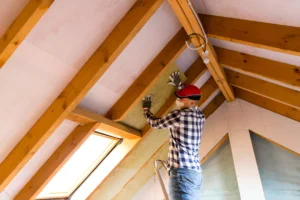 Thermal Insulation for Warehouses – Practical Solutions to Reduce Energy Loss
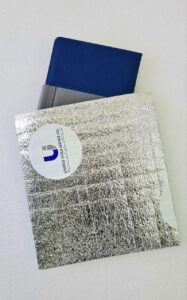 Best Foam Industrial Packaging Solutions: How to Protect Your Products and Reduce Returns?
 Best Foam Industrial Packaging Solutions: How to Protect Your Products and Reduce Returns?