Saudi factories operate in demanding environments where heat, changing ambient conditions, equipment noise, and inventory protection can directly influence day-to-day operations. For this reason,
industrial insulation should not be viewed simply as an additional construction layer. It is part of a broader strategy for protecting facilities, improving working conditions, and supporting operational efficiency.
Industrial facility insulation can address several operational challenges. Depending on the facility, it may help limit heat transfer through roofs and walls, reduce certain sources of noise and vibration, protect storage areas, and provide suitable protective layers around specific parts of the building or production environment. In Saudi Arabia, where outdoor temperatures remain high for significant periods of the year, insulation selection should reflect the actual industrial environment. The appropriate solution depends on building construction, stored materials, operating conditions, internal heat sources, and facility requirements rather than relying on one standard solution for every factory.
Why Do Factories Need Specialized Insulation Systems?
Factories need specialized insulation because heat, noise, moisture, and vibration can affect working conditions, stored materials, equipment, and industrial processes. A properly selected insulation system can limit heat transfer, improve the internal environment, and contribute to long-term facility protection. Industrial facilities have different requirements from residential or conventional commercial buildings. Some factories operate machinery for extended periods and generate continuous heat. Others have large metal-roof warehouses, while certain industrial environments must also manage significant noise or vibration.
1. Reducing Heat Transfer Into the Facility
Industrial roofs and external walls can remain exposed to solar radiation for long periods, allowing substantial heat to move into the building, particularly in metal structures and warehouses.
Thermal insulation for factories can help reduce this transfer when the insulation material, thickness, and installation method are properly selected. This does not mean insulation automatically lowers indoor temperatures to a predetermined level. Actual performance depends on several factors, including building design, surface area, ventilation, internal heat loads, insulation type, and thickness.
2. Supporting Cooling and Ventilation Efficiency
The greater the heat transfer from outside to inside, the more thermal load cooling and ventilation systems may need to handle. Effective thermal insulation can therefore become an important part of a facility’s overall heat-management strategy. This becomes particularly important in warehouses and production areas where more stable indoor conditions are desirable because of the products being stored, the processes taking place, or employee working conditions.
3. Improving the Working Environment
Excessive heat and noise are not simply comfort issues; they can influence the overall operating environment. Depending on site requirements, thermal and acoustic solutions can be combined to create more suitable working conditions inside industrial facilities.
4. Protecting Facility Areas and Inventory
Certain raw materials and finished products are more sensitive to heat, moisture, or environmental fluctuations than others. In these facilities,
warehouse insulation becomes part of the inventory protection strategy rather than simply a method for improving indoor temperature.
Sources of Heat and Noise Inside Industrial Facilities
Before selecting a
factory insulation solution, the source of the problem should be identified. Heat may enter through roofs and external walls or originate from machinery and industrial processes. Noise and vibration may come from motors, compressors, fans, production lines, and other equipment. This distinction matters. Insulating a roof will not necessarily solve heat generated by an internal machine, and a thermal insulation material is not automatically the same solution required for an acoustic or vibration-related problem.
Metal Roofs and Walls
Metal structures and roofing systems are widely used in factories, warehouses, and industrial sheds because they suit large-span buildings. However, metal conducts heat efficiently, making the design of the insulation layers an important factor in building performance.
How Does Heat Enter Through the Roof?
The external roof surface absorbs solar radiation and increases in temperature, after which heat moves toward the interior. The amount of heat transferred depends on roof material, surface characteristics, thickness, underlying layers, ventilation, and the insulation system. This is where solutions such as
hangar insulation and materials designed to reduce heat transfer through metal structures become relevant. However, the appropriate thickness should be selected according to project requirements rather than assuming that thickness alone determines performance.
What About Industrial Walls?
External walls, particularly metal walls or elevations with significant sun exposure, can provide another path for heat gain. The building envelope should therefore be assessed as a complete system that includes roofs, walls, openings, doors, and areas of air leakage.
Machinery and Production Lines
In some factories, internal heat generation can be more significant than outdoor heat gain. Motors, furnaces, compressors, and various industrial machines can release substantial amounts of heat during operation. It is important to distinguish between
building insulation and controlling heat at its source. Some facilities may require insulation around specific areas, improved ventilation, separation between operating zones, or a combination of several engineering measures.
Production Line Protection Starts With Understanding Operating Conditions
There is no single insulation material that can be considered a universal solution for every production line. Ambient temperature, equipment type, operating hours, machinery layout, ventilation, and industry-specific requirements should all be evaluated first. Effective
production line protection therefore requires an understanding of the complete operating environment rather than simply purchasing an insulation material.
Acoustic Insulation in Factories: Why Industrial Noise Matters
Industrial noise can originate from motors, fans, compressors, pumps, cutting processes, mechanical movement, and many other sources. The appropriate control method can vary significantly depending on where the noise originates and how it travels through the facility. It is important to distinguish between
sound absorption,
sound insulation, and
vibration control. These concepts are related but not identical, and an industrial site may require a combination of treatments. For example, noise may travel directly through the air, while equipment vibration can also transfer into the building structure and reappear as noise elsewhere in the facility. For this reason, effective noise control starts by identifying both the source and the transmission path before selecting materials.
How Does Insulation Help Protect Industrial Inventory?
Warehouse insulation can reduce the influence of outdoor temperature fluctuations on indoor storage areas, helping create more stable conditions for sensitive materials and products. However, the required level of protection always depends on the type of inventory and its specific storage requirements. Industrial facilities may store raw materials, semi-finished products, finished goods, packaging materials, spare parts, and other inventory. Each category can have different storage requirements.
Reducing Exposure to Excessive Heat
If a warehouse experiences significant heat gain through its roof and walls, indoor temperatures may rise considerably. Proper insulation helps reduce the rate of heat transfer through the building envelope. This is especially important when stored materials have specific temperature requirements. Where precise temperature ranges must be maintained, insulation should not be considered a substitute for the required environmental control or refrigeration systems.
Supporting Condensation and Moisture Management
Condensation can occur when surface temperatures, air temperature, and humidity create the appropriate conditions. In industrial buildings, this may cause problems for certain surfaces, materials, or stored goods. A suitable insulation system, combined with appropriate ventilation and moisture-management design, can help reduce condensation risks. However, the correct approach should always be based on actual site conditions.
The Role of Polyethylene Foam in Industrial Applications
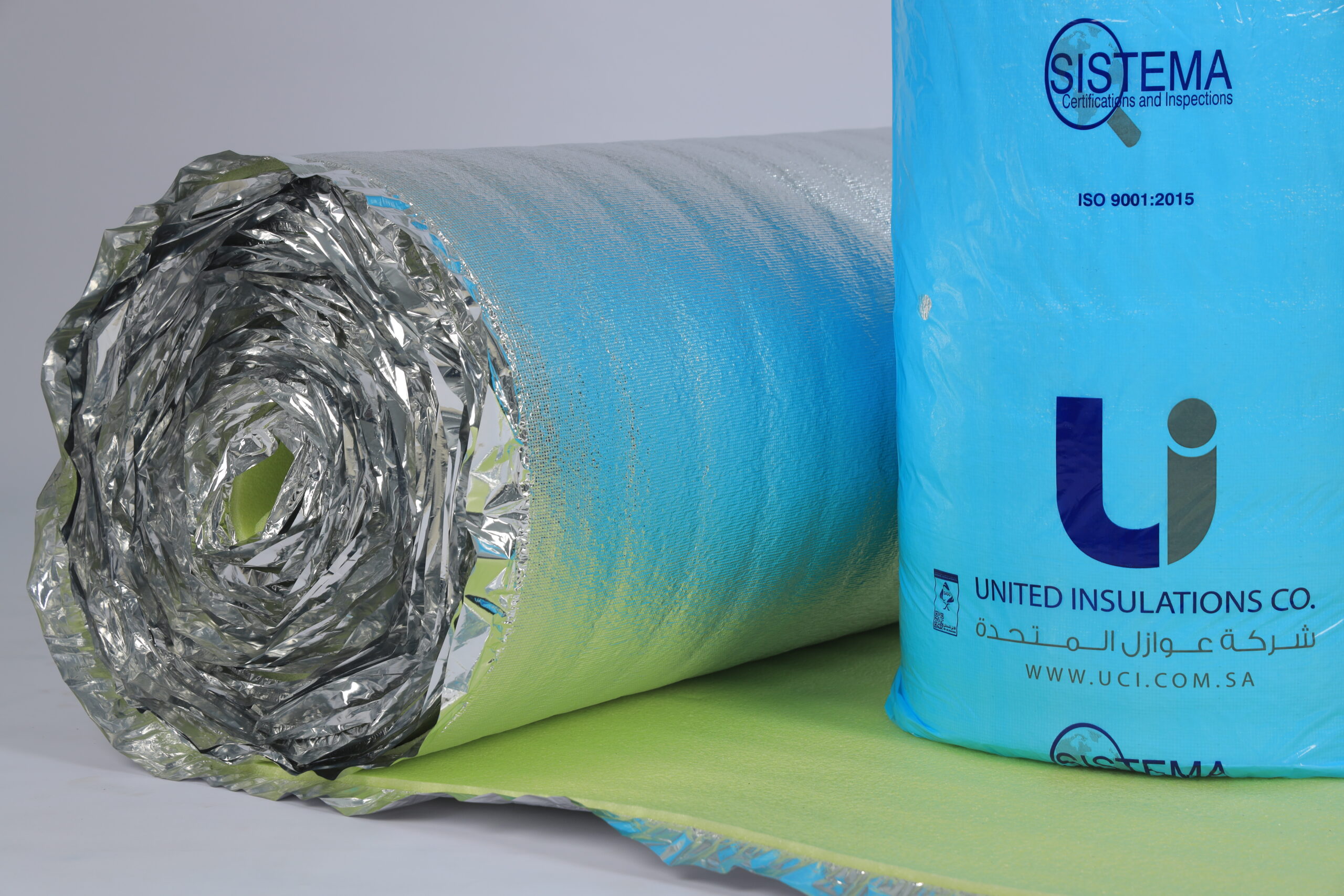 Polyethylene foam
is used across a variety of industrial applications. Its cellular structure and physical properties can make it suitable for insulation, protection, cushioning, and packaging applications, depending on the product specification and intended use.
United Insulations Company (UCI) specializes in manufacturing
low-density polyethylene (LDPE) foam products for a range of insulation, protection, and packaging applications.
Foam Sheets
Foam sheets can serve different industrial applications depending on density, thickness, and technical specifications. Product selection should therefore be based on the required function within the project rather than appearance or product name alone.
Protective and Packaging Foam
Inventory protection is not limited to warehouse temperature. Products can also be exposed to impact, scratching, and vibration during storage, handling, and transportation. In packaging applications, polyethylene foam can provide a protective cushioning layer that helps absorb impact and vibration while protecting product surfaces, depending on packaging design and product requirements.
How to Choose the Right Factory Insulation System
Choosing the
best insulation for a factory should not begin with “What is the best material?” The better starting point is: “What problem does the facility need to solve?”
1. Identify the Source of the Problem
Is the main issue heat entering through the roof? External walls? Production equipment? Condensation? Noise? Or a combination of several factors? A clear diagnosis provides a much stronger foundation for selecting the right solution.
2. Consider the Industrial Activity
A food-processing facility may have very different requirements from a building-material plant, plastics factory, or logistics warehouse. Insulation decisions should therefore reflect the actual operations carried out inside the building.
3. Review the Building Construction
Is the facility a metal industrial shed, concrete building, warehouse, or multi-zone manufacturing facility? What materials are used in the roof and walls? These details influence material selection, installation method, and the required insulation thickness.
4. Define Performance Requirements
Performance goals should be defined as clearly as possible: reducing heat transfer, managing condensation, improving working conditions, protecting inventory, or supporting noise-control measures.
5. Compare Solutions by Performance, Not Price Alone
Choosing the lowest-cost material without considering whether it suits the application can result in additional costs later through replacement, reinstallation, or inadequate performance. Instead, evaluate the total solution across its expected lifecycle, including material, installation, maintenance, service life, and suitability for the application.
Common Factory and Warehouse Insulation Mistakes
Selecting Thickness Without Assessing the Application
Thickness matters, but it is not the only performance factor. Material type, density, installation method, substrate, and intended purpose should all be considered.
Ignoring Internal Heat Sources
A roof may be fully insulated while overheating remains because the dominant heat source is actually production equipment inside the facility. Both external and internal heat loads should therefore be considered before defining the insulation scope.
Treating Thermal and Acoustic Insulation as the Same Thing
Some materials may offer multiple useful properties, but thermal and acoustic objectives still require different assessments.
Overlooking Installation Quality
Even an appropriate insulation product may underperform if installation leaves gaps, poorly sealed joints, or uncovered areas.
Ignoring Ventilation and Moisture
Insulation is one component of a building system, not the entire system. Certain industrial problems require insulation, ventilation, and moisture management to be addressed together.
When Does an Industrial Facility Need a Technical Assessment?
A technical assessment is recommended when the source of heat, moisture, or noise is unclear, when the facility is large, or when production and storage requirements demand careful material and thickness selection. A technical assessment becomes particularly valuable when:
- Certain zones remain excessively hot despite cooling or ventilation.
- Significant temperature differences exist between facility areas.
- Condensation or moisture appears on roofs or walls.
- Inventory is sensitive to environmental conditions.
- Noise or vibration requires treatment.
- The factory is being expanded or new production lines are being installed.
- An existing insulation system needs replacement.
- The appropriate insulation material or thickness is unclear.
Industrial Insulation Pre-Selection Checklist
Before requesting an
industrial insulation recommendation, prepare the following basic information: The more accurate the initial information, the easier it becomes to narrow down suitable options before proceeding to a detailed technical assessment.
How Insulation Supports Operational Continuity
Operational continuity never depends on one factor alone. It results from the combined performance of machinery, maintenance, ventilation, energy systems, working conditions, and the building itself. Insulation can support this system by improving control over the surrounding environment. When heat transfer through the building envelope is reduced, indoor conditions become less exposed to outdoor fluctuations. Better management of heat, noise, and condensation can also make the industrial environment more controllable. However, insulation should not be expected to solve every operational problem. It cannot repair machinery, replace appropriate ventilation, or substitute for specialized cooling systems where those systems are required. Its real value comes from integrating it into the broader design and operation of the facility.
United Insulations Company: Foam and Insulation Solutions for Industrial Applications
United Insulations Company (UCI) is a Saudi manufacturer specializing in insulation and foam products, including
low-density polyethylene (LDPE foam) solutions for various insulation, protection, and packaging applications. UCI serves a range of sectors and project requirements with a focus on manufacturing quality and selecting product specifications appropriate to each application. UCI holds
ISO 9001 certification for its quality management system, an international standard focused on process management, continual improvement, and consistently meeting customer requirements.
From Insulation to Protection and Packaging
Industrial projects often require more than one type of solution. A factory may need insulation for the building envelope while simultaneously requiring protective materials for products during handling or transportation. This makes polyethylene foam relevant across multiple industrial applications, with the appropriate solution determined according to project conditions and requirements.
Useful Resources for Choosing Insulation and Foam Solutions
To explore available options in greater detail, review
United Insulations Company products and compare solutions according to the intended application.
How to Get Started: Share Your Facility Details With UCI
Selecting an
industrial insulation solution should begin with understanding the facility rather than choosing a product at random. Roof construction, facility size, industrial activity, heat source, operating challenge, and storage requirements all help determine which solutions should be considered.
Share your facility details with the UCI team for an initial recommendation and identify suitable options before making a final project decision.
What Is the Best Insulation for Factories?
There is no single insulation material that is best for every factory. The correct choice depends on building construction, heat sources, operating requirements, inventory, moisture conditions, roof and wall systems, and required performance. The application should therefore be assessed before selecting material and thickness.
Does Insulation Reduce Warehouse Heat?
Yes. Proper thermal insulation can reduce heat transfer through warehouse roofs and walls, helping limit indoor heat gain. Actual results depend on building design, ventilation, internal heat sources, insulation type, and thickness.
Do Insulation Solutions Differ by Industry?
Yes. Insulation requirements vary according to industrial processes, stored materials, machinery, temperature, humidity, and technical requirements. A logistics warehouse may therefore require a different solution from a manufacturing plant.
What Is the Difference Between Factory and Warehouse Insulation?
Factory insulation may need to address the building envelope, production areas, internal heat sources, machinery, and noise. Warehouse insulation is often more focused on controlling heat transfer and supporting suitable inventory conditions, although the requirements can overlap.
Is Polyethylene Foam Suitable for Industrial Applications?
Yes. Polyethylene foam is used in a wide range of industrial applications, including selected insulation, protection, packaging, and cushioning uses. Density, thickness, and product specifications should be selected according to the intended application.
Does Greater Thickness Always Mean Better Insulation?
Not necessarily. Thickness is an important factor, but overall system performance also depends on material properties, installation, building construction, and the insulation objective. Thickness should be selected according to project requirements.
Can Insulation Help Control Condensation in Factories?
Proper insulation can form part of a condensation-control strategy, but it is not the only factor. Humidity, surface temperature, ventilation, and airflow should also be assessed to identify the cause and select the correct treatment.
When Should Factory Insulation Be Replaced?
Factory insulation should be assessed when visible damage, missing sections, installation gaps, changing facility requirements, or major expansions occur. There is no universal replacement interval because service life depends on the material, installation quality, and operating environment.
Is Insulation Alone Enough to Protect Production Lines?
No.
Production line protection depends on several measures, including heat management, ventilation, maintenance, equipment layout, and control of the operating environment. Insulation is an important component, but it does not replace other technical measures.
Conclusion: Insulation as an Investment in a More Efficient Industrial Environment
Industrial insulation in Saudi Arabia is an important consideration in the design and operation of manufacturing facilities, particularly in a climate where controlling heat transfer can significantly influence factories and warehouses. An effective solution does not begin by choosing the thickest or least expensive material. It begins with identifying the problem, understanding the facility and industrial process, and defining operating and inventory requirements. By combining
thermal insulation, appropriate acoustic measures, surface and inventory protection, and properly selected foam products, industrial facilities can develop a more integrated protection strategy and improve their operating environment. If you are planning to insulate a factory, warehouse, or industrial shed, the first step is to gather accurate project information and clearly define the operating challenge before selecting a product.
Share your facility details with the United Insulations Company (UCI) team to receive an initial recommendation for insulation and foam solutions suited to your project requirements.