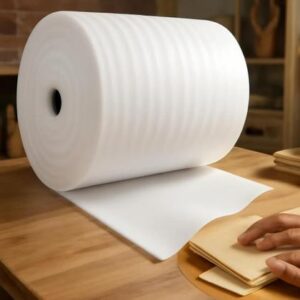
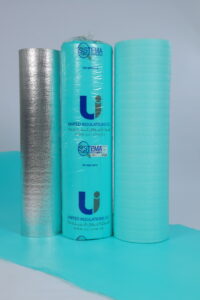
Foam insulation sheets are used across a wide range of construction and industrial applications, from insulating walls, roofs and floors to protecting products and equipment during transportation and storage. However, effective insulation is not simply about choosing foam; it requires selecting the
right foam type, thickness, density and dimensions for the intended application. Before placing an order, it is important to identify where the foam will be installed, what performance is required, the environmental conditions it will face, the total project area and the installation method. A foam sheet designed to protect a product inside shipping packaging, for example, may not be suitable for insulating a wall or protecting an insulation system on a construction site. In this guide from
United Insulations Company (UCI), we explain the key factors that help engineers, contractors, procurement teams and project owners select suitable foam sheets, minimize material waste and order the required sizes and quantities more accurately.
What Are Foam Insulation Sheets?
Foam sheets are lightweight cellular material sheets used for insulation, protection or separation depending on their material composition and technical properties. Polyethylene foam is one of the materials used in industrial and construction applications because it combines low weight, flexibility and versatility. Certain foam products feature a closed-cell structure, an important characteristic for applications requiring reduced water and moisture absorption together with thermal and mechanical protection. Not all foam sheets should therefore be treated as the same product. Performance can vary according to factors including:
- Raw material type.
- Cell structure.
- Density.
- Thickness.
- Thermal conductivity.
- Water absorption resistance.
- Compression performance and recovery.
- Sheet dimensions and cutting method.
- Installation method and operating environment.
For this reason, when comparing
thermal insulation sheets, asking only for the price per square metre is not enough. The required technical specification should be established first.
Why Is Polyethylene Foam Used in Different Applications?
The properties of polyethylene foam can provide a useful combination of flexibility, low weight, impact absorption and moisture resistance. This makes it suitable for different insulation, protection, packaging and construction applications. The ability to manufacture or supply foam in different thicknesses and dimensions can also help match the material to project requirements instead of relying on a standard size that may require extensive on-site cutting and create unnecessary waste.
Key Applications of Foam Sheets in Buildings and Industrial Facilities
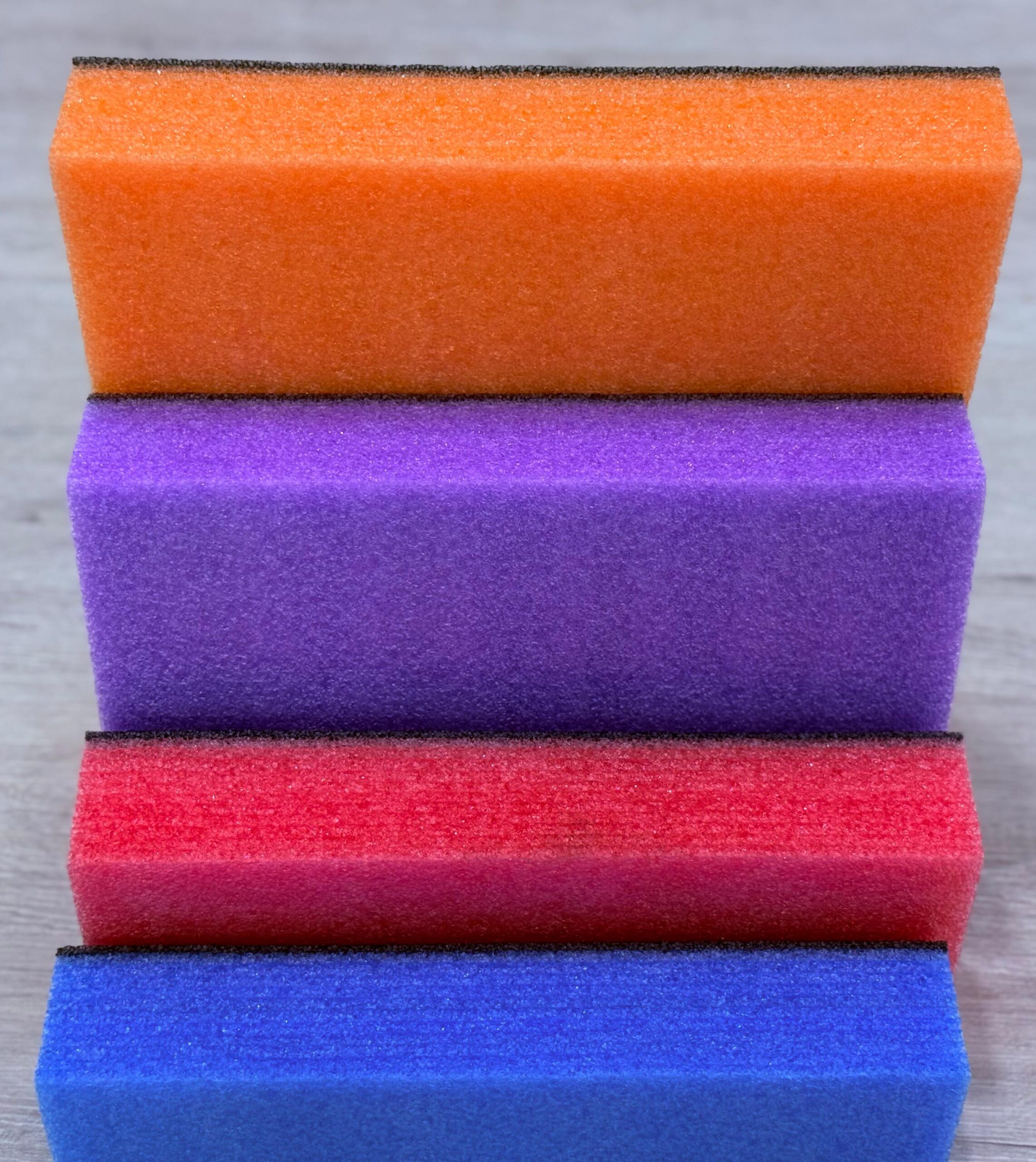 Foam insulation sheets
can be used across multiple sectors, but the selection criteria vary significantly by application. In buildings, thermal performance, moisture conditions and installation requirements may be key considerations, while packaging applications place greater emphasis on cushioning, impact absorption and surface protection. The purchasing decision should therefore begin with one fundamental question:
What function does the foam sheet need to perform? Roofs and Walls: When Should Foam Sheets Be Used for Thermal Insulation?
Foam sheets can form part of insulation systems for
walls, roofs and floors, helping reduce heat transfer and improve overall insulation performance when the appropriate material and specification are selected. In hot climates, controlling heat transfer is particularly important in commercial and industrial buildings, warehouses and other facilities exposed to high temperatures for extended periods. When selecting
wall insulation foam or roof insulation materials, consider:
- The type of wall or roof assembly.
- Whether the material will be used internally or within another construction system.
- Expected operating temperatures.
- Moisture exposure.
- Total project area.
- Material thermal conductivity.
- Required thickness.
- Installation and fixing method.
- Project-specific fire and safety requirements.
- Applicable engineering specifications and building requirements.
Is a Thicker Foam Sheet Always Better?
Not necessarily. Increasing thickness can increase thermal resistance when other material properties remain unchanged. However,
the correct thickness should be determined according to the requirements of the complete insulation system, rather than assuming that thicker always means better. Excessive thickness may increase material cost and occupy additional space without delivering a meaningful project benefit. Insufficient thickness, on the other hand, may prevent the system from achieving the required performance. The project specification and the product technical data sheet should therefore guide the final selection.
Practical Example
Suppose a contractor needs foam sheets for a large wall area. Instead of simply requesting “foam sheets,” the contractor should provide the supplier with information such as total area, wall construction, insulation objective, specified thickness if already determined by the engineer, required dimensions and operating conditions. This information allows the supplier to prepare a more accurate quotation and reduces the risk of ordering material that does not match the intended application.
Packaging and Protection: When Impact Absorption Is the Priority
Foam is not limited to thermal insulation. Polyethylene foam sheets are also used to protect sensitive products from
scratches, impacts, vibration and moisture during transportation and storage. Typical applications may include:
- Electrical and electronic equipment.
- Glass products.
- Furniture.
- Industrial components.
- Sensitive equipment.
- Metal products with scratch-sensitive surfaces.
- Products transported through long supply chains.
In these applications, selection criteria change. Rather than focusing primarily on thermal performance, factors such as
thickness, density, flexibility, cushioning performance and packaging configuration become more important.
How Do You Select Protective Foam?
Start with the product’s weight and its susceptibility to impact, breakage or scratching. A lightweight product requiring only surface protection may need a very different solution from a heavy piece of equipment requiring cushioning and protection around its corners and edges. Consider the entire logistics cycle as well: Will the product be transported once or repeatedly? Will it remain in storage for an extended period? Will it face moisture exposure? Can the protective foam be reused?
How to Choose Foam Sheet Thickness and Size
The best foam sheet thickness and size are those that achieve the required performance while minimizing waste and matching the dimensions and technical requirements of the application. There is no single ideal thickness for every project.
1. Start by Defining the Application
This is the most important step. Do you need the sheets for:
- Wall insulation?
- Roof or floor insulation?
- Protection of another insulation layer?
- Product packaging?
- Impact cushioning?
- Separation between surfaces or components?
- A custom industrial application?
Each application can require a different specification.
2. Define Performance Before Selecting Thickness
A common mistake is choosing a thickness first and then looking for a product. A better approach is to establish the
required performance and then select the material and thickness capable of delivering it. For thermal insulation, one parameter worth reviewing is
thermal conductivity. In general, thermal conductivity indicates how readily a material transfers heat. When comparing materials under equivalent test conditions, a lower thermal conductivity can indicate better resistance to heat transfer. However, a single value should not be considered in isolation. Thickness, operating conditions, installation quality, thermal bridging and continuity of the insulation layer all influence the performance of the completed system.
3. Review Foam Density
Density is not simply a marketing figure. It is associated with the mechanical characteristics and intended use of a foam product. It should therefore be selected according to the application’s load, flexibility and performance requirements rather than assuming that the highest density is automatically the best choice. For protective packaging, for example, the objective may be to balance flexibility, impact absorption and adequate product support.
4. Match Sheet Dimensions to the Installation Area
Sheet dimensions can directly affect:
- Installation speed.
- Number of joints.
- Amount of cutting required.
- Material waste.
- Labour requirements.
- Transportation and storage efficiency.
Review the project drawings or accurately measure the installation area before finalizing dimensions.
5. Calculate Quantity While Allowing for Cutting and Waste
The basic area can be calculated using:
Required area = Length × Width Calculate the area of every surface that needs to be covered and combine the totals. An appropriate allowance should then be made for cutting and waste according to the geometry of the project and the installation method. A simple rectangular area will usually have different material utilization from an area containing numerous openings, corners and irregular details.
Simple Example
For a wall measuring 20 metres long and 4 metres high:
20 × 4 = 80 m² This is the basic geometric area, not necessarily the final purchasing quantity. Openings, sheet layout, cutting requirements and expected waste should be considered before the purchase order is finalized.
Quick Foam Sheet Selection Table
| Selection Factor | Why It Matters | Question to Ask |
| Application | Determines the required foam type | Where will the foam be used? |
| Thickness | Influences insulation/protection performance | What thickness does the design require? |
| Density | Influences mechanical behaviour | What density suits the application? |
| Thermal conductivity | Important for thermal insulation | What tested value is declared? |
| Water absorption | Important in moisture exposure | How resistant is the material to water absorption? |
| Dimensions | Affect cutting and waste | What are the surface/product dimensions? |
| Flexibility | Important in packaging and selected applications | Does the foam need to wrap around the product? |
| Customization | Can reduce on-site work | Can it be manufactured or cut to order? |
| Quantity | Affects logistics and cost | What total area or number of pieces is required? |
When Do You Need Custom-Cut or Custom-Manufactured Foam Sheets?
You may need
custom foam sheet dimensions when standard sizes create excessive waste, require repetitive cutting, complicate installation or simply do not match the dimensions of the industrial application. Customization is not merely an optional feature. On large projects, it can form part of a strategy to reduce waste and improve installation efficiency.
Situations Where Custom Dimensions Can Be Useful
1. Repetitive Installation Areas
If hundreds of identical areas need to be covered, ordering dimensions closer to the installation size can reduce both cutting time and material waste.
2. Industrial Packaging
For products manufactured and shipped repeatedly, foam pieces can be sized around the product dimensions rather than manually cutting every piece during each packaging cycle.
3. Irregular Equipment and Products
Some equipment requires protection only around specific edges, surfaces or internal voids, making a customized solution more efficient.
4. High-Volume Projects
As quantities increase, waste becomes increasingly significant. A small difference in waste per sheet can become a substantial quantity across thousands of square metres. It can therefore be worthwhile to review dimensions with the supplier before production begins.
When Is a Standard Size the Better Choice?
Customization is not necessary for every application. If the order quantity is small, cutting is straightforward or standard dimensions already fit the intended application, a standard product may offer simpler procurement and installation. The right decision should compare
material cost + waste + cutting time + labour + installation efficiency, rather than sheet price alone.
Common Mistakes When Buying Foam Insulation Sheets
Selecting
insulating foam sheets based on price alone can create higher costs later through waste, unsuitable performance or installation problems.
Mistake 1: Ordering “Foam” Without Defining the Application
This is not a sufficient specification. Tell the supplier whether the foam is required for thermal insulation, packaging, protection or another construction or industrial application.
Mistake 2: Choosing Thickness Without Reviewing Technical Data
Thickness alone does not describe product performance. Review the material type, density, thermal conductivity, water absorption and relevant mechanical characteristics alongside thickness.
Mistake 3: Comparing Suppliers on Price Alone
If density, material, actual thickness or technical specifications differ, you are not comparing equivalent products. Compare technical specifications first, then evaluate price and supply options.
Mistake 4: Ignoring Site Dimensions
You may purchase enough material on paper and still experience high waste because of inefficient sheet layout and cutting. Prepare dimensions and installation layouts before ordering, particularly for large quantities.
Mistake 5: Not Requesting a Technical Data Sheet
Professional projects require verifiable specifications. Request the available
Technical Data Sheet (TDS) or product specifications before approval, especially when the project has defined engineering requirements.
Questions to Ask a Foam Sheet Supplier Before Purchasing
Before issuing a purchase order, prepare a concise list of technical and commercial questions. This allows you to compare suppliers on a more consistent basis instead of comparing prices for products with different specifications.
Important Technical Questions
- What type of foam is used?
- Is the product suitable for the intended application?
- Which thicknesses are available?
- What is the density?
- What is the thermal conductivity for insulation applications?
- What relevant water absorption or water vapour properties are available?
- Which technical tests and specifications are available?
- Is a product technical data sheet available?
Size and Manufacturing Questions
- What standard dimensions are available?
- Can custom dimensions be supplied?
- Can the foam be cut to a specified width or length?
- What dimensional and thickness tolerances apply?
- Is there a minimum order quantity for customization?
Supply Questions
Also ask about required order quantities, production lead times, packaging method, shipping options and whether large projects can be supplied in scheduled batches.
Simple RFQ Checklist
For a more accurate quotation, send the supplier:
Application + required thickness + dimensions + quantity/area + project location + special technical requirements. The clearer your requirements are, the easier it becomes to identify the appropriate product and supply option.
Why Choose Foam Products from United Insulations Company?
United Insulations Company (UCI) is a Saudi manufacturer and supplier of insulation solutions and foam products, offering polyethylene foam solutions for construction, industrial, packaging and protection applications. Its product portfolio covers flooring solutions, packaging, protection, expansion applications and industrial and construction insulation, including
foam sheets for wall, roof and floor applications. United Insulations Company has also obtained
ISO 9001 Quality Management System certification as part of its commitment to quality management and process improvement. Engineers, contractors and procurement teams can explore
[United Insulations Company products] to review available insulation and foam solutions and consult the
[product catalogues] for additional product information.
Need help determining the right foam type, thickness and dimensions before ordering? Request the foam sheet specifications suitable for your project and contact United Insulations Company to discuss your application, dimensions and required quantities. Conclusion: Choose Foam Sheets Based on the Application, Not Price Alone
Selecting the right
foam insulation sheets begins with defining the required function, followed by evaluating the thickness, density, dimensions and technical properties relevant to that application. Price matters, but it does not provide a complete picture of product suitability or the true project cost. On large projects, choosing the right dimensions can directly reduce waste, speed up installation and minimize on-site cutting. For insulation applications, technical performance should lead the decision, while cushioning and impact protection become more important in packaging applications. Before issuing a purchase order, gather the project information, determine the required dimensions and quantities, request technical data from the supplier and compare available solutions based on specifications rather than price alone.
Request the foam sheet specifications suitable for your project from United Insulations Company and explore available thicknesses, dimensions and supply options based on your application requirements. Frequently Asked Questions
−What are foam sheets used for?
Foam sheets are used for a variety of applications, including thermal insulation for walls, roofs and floors, protective packaging, impact cushioning and selected construction and industrial applications. The correct foam type and specification should be selected according to the intended use.
−How do I determine the right foam sheet thickness?
Thickness should be selected according to the application, required performance, foam type, technical properties and operating conditions. For thermal insulation, the system design and technical data should guide the decision rather than price or guesswork.
−Can foam sheets be supplied in custom sizes?
Customization depends on the product, supplier and order quantity. Custom dimensions can be particularly valuable for large projects and repetitive industrial applications because they can reduce cutting, waste and installation time.
−Are foam sheets suitable for wall insulation?
Certain foam insulation sheets can be incorporated into wall insulation systems when their properties meet project requirements. Thickness, thermal conductivity, moisture exposure, installation method and safety requirements should all be reviewed before approval.
−What is the difference between foam thickness and density?
Thickness is the distance between the two surfaces of the sheet, while density represents the mass of material per unit volume. Both can influence product selection, but they are different properties and should not be treated as interchangeable.
−How do I calculate the required quantity of foam sheets?
Calculate each surface area using length × width, combine the areas and then include an appropriate allowance for cutting and waste based on site geometry, sheet dimensions and installation method. For large projects, a sheet layout plan can improve quantity accuracy.
−Which specifications should I request from the supplier?
Request the material type, thickness, density, dimensions, thermal conductivity where relevant, applicable water or moisture properties, technical test information, manufacturing tolerances and the product technical data sheet.
−Are custom foam sizes better than standard sizes?
Not always. Custom dimensions are valuable when they reduce waste, cutting and labour, particularly on large or repetitive projects. Standard dimensions may be more practical for small quantities and straightforward applications.
−Can the same foam product be used for insulation and packaging?
The same base material may be used across different product categories, but thickness, density, dimensions and required performance can vary substantially. A packaging foam product should therefore not automatically be assumed suitable for a construction insulation system.
−What information should I send to a supplier for an accurate quotation?
Provide the application, required thickness and dimensions, total area or quantity, project location, technical requirements and any custom cutting or manufacturing requirements.