Why Is Thermal Insulation in Factories an Operational Decision, Not Just a Building Upgrade?
In industrial facilities, energy costs are influenced by more than equipment operating hours. They are also affected by how effectively the building controls heat transfer. When heat enters a factory through roofs and walls, or escapes through poorly insulated areas, the cooling system must work harder and for longer periods to maintain the required indoor conditions. For this reason,
thermal insulation in factories can become an important part of an energy-saving and operational efficiency strategy. An effective solution does not begin with choosing an insulation material at random. It begins by identifying heat gain and heat loss sources, understanding the industrial activity, operating hours, building characteristics, and then selecting the appropriate insulation system.
Where Do Factories Lose Energy?
Energy losses in factories often begin in areas that are not immediately obvious when looking only at the electricity bill. Roofs, walls, doors, openings, and areas surrounding production lines can all influence the thermal load inside an industrial facility. In factories that rely heavily on cooling or air conditioning, increased indoor heat gain can cause HVAC systems to operate longer, particularly during peak hours and periods of high outdoor temperatures.
Roofs Are One of the Major Heat Transfer Areas
An industrial roof is a large surface directly exposed to sunlight and outdoor temperatures. When the roof lacks an appropriate thermal insulation system, a significant amount of heat can transfer into the interior space. This becomes particularly important in
industrial warehouses, hangars, storage facilities, and large factories, where the roof area can be substantial. Improving roof insulation should therefore be considered an important part of any industrial energy-efficiency strategy.
Industrial Walls and Building Envelopes
Heat transfer does not occur only through roofs. External walls, metal facades, large doors, loading areas, and other openings can also influence the thermal performance of an industrial building. The impact depends on the facility’s design, facade orientation, materials used, exposure to sunlight, operating conditions, and the insulation system already in place.
Doors and High-Traffic Areas
In some facilities, loading doors, access points, and large entrances are opened frequently throughout the day. This can affect indoor temperature stability, especially in spaces that are mechanically cooled or require controlled operating conditions. For this reason, an
industrial facility insulation assessment should not focus only on roof insulation. The building envelope should be evaluated as a complete thermal system.
How Roofs, Walls, and Production Lines Affect Energy Consumption
When evaluating
thermal insulation in factories, it is important not to consider the building separately from the industrial process itself. Some production lines generate significant heat during operation, while other areas require more stable temperatures to protect materials, products, equipment, or working conditions. This is why insulation priorities can vary significantly from one factory to another.
Heat Generated by Equipment and Processes
Industrial equipment, furnaces, compressors, production lines, and certain manufacturing processes can generate substantial amounts of heat inside a facility. Insulation does not eliminate heat generated by the manufacturing process. Instead, it helps
control heat transfer between different areas and reduces the influence of outdoor conditions on spaces that require cooling or stable temperatures.
Why Should Production Areas Be Evaluated Separately?
Not every area within a factory requires the same insulation or cooling strategy. A facility may contain a high-temperature production area, raw-material storage, packaging zones, administrative offices, control rooms, and other spaces with different thermal requirements. The most effective approach is therefore to prioritize each area according to its actual use rather than applying a one-size-fits-all solution.
How Does Thermal Insulation Reduce HVAC Load?
The direct answer is simple:
thermal insulation reduces heat transfer through the building envelope, helping lower the cooling load required to maintain the desired indoor conditions. However, the actual energy savings cannot be determined from insulation area alone. Savings depend on factors such as climate, building size, roof and wall construction, operating hours, target temperatures, HVAC systems, and installation quality.
The Relationship Between Insulation and HVAC
When heat continuously enters a building, the HVAC system must remove that heat to maintain the desired indoor temperature. Improving the thermal performance of the building envelope can make temperature control easier and may reduce the cooling demand or operating time required, depending on project conditions. This is where
industrial energy efficiency becomes important. The goal is not simply to install insulation, but to reduce unnecessary energy demand and improve the overall efficiency of the facility.
A Simple Example
Consider a factory that operates for long hours and relies on air conditioning to maintain suitable working conditions. If the roof is directly exposed to sunlight and provides insufficient thermal resistance, heat entering through the roof becomes part of the cooling load that the HVAC system must handle. Improving insulation can help reduce this heat transfer. However, the actual savings should be calculated using the facility’s real operating and building data rather than relying on a generic percentage.
Choosing Insulation Based on Industrial Activity and Operating Hours
There is no single insulation material that is ideal for every factory. The selection of
factory thermal insulation should consider the facility’s industrial activity, required temperature range, moisture exposure, surface characteristics, installation method, operating hours, and project requirements.
Facilities With Long Operating Hours
The longer a factory operates, the more important stable indoor conditions become. In facilities operating around the clock or for extended shifts, improving thermal performance can become part of a long-term operational strategy because the impact of poor insulation may repeat continuously throughout the year.
Factories, Warehouses, and Industrial Hangars
Large industrial buildings require special attention to roofs, walls, and areas exposed to direct sunlight or outdoor air.
Industrial hangar insulation should be considered when the facility consists of a large manufacturing or storage space where improved thermal performance is required. UCI provides solutions that can be evaluated for industrial projects, including
hangar insulation applications.
Facilities Exposed to Moisture
In some industrial environments, thermal performance is not the only consideration. Moisture resistance, impact absorption, protection during transportation or storage, and other properties may also be important depending on the application. Material characteristics and proper application therefore become essential parts of the purchasing decision, rather than focusing on price alone.
What Should an Industrial Insulation Assessment Include?
Before implementing a
thermal insulation project in a factory, the decision should be based on clear project data. A proper assessment should go beyond measuring the area. It should connect building characteristics, heat sources, operating hours, HVAC systems, and the financial objectives of the project.
1. Assess the Existing Building
Start by identifying:
- Roof and wall areas.
- Existing construction materials.
- Current insulation condition.
- Areas with high solar exposure.
- Doors, openings, and loading areas.
- Air-conditioned and cooled zones.
- Production areas that generate heat.
2. Analyze Operating Hours
The assessment should consider daily operating hours, operating days, and whether the facility operates one or multiple shifts. This information helps determine the extent of continuous thermal load exposure and the potential importance of investing in improved insulation.
3. Review HVAC and Cooling Systems
HVAC performance should be evaluated alongside building performance. If cooling systems operate continuously to maintain a target temperature, the assessment should determine whether heat gain through the building envelope contributes significantly to the cooling demand.
4. Define the Financial Objective
An industrial decision-maker needs more than the name of an insulation material. They need to understand what the investment is expected to deliver. Where sufficient data is available, an assessment should consider:
- Solution cost.
- Scope of work.
- Installation timeline.
- Expected thermal performance improvement.
- Potential energy savings.
- Estimated payback period.
How Can You Estimate Energy Savings Before Implementation?
It is not advisable to use a fixed statement such as “insulation saves 30%” for every factory. Such a figure can be misleading because industrial facilities differ significantly. A better approach is to develop a project-specific estimate based on actual facility data and compare the existing condition with the proposed insulation scenario.
Data That Helps Estimate Savings
The more accurate the available data, the more useful the assessment becomes. Important information can include:
- Historical electricity consumption.
- Factory operating hours.
- External surface areas.
- Building construction materials.
- Existing insulation type and condition.
- HVAC and cooling capacity.
- Target indoor temperatures.
- Industrial process characteristics.
- Seasonal operating data, when available.
Do Not Measure Success by the Electricity Bill Alone
Insulation can influence more than the total electricity bill. It may also contribute to thermal comfort, indoor temperature stability, and reduced cooling demand. For this reason, it is better to establish several performance indicators before and after implementation rather than relying on a single metric.
Common Mistakes When Implementing Thermal Insulation in Factories
In some projects, the main issue is not whether insulation is needed, but how the solution is selected and implemented.
Mistake 1: Choosing Insulation Based Only on Price
The lowest purchase price does not necessarily mean the lowest long-term cost. Solutions should be compared based on performance, service life, maintenance requirements, installation method, application suitability, and total value rather than initial price alone.
Mistake 2: Ignoring Existing Insulation
A factory may already have old, damaged, or inconsistent insulation. Adding another layer without assessing the existing system may not deliver the expected result. The existing condition should therefore be evaluated before defining the project scope.
Mistake 3: Ignoring Building Details
Openings, joints, doors, difficult-to-access areas, and other construction details can influence the final performance. Even a high-quality insulation material requires proper design and installation to achieve the intended result.
Mistake 4: Applying One Solution to Every Area
A control room may have different requirements from a warehouse, while a production area may have different needs from administrative offices. Insulation selection should therefore be based on the function and requirements of each area.
UCI Solutions for Industrial Projects
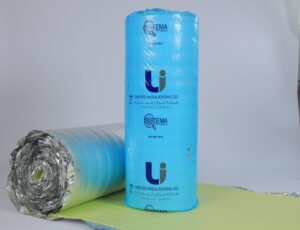
United Insulations Company (UCI) provides Saudi-manufactured solutions specializing in
Low-Density Polyethylene Foam (LDPE Foam) products, with a focus on quality, application versatility, and project requirements. The company’s solutions cover insulation, protection, packaging, and related applications serving industrial, commercial, infrastructure, and other project needs.
LDPE Foam Products
Low-density polyethylene foam can be used across a variety of applications depending on the required specifications and design. Depending on the application, foam solutions can provide properties such as thermal and acoustic insulation, moisture resistance, impact absorption, and protection from external conditions.
Solutions Built Around the Application
An industrial solution should not start with the product alone. It should start with understanding the application. The end use, project area, operating conditions, insulation requirements, and technical specifications should be evaluated before selecting the appropriate product. This approach allows decision-makers to move from simply purchasing a material to selecting an
insulation solution designed around a clear operational objective.
Quality as Part of the Industrial Purchasing Decision
In industrial projects, product specifications alone are not enough. Consistent quality, process management, and the ability to meet customer requirements are all important factors in procurement decisions and long-term business relationships.
United Insulations Company holds ISO 9001 certification as part of its quality management approach. ISO 9001 is an international quality management standard focused on consistent processes, performance improvement, and meeting customer requirements.
From Energy Costs to Operational Stability: Why Should Insulation Be Evaluated?
For an industrial decision-maker, the value of insulation goes beyond reducing heat transfer. A facility with better thermal performance can have greater control over its operating environment, reduce unnecessary thermal loads, and improve the way cooling and HVAC systems are utilized. Investing in energy efficiency also supports the broader direction of modern industrial facilities toward reducing waste, improving resource efficiency, and strengthening sustainability.
Is Thermal Insulation an Investment or an Additional Cost?
The answer depends on the project, but treating insulation only as an additional expense can overlook its operational value. A proper assessment should compare implementation costs with expected benefits over the useful life of the solution rather than focusing only on the material’s purchase price. If the solution helps reduce cooling demand and improve indoor conditions, insulation can become part of a cost-reduction strategy rather than simply another expense.
When Is the Right Time to Evaluate Insulation?
If energy bills are high, HVAC systems operate for extended periods, certain factory areas experience excessive heat, or the building is old or inadequately insulated, these are clear reasons to consider an assessment. A facility does not need to wait for a major problem. Insulation can be evaluated before expansion, during the renovation of an existing building, or as part of a broader energy-efficiency program.
Can an Existing Factory Be Insulated Without Stopping Operations?
Yes. In many cases, an existing factory can be evaluated and insulated while operations continue. However, the installation approach depends on the building structure, insulation locations, operating hours, safety requirements, and access conditions. A clear execution plan should identify work zones, scheduling, and coordination requirements to minimize disruption to production.
How Should You Start a Factory Thermal Insulation Project?
If you are considering
thermal insulation for your factory, the first step should not be ordering insulation materials. It should be identifying the problem you want to solve. Start by collecting facility data, identifying priority areas, reviewing energy consumption and operating hours, and then requesting a technical assessment of the most suitable solution.
Practical Steps to Get Started
- Identify areas with the highest heat exposure.
- Inspect roofs, walls, and existing insulation.
- Collect energy consumption and operating-hour data.
- Identify areas requiring greater thermal stability.
- Define the project’s financial and operational objectives.
- Request an assessment based on the facility’s conditions.
- Compare solutions based on performance and long-term cost.
- Develop an installation plan that minimizes production disruption.
Request a Thermal Insulation Assessment for Your Factory
Do not base an insulation decision on assumptions or material prices alone. If your goal is to improve
industrial energy efficiency, reduce thermal loads, and support a more stable operating environment, the right starting point is an assessment based on your facility’s actual conditions and requirements.
Contact United Insulations Company to discuss your project requirements and identify the most suitable solution for your industrial application. Conclusion
Thermal insulation in factories is more than an additional building layer. It can be part of a broader strategy for improving
industrial energy efficiency, reducing thermal loads, supporting operational stability, and improving the use of HVAC and cooling systems. The right decision should not be based on choosing insulation randomly or simply selecting the lowest price. It should begin with understanding the facility: Where is heat entering? How many hours does the factory operate? Which areas require greater thermal stability? And how does the current operating cost compare with the proposed solution? Answering these questions allows decision-makers to move from purchasing a material to making a data-driven investment decision based on actual operational needs.
United Insulations Company (UCI) provides solutions based on low-density polyethylene foam products and works to meet project requirements according to application conditions and technical specifications.
Start by assessing your factory’s insulation needs and identifying opportunities to improve energy efficiency before implementation. Frequently Asked Questions
−Is Thermal Insulation Suitable for All Types of Factories?
Yes, thermal insulation can be evaluated for many types of industrial facilities. However, the appropriate solution varies according to the industrial activity, building structure, required temperatures, operating hours, moisture conditions, and application requirements. A one-size-fits-all solution is therefore not recommended.
−When Will Energy Savings Appear After Insulation Is Installed?
Operational effects may become noticeable after implementation, but measuring actual savings requires comparing energy and performance data before and after installation while accounting for weather, operating hours, production levels, and HVAC performance. There is therefore no fixed savings timeline that applies to every factory.
−Can an Existing Factory Be Insulated?
Yes. Many existing factories can be evaluated for insulation upgrades. The installation method depends on the facility design, insulation locations, operating schedule, access requirements, and safety considerations. A suitable execution plan should be developed to minimize disruption to production.
−Does Thermal Insulation Directly Reduce Electricity Bills?
Thermal insulation can contribute to lower cooling demand and energy consumption associated with heat gain. However, the actual reduction depends on the facility’s conditions. A project-specific assessment is therefore preferable to relying on a fixed savings percentage.
−Which Areas of a Factory Should Be Insulated First?
Priority depends on the facility, but roofs, external walls, sun-exposed areas, openings, doors, and spaces requiring thermal stability should be evaluated. Areas with high internal heat loads generated by production processes should also be considered.
−How Do I Know Which Insulation Type Is Right for My Factory?
The appropriate solution depends on the facility type, application, temperature requirements, moisture exposure, surface characteristics, operating hours, and project specifications. Insulation should therefore be selected based on the application rather than simply the material name.
−Can LDPE Foam Be Used in Industrial Applications?
LDPE Foam can be used in a range of industrial applications depending on the required specifications and intended use. Performance and properties vary according to the product, design, thickness, and installation method, so technical requirements should be defined before selecting a solution.
−Is Insulation Suitable for Factories Operating 24/7?
Yes. Insulation can be particularly relevant for facilities with long operating hours because the building’s thermal performance can affect operations continuously. However, the actual benefits should be evaluated based on the facility’s specific conditions.