Using foam to protect industrial products may seem straightforward: place a layer of foam around the product, package it, and ship it. In reality, effective protection is more complex. Products can arrive scratched, damaged, deformed, or broken despite using
product protection foam. In many cases, the problem is not whether foam was used, but whether its type, density, thickness, and configuration were suitable for the product. In industrial environments, packaging is not simply about preventing scratches. A packaging system should help absorb impact and reduce the effects of vibration, friction, compression, and handling while taking transportation, storage conditions, and product characteristics into account. Therefore, selecting
industrial packaging foam should begin with risk analysis rather than thickness alone. If a product is being damaged during transportation, the right question is not simply, “Do we need foam?” The better question is:
“What foam specifications does this product require to arrive safely?” This is where the real criteria for selecting an effective packaging solution begin.
Why Does a Product Get Damaged Despite Using Foam?
Industrial packaging foam can fail when its properties do not match the loads and risks the product experiences. A foam material may be high quality yet unsuitable for the product’s weight, shape, or transportation conditions. Likewise, greater thickness does not automatically mean better protection if density or design is inappropriate. The most common causes of packaging damage can be summarized as follows:
- Selecting an unsuitable foam density.
- Using insufficient or excessive thickness for the expected impact level.
- Failing to account for the product’s weight, shape, and pressure points.
- Leaving excessive empty space inside the package.
- Using the same foam configuration for different products.
- Ignoring transportation, storage, and handling conditions.
- Implementing the packaging solution without testing it first.
Foam Is More Than Just a Protective Layer
The role of foam in a packaging system is to manage the energy generated by impact, compression, and movement. When a package is dropped or exposed to vibration, forces are transferred toward the product. The foam should act as a buffer that reduces the intensity of these forces and protects the most sensitive areas. This is why
impact absorption depends not only on using foam, but also on the material properties, configuration, and way the foam is positioned around the product. An unsuitable solution may provide limited protection despite increasing packaging costs.
Why Does Packaging Foam Fail?
Several factors can cause
product protection foam to fail. Some are related to the material itself, while others are associated with package design or transportation conditions.
Unsuitable Foam Density
Density is one of the key properties to consider when selecting foam. It influences how the material behaves under compression and how it handles different loads. Therefore, there is no single ideal density for every product or application. If the density is unsuitable, the foam may not provide the required support or may compress excessively under load. Conversely, choosing a material that is unnecessarily rigid may not be ideal for products that require greater flexibility to manage impact and surface contact. Density should therefore be evaluated according to product weight, surface characteristics, load points, required protection level, and transportation conditions.
How Does Density Affect Performance?
Density can be considered one of the key indicators of how foam behaves under load, but it is not the only criterion. Foam selection should be based on a combination of material properties that work together to deliver the required level of protection. This is where one common mistake occurs: assuming that the highest available density is always the best choice. In reality, the better solution is
the density that is appropriate for the application, not necessarily the highest one.
Insufficient Thickness
Thickness is an important factor in product protection, but it does not work independently from the other specifications. If the foam layer is too thin for the expected impact or compression, it may not provide sufficient cushioning capacity. On the other hand, increasing thickness without analysis can increase package size and cost without providing a meaningful improvement in performance. Therefore, thickness should not be selected based on the assumption that “thicker always means better protection.”
How Do You Choose the Right Thickness?
Start by identifying the areas of the product that are most vulnerable. Not every side of a product necessarily requires the same thickness. Some products need additional support around corners, while others require continuous protection around the entire surface. You should also consider potential drop height, handling practices, possible compression during storage or transportation, and the weight of the product.
Ignoring Product Shape and Weight
Knowing a product’s dimensions is not enough to select
industrial packaging foam. The product’s geometry, weight distribution, and pressure points can significantly affect how forces are transferred through the package. For example, a lightweight product with a sensitive edge or corner may be more vulnerable to damage than a heavier product with better weight distribution. Equipment with protruding components or delicate surfaces may also require a different design from products with regular shapes. For this reason, designing the foam around the product is one of the most important elements of successful industrial packaging.
Industrial Packaging Foam vs. Commercial Packaging Foam
Commercial and industrial packaging solutions may look similar, but their requirements and applications can differ significantly. Commercial packaging may focus on general protection during standard shipping, while industrial packaging may need to handle heavier, more sensitive, or higher-value products.
| Criterion | Commercial Packaging | Industrial Packaging |
| Product Type | Various consumer products | Industrial equipment and products |
| Protection Level | General protection | Risk-based protection |
| Design | Often standardized | Can be customized |
| Weight | Light to medium | Medium to heavy |
| Risks | Friction, handling, shipping | Impact, compression, vibration, handling, transportation |
| Customization | Limited in some applications | More critical |
In industrial applications, the objective is not simply to “package the product.” It is to develop a solution that reduces the risk of damage and protects the product throughout transportation and storage.
How Can You Test Packaging Performance Before Supply?
Before approving a
product protection foam solution for large-scale supply, it is advisable to test the proposed configuration using the actual product or a representative model. Early testing can identify weaknesses before they result in product losses or additional costs.
1. Identify Vulnerable Areas
Identify the most vulnerable areas of the product, including corners, edges, scratch-sensitive surfaces, protruding components, or parts that may be damaged under pressure.
2. Evaluate Product Weight
Product weight should be a key part of foam selection. Heavier products require a solution capable of handling the loads generated by movement, compression, and handling.
3. Analyze Transportation Conditions
Is the product transported within Saudi Arabia or to international markets? Will it undergo multiple manual handling stages? Will it be stored for extended periods? Could the package experience compression or stacking? All of these factors should be considered when designing the packaging solution.
4. Build a Prototype
A packaging prototype can be developed before finalizing the design. This makes it easier to identify issues related to movement inside the package, insufficient support, or excessive packaging volume.
5. Test the Product After Transportation or Simulation
Once the packaging solution has been prepared, the product should be inspected and its condition compared before and after transportation or simulated handling. The goal is to verify that the foam provides the required protection under realistic conditions.
Customized Packaging Solutions
Products are not identical, so
industrial packaging foam solutions should not always be identical either. When product weights, dimensions, or vulnerable areas differ, a customized solution can provide better protection than a generic approach. Foam solutions can be designed around the product based on:
- Length, width, and height.
- Product weight.
- Geometry and shape.
- Sensitive corners and edges.
- Required protection level.
- Handling conditions.
- Transportation and storage conditions.
- Product type and industry application.
When Do You Need a Customized Solution?
A customized solution is particularly suitable when the product is high-value, sensitive to impact or scratches, irregularly shaped, or when damage continues to occur despite using conventional packaging solutions. Customization is also important for
packaging sensitive equipment, especially products containing delicate components or surfaces that require continuous protection during transportation and storage.
How Do You Choose the Right Product Protection Foam?
Foam selection should begin with the product, not simply with the material. Before requesting foam, gather the key information that allows the supplier to understand the application and provide an appropriate recommendation.
Information You Should Prepare
- Product dimensions.
- Product weight.
- Clear product photographs.
- Sensitive materials or surfaces.
- Components that are commonly damaged.
- Current packaging method.
- Type of damage occurring during transportation.
- Transportation method.
- Expected storage duration.
- Required quantities.
The clearer this information is, the easier it becomes to assess the packaging requirements and develop a suitable solution.
Common Mistakes When Selecting Industrial Packaging Foam
Focusing Only on Thickness
Thickness matters, but it is not the only factor. Choosing thicker foam without evaluating density and design may fail to address the actual cause of damage.
Using the Same Solution for Every Product
Using the same size and thickness for every product may be convenient, but it is not necessarily the most effective approach. Differences in weight, shape, and sensitivity mean that requirements may vary from one product to another.
Failing to Control Product Movement Inside the Package
Even high-quality foam may not deliver the expected result if the product moves excessively inside the package. The design should minimize unwanted movement and provide support in the right areas.
Ignoring the Total Cost of Damage
The cheapest packaging may appear to be the most economical option. However, if it leads to higher damage rates, returns, or customer complaints, the actual cost can be significantly higher.
Polyethylene Foam for Protective Packaging Applications
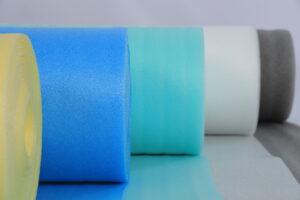
Polyethylene foam is used in a wide range of protective packaging applications due to its suitability for various uses. Depending on the product and application, it can be used to protect surfaces, reduce friction, and support products during handling and transportation. Foam performance depends on selecting suitable specifications and integrating the material correctly into the overall packaging system. It should therefore be viewed as part of a complete packaging solution rather than simply a packaging material.
What Makes an Industrial Packaging Solution Effective?
An industrial packaging solution can be considered effective when it achieves a balance between protection, cost, usability, package size, and product requirements. Key indicators of an effective solution include:
- Reducing the likelihood of product damage.
- Minimizing scratches and friction.
- Providing adequate support for sensitive components.
- Reducing product movement inside the package.
- Matching the foam to product weight and shape.
- Ensuring practical application within the packaging process.
- Maintaining product condition during transportation and storage.
- Achieving a reasonable cost relative to the risk of damage.
When Should You Replace Your Current Packaging Solution?
If products repeatedly arrive in poor condition or transportation-related damage is contributing to a high return rate, it may be time to reassess the entire packaging solution. A review may also be necessary when product weight, design, or shipping methods change, or when expanding into new markets with different transportation and handling conditions. Instead of addressing each damage incident separately, it is better to identify the root cause and establish clear criteria for foam selection and packaging design.
How Can United Insulations Help You Choose the Right Packaging Solution?
United Insulations Company (UCI) is a Saudi manufacturer specializing in insulation and foam products, including
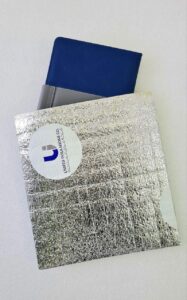
low-density polyethylene foam (LDPE Foam) and protective packaging solutions. United Insulations offers a range of foam products suitable for protective packaging applications, with the ability to assess product and application requirements to identify a suitable solution. Its protective and packaging solutions include products such as
Packing Sheet,
Foam Bags, and
Foam Corner, in addition to
polyethylene foam products that can be used across different applications depending on product requirements. UCI operates under an
ISO 9001 quality management system, supporting a structured approach to quality management, process improvement, and customer requirements.
Do Not Choose Foam Based on Thickness Alone
The right decision when selecting
industrial packaging foam begins with understanding the product and the risks it faces. Density and thickness are important, but they are only part of a broader set of criteria that includes weight, shape, vulnerable areas, transportation and storage conditions, and package design. If your goal is to reduce product damage and improve protection, do not start by requesting a specific foam size or thickness alone. Start with the product specifications and the actual problem, then develop the packaging solution around the real application requirements.
Send Your Product Specifications for a Packaging Recommendation
Send the product dimensions, weight, photographs, and details of the damage occurring during transportation, along with information about shipping and storage conditions. This information helps assess your requirements and identify a suitable
product protection foam solution.
Why Does Packaging Foam Fail?
Packaging foam can fail when its properties do not match the product’s weight, shape, and exposure to impact, compression, and movement during transportation and storage. The cause may involve density, thickness, package design, or insufficient support for vulnerable areas.
What Is the Difference Between Thickness and Density?
Thickness refers to how thick the foam layer is, while density relates to the amount of material within a given volume and how it behaves under load. Neither should be considered a substitute for the other, as overall performance depends on how the properties match the application.
Can Foam Be Designed According to the Product?
Yes. Customized packaging solutions can be developed according to product dimensions, weight, shape, vulnerable areas, and required protection level. This approach is particularly useful for industrial products, sensitive equipment, and products with non-standard shapes.
Does Thicker Foam Always Provide Better Protection?
Not necessarily. Thickness should be appropriate for the application, while density, design, product weight, and impact conditions must also be considered. Increasing thickness without proper analysis can increase packaging cost and size without providing a meaningful performance improvement.
What Is the Best Foam for Packaging Sensitive Equipment?
There is no single foam solution that is ideal for every type of equipment. The choice depends on equipment weight and shape, sensitive components, required protection, and transportation and storage conditions. The product and application should therefore be assessed before determining foam specifications.
How Do I Know If My Current Packaging Solution Is Inadequate?
Repeated scratches, breakage, deformation after transportation, excessive product movement inside the package, or recurring damage to specific components are all signs that the packaging system should be reviewed. Increased returns or customer complaints related to shipping damage may also indicate that the current solution needs reassessment.
Can the Same Foam Be Used for Multiple Products?
The same foam type may be suitable for multiple applications when the products have similar requirements. However, the same thickness, density, and configuration should not automatically be assumed to work for every product. Requirements vary according to weight, shape, sensitivity, and transportation conditions.
What Information Is Needed to Select the Right Packaging Foam?
It is helpful to provide product dimensions, weight, photographs, sensitive materials or surfaces, previously damaged areas, transportation and storage conditions, current packaging method, and required quantities. The more accurate the information, the more relevant the packaging recommendation can be.
Conclusion
The failure of
industrial packaging foam does not necessarily mean that foam itself is ineffective. It may indicate that the solution was not designed around the actual product requirements. Density and thickness matter, but successful protection depends on a complete system that considers product weight, shape, vulnerable areas, impact conditions, transportation, storage, and package design. When
product protection foam is selected based on clear criteria and tested before large-scale supply, packaging becomes a strategic tool for protecting products and reducing losses rather than simply another step in the shipping process. If you are experiencing recurring transportation damage or need
packaging for sensitive equipment, the first step is to share your product specifications and application requirements so that a packaging solution can be developed around your actual needs.
Send your product specifications to United Insulations for a suitable packaging recommendation.