Expansion joints for roads and bridges are essential components in many concrete and infrastructure applications. They allow structural elements to accommodate movement caused by temperature changes, shrinkage, creep, traffic loads, rotations, and other structural effects without transferring excessive stresses to adjacent components. Choosing the right joint is therefore not simply a matter of selecting a filler thickness or joint width. In road and bridge projects, engineers should consider the
expected movement, loading conditions, joint location, exposure to water and weather, movement cycles, maintenance requirements, and the sealing and waterproofing system used with the joint. Engineering guidance from the U.S. Federal Highway Administration (FHWA) highlights that bridge joint design may need to account for several types of movement, including thermal expansion and contraction, concrete shrinkage and creep, live-load rotation, prestressing effects, and foundation movements. This guide explains
when roads and bridges require expansion joints, how joints accommodate movement, the differences between foam fillers and elastomeric or mechanical systems, how to select joint materials, the role of Backer Rod and sealants, and the common design and installation mistakes that can reduce joint performance and service life.
Why Do Roads and Bridges Need Expansion Joints?
Concrete structures need controlled space to accommodate movement when their dimensions change or when they are subjected to repeated loads and structural actions. Concrete is not dimensionally static; it expands and contracts with temperature changes and is also affected by shrinkage, creep, loading, and relative movement between structural elements. An
expansion joint can be defined as a deliberately created separation that allows controlled relative movement between adjacent structural elements while reducing unwanted stress transfer and cracking.
Thermal Movement and Its Effect on Concrete
One of the main sources of movement in roads and bridges is
temperature variation. As temperatures rise, concrete elements tend to expand; as temperatures fall, they contract. If this movement is excessively restrained, stresses may develop and contribute to cracking or deterioration around the joint. This becomes particularly important in environments with significant temperature variations between day and night or across seasons. Sun-exposed surfaces can also experience substantial temperature differences because concrete surface temperatures may become considerably higher than ambient air temperatures. FHWA references also identify thermal effects as an important consideration in concrete cracking and movement, particularly where concrete elements experience significant temperature variations.
Loads and Bridge Movement
Bridges are not affected by thermal movement alone. Repeated vehicle loading can cause rotation and relative displacement in structural components, particularly at deck ends and transition areas between the bridge and roadway. In multi-span bridges, movement can vary from one location to another depending on span length, structural system, temperature, loading conditions, bearing configuration, and support details. For this reason,
bridge expansion joints cannot be selected using a single rule for every project. The expected design movement should first be established, followed by selection of a joint system capable of accommodating that movement under actual service conditions.
How Do Expansion Joints Absorb Movement and Stress?
Expansion joints work by providing a controlled gap or a compressible material between adjacent concrete elements. When one element expands, the joint material accommodates the movement rather than forcing the surrounding concrete to absorb the entire deformation. A joint should be viewed as a
controlled movement zone, not simply as a gap between two concrete sections. Its design must therefore be compatible with the expected movement, loading conditions, and surrounding environment.
What Happens When Temperature Rises?
As temperatures rise, concrete elements expand. When properly designed, the joint filler or mechanical system accommodates this movement without generating unacceptable pressure on adjacent components. If the joint is too narrow or the filler cannot compress adequately, the system may lose its ability to accommodate movement, potentially resulting in cracking, debonding, or sealant failure.
What Happens When Temperature Falls?
When temperatures fall, concrete elements contract and the joint may become wider. This is where an
elastic sealant becomes important because it helps maintain joint closure and limits the penetration of water and contaminants into the underlying structure. For this reason, selecting a good filler alone is not enough. The
filler + Backer Rod + sealant + waterproofing details should function as an integrated joint system.
Types of Expansion Joints
Expansion joint types vary according to joint location, movement range, loading, environmental exposure, and project requirements. In general, solutions may include compressible joint fillers, flexible sealing systems, and elastomeric or mechanical joint systems designed for larger movements and heavier traffic.
Foam Expansion Joint Fillers
Foam expansion joint fillers are used as flexible, compressible fillers in a wide range of concrete applications. Closed-cell polyethylene foam is suitable for certain joint details because of its low weight, flexibility, moisture resistance, and ease of handling. United Insulations Co. (UCI) manufactures
closed-cell polyethylene foam expansion joint sheets designed for use as expansion joint fillers and flexible gap materials in walls, floors, and concrete structures, with dimensions available according to project requirements. Key advantages of closed-cell foam in joint applications include:
- Flexibility and compressibility.
- Low water absorption compared with open-cell materials.
- Easy cutting and installation.
- Lightweight handling and transportation.
- Compatibility with suitable sealant and waterproofing systems.
UCI’s published product data lists standard expansion joint sheet thicknesses such as
10, 15, and 20 mm, with width and length available according to customer requirements. The published test data also covers properties such as density, elongation, water absorption, and other characteristics under specified ASTM test methods.
But is foam suitable for every bridge? No. This is an important engineering distinction. Foam sheets can serve as flexible fillers or separation materials in specific joint details, but they are not a direct substitute for all
heavy-duty bridge expansion joint systems. Where large movements and repeated traffic loading are expected, a dedicated elastomeric or mechanical system may be more appropriate.
Elastomeric and Mechanical Expansion Joints
Elastomeric and mechanical joint systems are used where greater movement capacity or repeated operational loading must be accommodated. These systems may incorporate elastomeric components, metal profiles, or mechanical assemblies designed to permit movement while maintaining a functional traffic surface. For bridges, the joint system should be selected according to project requirements, owner specifications, and applicable engineering standards. Maintenance and replaceability should also be considered because bridge joints are exposed to water, debris, chemicals, and repeated traffic loading. FHWA notes that bridge deck joints can become maintenance problem areas because roadway water and contaminants may leak through them, or because the joint does not perform as intended.
How to Select the Right Joint Based on Load and Location
Selecting
expansion joints for roads and bridges should begin with the operating conditions rather than with a predetermined material. The engineer should first establish the expected movement, then evaluate loading, location, environmental exposure, waterproofing, and sealing requirements.
1. Expected Movement
The first question is:
How much movement must the joint accommodate? As expected movement increases, the joint system must have an appropriate movement capacity rather than relying on a simple filler that does not match the design requirements.
2. Loading Conditions
Is the joint located in a building floor, a roadway, or at the end of a bridge carrying heavy trucks every day? The difference is significant. A joint in a pedestrian or interior floor area may experience completely different loading conditions from a joint installed in a highway bridge deck.
3. Joint Location
Joint location directly affects material and installation requirements. Determine whether the joint is:
- Exposed to direct sunlight.
- Exposed to water or moisture.
- Exposed to oils, fuels, or chemicals.
- Located in a high-traffic area.
- Connected to a waterproofing system.
- Located within a concrete element or between two different structural components.
4. Movement Cycles
Some joints experience limited movement, while others may undergo thousands or millions of movement and loading cycles during the service life of a project. Therefore, selection should not be based on
material strength alone, but also on the ability of the material to retain its properties under repeated compression, movement, and environmental exposure.
5. Water and Moisture Resistance
In roads and bridges, water penetration is a major risk that must be controlled, particularly when water can reach steel components or vulnerable areas within the structure. For this reason, the joint design should be integrated with
sealants and waterproofing systems, rather than simply inserting a filler into the gap.
| Application | Primary Consideration | Potential Solution |
| Concrete floors and slabs | Movement and separation | Flexible foam filler |
| Joints between concrete elements | Expansion and contraction | Foam + suitable sealant system |
| High-traffic roads | Loading and movement cycles | Traffic-rated joint system |
| Bridge deck ends | Movement, loads, and water protection | Dedicated bridge joint system |
| Water-exposed areas | Sealing and waterproofing | Joint filler + Backer Rod + sealant |
| Large movement | Movement capacity | Elastomeric/mechanical system according to design |
The Role of Backer Rod and Sealants
A
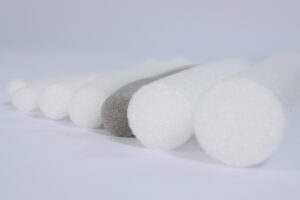
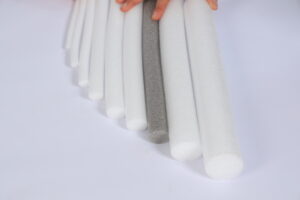
Backer Rod is an important component in many joint details that use flexible sealants. Its primary purpose is not to replace the main joint filler, but to control sealant depth and create an appropriate joint geometry. Backer Rod can also reduce sealant consumption and help prevent unwanted three-sided adhesion, allowing the sealant to accommodate joint movement more effectively. United Insulations Co. states that its
closed-cell polyethylene Backer Rod is designed to control sealant depth and support sealant performance, with published product information highlighting resistance to water, environmental conditions, and chemicals.
Why Shouldn’t the Entire Joint Be Filled with Sealant?
Using more sealant does not necessarily provide better protection. An incorrect sealant depth or joint geometry can restrict movement and increase the risk of failure over time. This is why Backer Rod is commonly used to establish an appropriate sealant depth, subject to the joint design and the sealant manufacturer’s recommendations. UCI’s dedicated
Backer Rod product page provides additional information about available sizes and product characteristics.
UCI Backer Rod Product Common Expansion Joint Design and Installation Mistakes
A joint can fail even when a high-quality material is used if the problem lies in the design or installation. In many cases, the underlying issue is that the overall system does not match the expected movement, loading, or environmental conditions.
Mistake 1: Choosing the Joint Based Only on Price
A lower-cost material may appear economical initially, but repair, replacement, and maintenance costs can be significantly higher than selecting the appropriate system from the beginning.
Mistake 2: Ignoring Design Movement
Selecting a joint without determining the expected expansion, contraction, and structural movement leaves the selection process incomplete.
Mistake 3: Using the Same Joint for Every Location
A joint suitable for a concrete floor is not necessarily suitable for a bridge deck or highway. Loading, environmental exposure, movement cycles, and maintenance requirements vary from one application to another.
Mistake 4: Neglecting Water Management
Poor waterproofing and sealing details can allow water to penetrate through the joint and reach vulnerable layers or structural components.
Mistake 5: Incorrect Backer Rod Installation
Backer Rod diameter and installation depth should not be selected arbitrarily. They should correspond to the joint dimensions, sealant system, and manufacturer’s installation requirements.
Mistake 6: Ignoring Long-Term Movement
A joint may perform well during initial service, but repeated movement and exposure to temperature, water, and loading can reveal weaknesses over time.
How to Select Joint Materials for Your Project
A simple checklist can be used before approving
joint materials:
Why Is Polyethylene Foam Important in Certain Joint Applications?
Closed-cell polyethylene foam combines
flexibility, lightweight construction, moisture resistance, and ease of installation, making it suitable as a flexible filler in various concrete joint applications. UCI’s published expansion joint sheet data includes properties such as density, elongation, water absorption, thermal conductivity, and compression performance. The product is available in different thicknesses, with certain dimensions customizable according to project requirements. This makes the material useful when the project requires a
flexible or compressible separation layer within a properly designed joint system, rather than treating it as a universal solution for every bridge expansion joint.
Expansion Joints in Saudi Infrastructure Projects
Infrastructure projects in Saudi Arabia can face demanding operating conditions that require careful consideration of joint materials, particularly in areas exposed to high temperatures, strong solar radiation, dust, water, and repeated traffic loads. For this reason, joint selection should not be based solely on a material’s commercial name. It should consider
performance data, test methods, project requirements, material compatibility, and installation procedures. United Insulations Co. provides low-density polyethylene foam solutions across its range of insulation, joint, and protection products, with applications serving construction and industrial projects.
The Relationship Between Expansion Joints and Protection Layers
An expansion joint does not operate independently from the rest of the construction assembly. In some applications, waterproofing layers and adjacent components must be protected from impact and construction activities. For this reason,
protection layers may form an important part of the surrounding system, particularly in foundations, tunnels, and structures where waterproofing needs protection during backfilling and construction. UCI also manufactures polyethylene foam protection boards designed to protect waterproofing and thermal insulation systems in construction projects, with properties intended to withstand impact and demanding environments. This section can be internally linked to UCI’s
Protection Board product page when the article is published.
UCI Protection Board How Do You Know if the Selected Joint Is Appropriate?
There is no single material that can be considered the best for every project. The appropriate material is the one that provides compatibility between
movement, loading, environment, installation method, and service-life requirements. Before approving a product, the project team should ask:
- What is the design movement?
- What are the loading conditions?
- Is the joint exposed to water?
- Are chemicals or oils present in the surrounding environment?
- Is a Backer Rod required?
- What type of sealant will be used?
- Are all materials compatible?
- Does the product meet the required specifications and test methods?
Once these questions have been answered, selecting
expansion joints for roads and bridges becomes more systematic and less dependent on guesswork.
When Should You Seek Technical Advice?
For large projects involving significant movement or continuous traffic loading, joint selection should not rely on a product catalog alone. Drawings, specifications, design movement, and site conditions should be reviewed. Technical consultation becomes especially important for:
- Bridges and tunnels.
- High-traffic roads.
- Industrial facilities.
- Water- and moisture-exposed projects.
- Projects requiring long service life and limited maintenance.
Conclusion: The Right Joint Starts with Understanding Movement
Expansion joints for roads and bridges are not simply materials placed between two concrete sections. They are part of an engineering system designed to accommodate movement and protect surrounding components. The correct selection process begins by defining
expected movement, loading, joint location, and environmental conditions, followed by selecting the appropriate filler or joint system while considering Backer Rod, sealants, waterproofing, and installation details.
Polyethylene foam sheets can be an effective solution for many joint filler and flexible separation applications, particularly where flexibility, moisture resistance, and ease of installation are required. However, for bridge and roadway joints subjected to significant movement and traffic loads, the complete system should be evaluated according to project requirements rather than selecting a single material in isolation. If you are working on a road, bridge, or concrete construction project and need to determine the appropriate
expansion joint type, filler material, or Backer Rod, the project’s technical requirements should be reviewed before approving the product.
- Expansion joints for roads and bridges
Frequently Asked Questions
−Why are expansion joints important?
Expansion joints help accommodate movement caused by temperature changes, shrinkage, creep, loading, and other structural actions, reducing unwanted stress transfer and cracking around the joint.
−How do I choose the right expansion joint type?
The appropriate type should be selected based on expected movement, loading, joint location, exposure to water and chemicals, movement cycles, maintenance requirements, and the project’s approved specifications.
−Do expansion joints vary depending on the road or bridge type?
Yes. Joint requirements vary according to the structure type, span length, bridge system, expected movement, traffic loading, and environmental conditions. There is therefore no single joint type suitable for every road or bridge.
−Can polyethylene foam be used in bridge expansion joints?
Polyethylene foam can be used as a flexible filler or separation material in specific structural joint details, but suitability depends on the joint design, movement, and loading. It should not automatically be considered a substitute for dedicated mechanical or elastomeric bridge joint systems designed for large movements and heavy traffic.
−What is the function of Backer Rod in expansion joints?
Backer Rod controls sealant depth and helps establish the appropriate joint geometry. It can also reduce sealant consumption and help prevent unwanted three-sided adhesion.
−Are foam expansion joint fillers water-resistant?
Water resistance depends on the foam type, structure, and specifications. Closed-cell foam generally provides better moisture resistance than open-cell materials, but the complete system—including sealant, waterproofing, and installation details—must be evaluated.
−Can the same joint material be used for every project?
No. Joint requirements vary according to project type, movement, loading, and environmental exposure. A material suitable for a concrete floor may not be appropriate for a bridge or highway joint.
−What should be reviewed before approving a joint material?
The project team should review design movement, loading, joint dimensions, site conditions, water and chemical resistance, compatibility between the filler and sealant, test methods, installation instructions, and approved project specifications.
−How can joint materials help extend the service life of a structure?
When properly selected, designed, and installed, joint materials help accommodate movement, reduce stress transfer, and limit water and contaminant penetration into vulnerable areas, supporting long-term structural performance.
Ready to Get Started?
Contact the UCI team to identify the right expansion joint solution for your project requirements and obtain available technical specifications and dimensions.
Request a Quote 
 Expansion Joints for Roads and Bridges – When You Need Them and How to Choose the Right Type?
  Expansion Joints for Ports and Airports | Expansion Joint Sheet
  Foam Protection in Roads and Bridges Projects – The Role of Protection Layers in Modern Construction
  How to Choose the Correct Backer Rod Diameter for Every Type of Joint