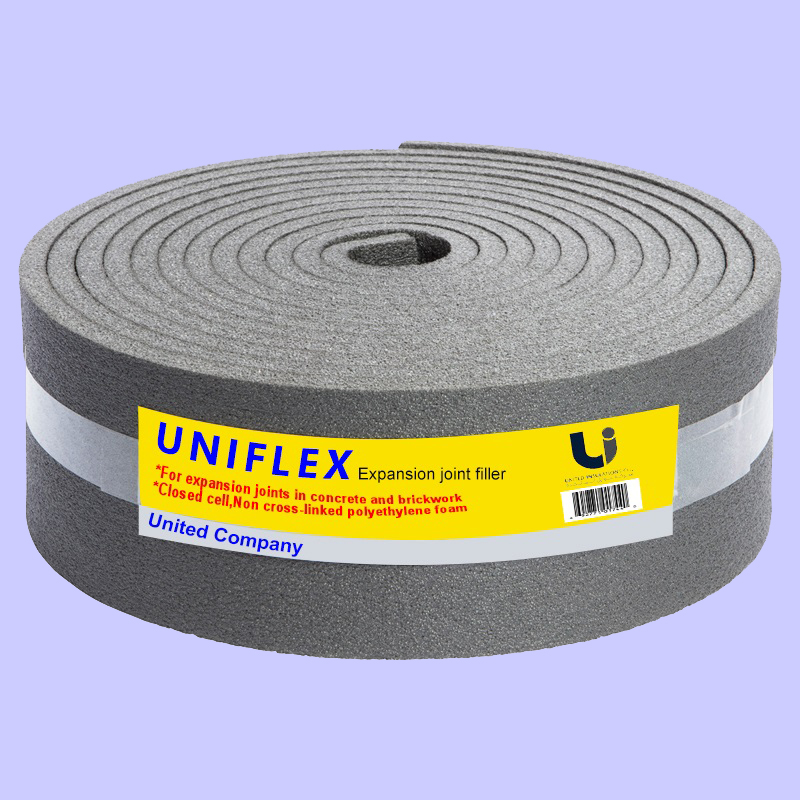
Multi-storey parking structures are among the most heavily stressed concrete buildings. Every day they withstand constant vehicle movement, repetitive traffic loads, vibration, and significant temperature fluctuations.
For this reason, structural durability depends not only on concrete strength but also on the ability of the building to accommodate movement safely. A properly designed Expansion Joint Sheet absorbs thermal and structural movement, prevents stress concentration, and significantly extends the service life of the parking structure.
This guide explains why expansion joints for parking structures are essential, where they should be installed, how to choose the right specification, and what engineering practices ensure long-term performance.
Unlike conventional buildings, parking garages experience continuous vehicle traffic throughout the day. Every acceleration, braking action, and steering movement generates dynamic loads that repeatedly stress the concrete slabs.
Without a properly engineered Expansion Joint Sheet, these movements gradually create micro-cracks that can develop into serious structural issues, including damaged concrete, water penetration, and deterioration of waterproofing systems.
This is particularly important in commercial parking facilities, airports, hospitals, and shopping malls where traffic volumes remain consistently high.
Open-air parking decks are exposed to intense sunlight during the day and cooler temperatures at night. This repeated thermal cycle causes concrete slabs to expand and contract continuously.
Over the building’s lifetime, these movements occur thousands of times, making Expansion Joint Sheets essential for accommodating structural movement while protecting adjacent concrete elements.
For long-term durability, expansion joint materials should offer excellent flexibility, UV resistance, weather resistance, and long-lasting performance.
Parking structures face unique engineering challenges that differ significantly from residential or office buildings. Floors, retaining walls, and exposed decks must withstand continuous vehicle traffic, environmental exposure, moisture, and chemical contaminants such as oil, fuel, and de-icing salts.
For this reason, an integrated system combining Expansion Joint Sheets with waterproofing solutions is essential to maintain structural integrity over the building’s entire service life.
Every vehicle traveling through a parking structure generates dynamic loads that affect concrete joints, especially around entrances, exits, ramps, and turning areas.
As traffic intensity increases, high-quality expansion joint systems become essential for reducing stress transfer and protecting surrounding concrete elements.
Open parking decks experience significant temperature fluctuations between seasons and even within a single day. Although concrete movement is relatively small, repeated expansion and contraction accumulate stress over time.
A properly selected Expansion Joint Sheet absorbs this movement, helping maintain slab stability while reducing the risk of cracking and localized settlement.
Water leakage is one of the most common problems in multi-storey parking structures, particularly on exposed upper decks and frequently washed parking areas.
If expansion joints are not properly protected, water can penetrate lower levels, accelerating reinforcement corrosion, weakening concrete, and increasing maintenance costs.
Integrating an Expansion Joint Sheet with a reliable waterproofing system is therefore essential for long-term structural protection and operational reliability.
Expansion Joint Sheets are one of the most critical components in protecting parking structures against structural movement and repetitive traffic loads. While concrete is exceptionally strong in compression, it has limited flexibility and requires engineered movement joints to accommodate expansion and contraction safely.
A properly designed Expansion Joint Sheet absorbs structural movement between concrete sections while maintaining a continuous driving surface. It also protects waterproofing systems, minimizes stress transfer, and significantly reduces long-term maintenance costs.
Concrete naturally expands in hot weather and contracts when temperatures fall. In parking structures, this cycle repeats continuously, especially on exposed upper decks.
An Expansion Joint Sheet accommodates these movements without transferring excessive stress to adjacent slabs, reducing the likelihood of cracking while improving long-term structural stability.
Expansion joints do more than accommodate movement—they also help distribute wheel loads across concrete sections.
High-performance joint systems reduce edge stresses, preventing premature concrete deterioration in heavy-traffic facilities such as:
Water intrusion is one of the leading causes of reinforced concrete deterioration. Once moisture reaches the reinforcing steel, corrosion begins, reducing structural durability.
Modern Expansion Joint Sheet systems integrate with waterproofing membranes to prevent water from penetrating between parking levels.
Benefits include:
Expansion joints are strategically positioned throughout a parking structure based on structural movement analysis.
Their location depends on building dimensions, structural layout, floor configuration, traffic loading, and expected thermal movement.
Parking floor slabs experience the highest traffic loads within the structure.
Expansion joints installed between slabs allow movement while maintaining a smooth, safe driving surface and reducing vibration transfer.
Retaining walls are subjected to earth pressure, groundwater forces, and thermal movement.
Expansion joints reduce stress accumulation and help maintain structural stability over time.
Parking ramps experience continuous braking, acceleration, and dynamic loading.
Expansion joints installed in these areas must withstand:
Top parking decks are exposed to the most severe environmental conditions, including direct sunlight, rainfall, and temperature fluctuations.
These locations require durable Expansion Joint Sheet systems with excellent UV resistance, weather resistance, and full compatibility with waterproofing systems.
Installation Area | Primary Purpose | Main Challenge |
|---|---|---|
Parking Floors | Slab movement | Continuous vehicle loads |
Ramps | Dynamic traffic movement | Braking and vibration |
Retaining Walls | Stress relief | Soil and groundwater pressure |
Exposed Decks | Thermal movement | UV exposure and weather conditions |
For optimal long-term performance:
Many people consider expansion joints a secondary construction element. In reality, they are among the most critical components in protecting parking structures from long-term structural deterioration.
Ignoring expansion joints—or selecting an unsuitable system—can lead to costly repairs, operational disruptions, and premature structural damage. Problems often begin with minor surface cracks before progressing to water infiltration, reinforcement corrosion, and concrete deterioration.
Choosing the right Expansion Joint Sheet from the beginning is one of the most effective investments in the building’s long-term performance.
Yes. One of the leading causes of premature concrete cracking in parking structures is the absence of properly designed expansion joints.
When concrete cannot expand or contract freely, internal stresses build up until cracks begin to form, especially in high-traffic areas such as ramps, entrances, and exits.
Over time, these cracks allow moisture and contaminants to penetrate the concrete, accelerating structural deterioration.
Water leakage is one of the most common maintenance issues in multi-storey parking facilities, particularly where upper decks are exposed to rain or frequent washing.
Without properly protected expansion joints, water can travel through the structure and cause:
Integrating Expansion Joint Sheets with compatible waterproofing systems is therefore essential.
Poorly designed or improperly installed expansion joints often generate noticeable vibration and noise as vehicles pass over them.
A high-quality joint system provides a smooth driving surface while reducing:
This improves user comfort and extends the facility’s operational life.
Repairing expansion joints after a parking facility becomes operational is significantly more expensive than installing them correctly during construction.
Repairs often require:
Proper installation during construction is therefore a cost-effective long-term strategy.
Mistake | Consequence |
|---|---|
Incorrect joint selection | Premature failure |
Incompatible waterproofing | Water leakage |
Poor installation | Early cracking |
Lack of maintenance | Reduced service life |
Selecting the right Expansion Joint Sheet depends on traffic loading, structural movement, building function, waterproofing requirements, and environmental conditions.
No single specification fits every parking structure. Hospitals, airports, shopping malls, and residential buildings each require different performance characteristics.
As buildings become taller, structural movement caused by temperature changes, wind, and loading also increases.
Expansion joints should therefore be selected according to the anticipated movement throughout the building’s service life.
Traffic intensity plays a major role in joint selection.
Facility Type | Traffic Load |
|---|---|
Residential | Low to Moderate |
Commercial | High |
Hospital | Very High |
Airport | Very High |
Shopping Mall | High |
Expansion joints should work as part of an integrated building envelope, fully compatible with the waterproofing system.
Important selection criteria include:
For major projects such as airports, hospitals, and commercial parking facilities, expansion joint selection should be based on long-term performance rather than initial cost. Evaluating durability, maintenance requirements, and compatibility with the overall building system leads to lower lifecycle costs and greater operational reliability.
The performance of an Expansion Joint Sheet depends not only on product quality but also on proper installation. Even premium joint systems may fail if they are installed incorrectly.
Professional installation, adherence to engineering specifications, and compliance with the manufacturer’s guidelines are essential to achieve long-term durability and minimize future maintenance.
Before installation, the joint opening must be free from dust, concrete debris, oil, and excess moisture. The joint dimensions should also be verified against the structural drawings.
Proper surface preparation improves material performance and ensures reliable long-term operation.
Best Practices
Remove all contaminants.
Ensure the substrate is dry.
Verify joint dimensions.
Repair damaged concrete before installation.
In many projects, a Backer Rod is installed before sealants or expansion joint systems. It controls sealant depth and improves joint movement performance.
Key benefits include:
Reduced sealant consumption.
Improved flexibility.
Prevention of unwanted three-sided adhesion.
Extended sealant service life.
Suggested Internal Link:
Learn more about Backer Rod and its role in concrete expansion joint systems.
The Expansion Joint Sheet should be installed flush with the finished floor level to provide a smooth driving surface and reduce vibration.
The installation must comply with the manufacturer’s recommendations and the project’s traffic load requirements.
Before opening the parking structure, movement and quality inspections should verify that the expansion joint performs as intended.
Recommended tests include:
Visual inspection.
Movement testing.
Waterproofing verification.
Surface level inspection.
At United Insulation Company (UCI), we understand the demanding requirements of multi-storey parking structures. Our engineered solutions are designed to deliver durability, flexibility, and long-term performance for commercial, industrial, and government projects.
With extensive expertise in LDPE Foam manufacturing and internationally recognized quality standards, we provide reliable solutions that enhance structural protection and operational efficiency.
UCI supplies Expansion Joint Sheets engineered to withstand continuous vehicle traffic while maintaining long-term performance.
Key Features
High load resistance.
Thermal movement accommodation.
Waterproofing compatibility.
Long service life.
Easy maintenance.
Beyond supplying products, UCI provides technical support for engineering consultants and contractors throughout the project lifecycle.
Services include:
Technical specification review.
Product selection assistance.
Technical documentation.
Installation guidance.
UCI has the manufacturing capability to support large-scale government and commercial parking projects with reliable supply, consistent quality, and dependable delivery schedules.
The long-term performance of multi-storey parking structures depends on many engineering details, and Expansion Joint Sheets are among the most important.
They accommodate structural movement, protect concrete slabs, reduce cracking, prevent water leakage, and lower maintenance costs—making them a valuable investment from the earliest stages of project design.
Planning a multi-storey parking project?
Contact United Insulation Company (UCI) for:
Technical evaluation of your expansion joint requirements.
Engineering consultation.
A quotation for Expansion Joint Sheets.
Technical support for consultants and contractors.
Multi-storey parking structures experience continuous traffic loads and thermal movement, requiring engineered expansion joints to protect the concrete structure.
Yes. When integrated with a compatible waterproofing system, expansion joints help prevent water penetration.
Yes. Properly engineered systems are designed to withstand continuous vehicle traffic.
Floor joints primarily accommodate traffic movement, while retaining wall joints manage structural and soil-related movement.
Yes. UCI offers technical support for consultants, contractors, and large-scale projects.
Expansion Joint Sheets should be installed during structural construction according to approved engineering drawings.
Service life depends on product quality, installation, operating conditions, and maintenance.
Yes. Periodic inspection helps ensure continued performance and extends service life.