Modern sports fields are no longer just artificial turf surfaces. They have evolved into integrated systems focused on safety and athletic performance. With technological advancements and increased awareness of sports injuries, shock-absorbing layers have become a fundamental part of modern design.
Previously, the main focus was only on the appearance of artificial turf. Today, the primary goal is player protection and injury reduction during sports activities.
The rise in sports injuries, especially knee and joint injuries, has pushed sports authorities to adopt higher standards such as adding a shock-absorbing layer for sports fields.
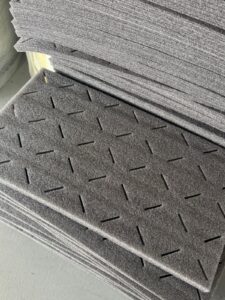
Modern statistics show that fields without safety layers experience higher injury rates, leading to the development of multi-layer flooring systems.
Artificial turf provides only aesthetics, but it does not absorb impact sufficiently, making shock pad for modern sports fields a necessity rather than an option.
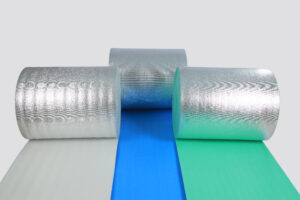
A shock pad is a flexible layer installed beneath artificial turf, designed to absorb impact and distribute pressure, improving safety and athletic performance.
It is a layer made from materials such as low-density polyethylene (LDPE) foam, helping reduce the impact of falls and friction.
It is installed between the base layer and artificial turf, acting as an intermediate layer that absorbs kinetic energy.
It distributes weight and impact evenly across the surface, reducing dangerous pressure points.
Shock pad for artificial turf has become a global standard due to its direct impact on safety and performance.
It significantly reduces impact force during falls, protecting players from serious injuries.
It reduces common injuries such as bruises, sprains, and joint injuries.
It provides a more comfortable and flexible surface that enhances player movement.
It protects turf backing from direct pressure, reducing early deterioration.
Most engineering specifications now require a safety layer for sports fields as part of the core design.
It reduces joint stress during running and jumping.
It absorbs fall energy and reduces its severity.
It provides a flexible surface that reduces long-term muscle fatigue.
Highly important in schools and public parks to protect children from injuries.
The higher the energy absorption capacity, the lower the injury rate.
It provides a smoother surface that reduces foot pressure.
It allows athletes to perform longer without fatigue.
It prevents unexpected slipping and improves balance.
It supports long-term athlete health and performance.
Because it combines safety, comfort, and performance improvement simultaneously.
It prevents pressure concentration in specific points.
It protects underlying layers from wear.
It reduces the need for early replacement.
It prevents surface deformation and unevenness.
By extending system lifespan and reducing repairs.
The most common application globally.
Essential for student safety.
For professional performance standards.
Provides high safety in play areas.
Enhances project value and quality.
Due to quality-of-life initiatives and Vision 2030 projects.
Depends on usage intensity.
Higher density means higher durability.
Critical for Saudi climate.
Must be compatible for optimal performance.
By analyzing usage, budget, and safety standards.
The biggest issue in unprotected fields.
Turf degrades faster.
Frequent and costly repairs.
Project fails modern standards.
When the safety layer is ignored.
Enhances final execution quality.
Provides a safe sports environment.
Reduces maintenance and repairs.
Preferred by players and coaches.
Because it balances quality, cost, and safety.
Products manufactured under ISO 9001 quality standards.
Engineered for harsh climate conditions.
Suitable for different project types.
Expert team assists in selecting the right solution.
By analyzing project needs and providing precise engineering recommendations.
High injuries and fast turf deterioration.
High-density shock pad layer.
Reduced injuries and improved performance.
Importance of integrating safety layers from the start.
Shock pad is no longer an optional element; it has become a core part of modern sports field specifications focused on safety and efficiency.
Because it combines protection, performance, and sustainability.
By reducing injuries and enhancing playing experience.
Fewer injuries + lower maintenance + longer lifespan.
Start by evaluating your project needs, then consult experts for the optimal solution.
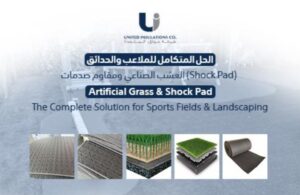 Artificial Grass & Shock Pad – The Complete Solution for Sports Fields & Landscaping
 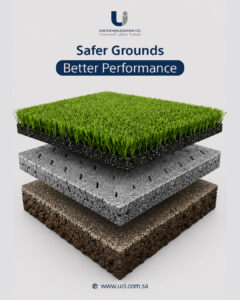 How to Choose the Right Shock Pad for Playgrounds and Sports Fields? A Professional Project Guide
 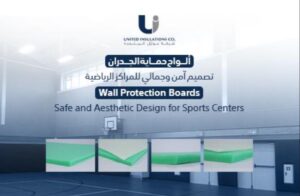 Wall Protection Boards – Safe and Aesthetic Design for Sports Centers
  Carpet Underlay – The Difference Between Commercial and Standard Quality in Flooring