Table of Contents
ToggleMany manufacturers believe that product quality alone is enough to ensure it reaches customers in perfect condition. However, reality proves otherwise. Many products are damaged during transportation and storage due to inadequate packaging systems, leading to recurring financial losses, increased returns, and lower customer satisfaction.
In today’s business environment, packaging has become an essential part of both the customer experience and the supply chain. As a result, industrial companies increasingly rely on foam industrial packaging solutions as one of the most effective ways to protect products and minimize shipping-related risks.
Companies invest heavily in product development and production optimization, yet they sometimes overlook the importance of packaging. As a result, even a high-quality product may arrive damaged because it was not adequately protected during transit.
Packaging should be viewed as an extension of product quality rather than simply the final step before shipping.
Once a product leaves the factory, it goes through multiple stages including loading, transportation, warehousing, and unloading. During this journey, it faces numerous risks such as impacts, vibrations, moisture, and friction.
Any weakness in the packaging system can result in product damage before it reaches the end customer.
Returns involve much more than replacing a product. They include reverse logistics costs, inspections, storage expenses, customer service efforts, and the loss of customer trust.
Industrial experience consistently shows that investing in professional packaging is often far less expensive than dealing with damages caused by unsafe transportation.
Many manufacturers still rely on traditional packaging methods that fail to provide sufficient protection, especially when shipping fragile or high-value products.
Certain traditional packaging materials have limited shock-absorption capabilities, making products more vulnerable to damage during handling and transportation.
Common issues include:
Products are exposed to continuous vibrations and repeated impacts during transportation. Without proper protective materials, the risk of damage increases significantly.
The risk becomes even greater when shipping:
Every damaged product increases the likelihood of returns or replacement requests, raising operational costs and reducing supply chain efficiency.
High return rates also consume customer service resources and negatively impact overall profitability.
In the age of e-commerce and online reviews, a single poor experience can influence the decisions of dozens of potential customers.
When a product arrives damaged, customers often associate the problem with the manufacturer, even when the real cause is inadequate packaging.
Foam is one of the most widely used packaging materials in modern industries due to its exceptional ability to protect products from impacts and external factors.
Many global manufacturers rely on industrial foam packaging as an effective solution for maintaining product quality during shipping and storage.
The greatest advantage of foam is its ability to absorb impact energy and prevent it from reaching the product directly.
This significantly reduces the likelihood of:
Foam can be manufactured in various shapes and sizes to perfectly match the dimensions and protection requirements of a product.
This allows manufacturers to create custom-fit protection rather than relying on generic packaging solutions.
One of the key advantages of industrial foam is its ability to resist moisture and environmental factors, helping protect products during storage and transportation, especially when goods travel long distances or through varying climate conditions.
This advantage becomes even more critical when shipping electronics or sensitive components that can be significantly affected by moisture exposure.
Compared to traditional packaging materials, foam provides a higher level of protection and flexibility.
Criteria | Foam | Cardboard | Plastic |
|---|---|---|---|
Shock Absorption | Excellent | Moderate | Low |
Moisture Resistance | Excellent | Poor | Good |
Protection for Sensitive Products | Excellent | Moderate | Moderate |
Customization | High | Medium | Medium |
Return Reduction | High | Medium | Medium |
For this reason, many manufacturers rely on foam industrial packaging solutions to protect products and minimize losses.
A wide range of industrial foam products can be used individually or as part of a complete packaging system depending on the product type and shipping requirements.
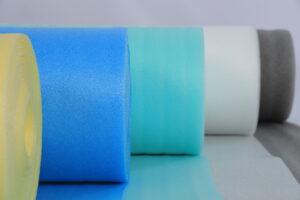
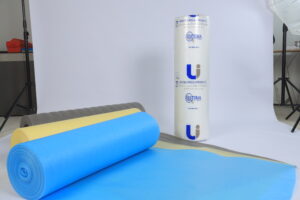
Foam rolls are among the most widely used packaging solutions in factories and distribution centers.
Key benefits include:
Learn more about foam rolls used for industrial product protection.
Foam bags are designed to protect individual products from friction and impact during shipping and storage.
They are ideal for:
Explore the advantages of foam bags for delicate products.
Foam corners are specifically designed to protect edges and corners that are vulnerable to damage during transportation.
Common applications include:
Learn how foam corners protect products during transportation.
In many cases, using a single packaging product is not enough. Multiple solutions are combined to achieve maximum protection.
An integrated system may include:
This approach is known as integrated packaging solutions, widely adopted by leading manufacturers.
Choosing the right packaging system depends on more than budget alone. Several factors directly influence protection levels and delivery quality.
Every product has unique protection requirements.
For example:
The more sensitive a product is, the more specialized the packaging materials need to be.
Sensitive products include:
Packaging requirements vary depending on the transportation method.
Ground, sea, and air transportation each present different challenges that require suitable protection measures.
When selecting a packaging system, production volume should also be considered.
High-volume manufacturers need cost-effective and scalable solutions without compromising protection quality.
Direct Answer: Foam reduces returns because it protects products from damage before they reach customers.
The lower the damage rate during transportation, the lower the return rate becomes.
Industrial experience has shown that foam packaging significantly reduces risks associated with impacts and vibrations.
Receiving a product in perfect condition reflects professionalism and strengthens customer confidence.
Foam continues protecting products throughout the entire shipping journey, from warehouse handling to final delivery.
Higher delivery quality leads to greater customer satisfaction and increased repeat business opportunities.
When customers receive products without damage, they develop stronger trust in the brand.
When selecting a packaging system for a factory, comparing available options is essential to achieve maximum protection with the lowest possible operational cost.
Cardboard is widely used in packaging and shipping operations. However, it often requires additional protective materials when transporting fragile or high-value products.
On the other hand, cardboard is suitable for low-risk products that do not require advanced protection levels.
Some companies rely on conventional plastic packaging materials during transportation, but they often fail to provide sufficient protection against impacts and vibrations.
The answer depends on the product type. However, for most industrial applications requiring maximum transportation protection, foam remains the most efficient and reliable choice.
This is why many manufacturers rely on foam industrial packaging solutions as part of their shipping and storage operations.
Many businesses view packaging as an added expense, while in reality, it is a direct investment that improves profitability and reduces operational losses.
Every damaged product represents a direct loss that includes:
A professional packaging system helps significantly reduce these losses.
Customer experience does not begin when the product is used—it starts the moment it is received.
When products arrive in excellent condition, customer trust in the company and brand increases.
Satisfied customers are more likely to make repeat purchases and recommend the company to others.
As a result, quality packaging indirectly contributes to higher sales and sustainable growth.
The lower the return and complaint rates, the more efficient and profitable operations become.
Teams can focus on growth and production rather than resolving damage-related issues.
Many manufacturers make packaging mistakes that seem minor but can lead to substantial long-term losses.
Selecting packaging materials that do not match product requirements is one of the most common mistakes.
Materials suitable for metal products may not be appropriate for electronics or glass items.
Some businesses attempt to reduce costs by using low-quality packaging materials.
However, this decision often results in greater losses due to increased damage and return rates.
Testing packaging before commercial use helps identify weaknesses before products reach customers.
This includes:
Most packaging issues can be avoided by:
United Insulation Company (UCI) provides a comprehensive range of industrial foam solutions designed to meet the needs of manufacturers across multiple sectors.
The company’s solutions include:
The company utilizes premium raw materials and advanced manufacturing technologies to ensure reliable and long-lasting performance.
It also holds ISO 9001 certification for quality management systems.
UCI serves various sectors including:
UCI’s technical team provides professional consultation to help customers select the most suitable packaging system for their products.
The best solution depends on the product type and typically includes foam rolls, foam bags, and foam corners as part of an integrated packaging system.
Yes. Foam offers excellent shock absorption and reduces the impact of vibrations during transportation.
Returns can be reduced by using suitable packaging materials and testing packaging systems before deployment.
For fragile or high-value products, foam generally provides superior protection compared to cardboard.
The selection depends on product type, sensitivity level, shipping method, and production volume.
Yes. Receiving products in excellent condition increases trust, satisfaction, and brand loyalty.
Foam industrial packaging solutions have become a critical component for manufacturers seeking to reduce damage, lower return rates, and improve customer experience.
Investing in a professional packaging system does more than protect products—it directly impacts profitability, operational efficiency, and brand reputation.
Start by evaluating your products and identifying transportation risks, then implement specialized packaging solutions that provide the required level of protection with maximum efficiency.
 Best Foam Industrial Packaging Solutions: How to Protect Your Products and Reduce Returns?
  Industrial Packaging Foam: Why Do Some Solutions Fail to Protect Products?
  Foam Rolls in Packaging – The Best Solutions to Protect Furniture and Products
  How to Choose the Right Industrial Packaging Foam for Your Products?
 United Insulations Company (UCI) is a leading Saudi company specialized in manufacturing and supplying thermal and acoustic insulation solutions, as well as low-density foam products. The company is committed to the highest standards of quality and sustainability to support construction and industrial projects within the Kingdom and beyond.
Third Industrial City, P.O. Box: 22766 Jeddah-6838, Saudi Arabia
Sunday - Thursday 8AM : 5PM