Table of Contents
ToggleTesting packaging foam quality before supplying industrial and commercial projects is no longer optional; it is a critical step to reduce risks and protect products during transportation and storage. Companies that skip this stage often face direct losses, including product damage, returns, and replacement costs.
Technical specifications may look perfect on paper, but real performance is only revealed during actual usage. That is why field testing is essential to evaluate shock absorption and compression resistance.
Receiving low-quality packaging foam leads to product damage, increased returns, and loss of customer trust. It can also disrupt the supply chain and negatively impact brand reputation.
Before supply, testing costs are minimal and controlled, while after supply, losses can multiply due to damaged shipments and replacement expenses.
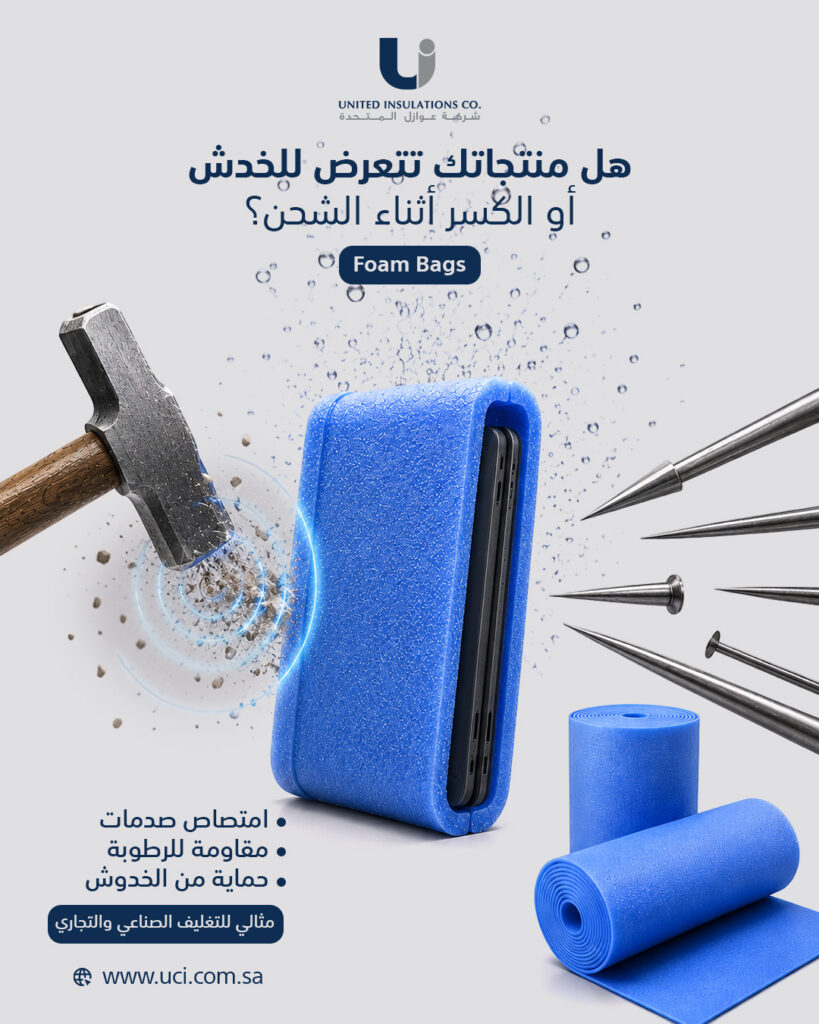
Low-quality foam fails to absorb shocks effectively, resulting in product breakage or deformation during transportation.
With repeated use or high pressure, foam loses its original shape and becomes ineffective in protection.
Poor foam quickly loses flexibility, reducing its ability to adapt to different product shapes.
These issues lead to damage of electronics, glass items, and sensitive products, increasing operational costs.
Density is the most important indicator of foam quality, reflecting its durability and protective capability.
The greater the thickness, the higher the foam’s ability to absorb shocks and protect products.
Flexibility allows foam to adapt to different product shapes without losing effectiveness.
High-quality foam must resist moisture to prevent product damage during storage.
Press the foam with your hand and observe how quickly it returns to its original shape—the faster it rebounds, the better the quality.
Dropping a light object on the foam helps evaluate its shock absorption capability.
Continuous pressure testing reveals long-term durability performance.
Compare multiple samples before making a final decision to identify the best option.
Commercial foam is used for light products, while industrial foam is designed for heavy-duty protection.
Industrial foam delivers superior shock absorption compared to commercial foam.
Industrial foam lasts longer and resists wear more effectively.
Choosing the right type reduces losses and improves supply chain efficiency.
Numbers must be analyzed carefully as they define real protection levels.
Material type determines the final performance quality of foam.
Comparison helps select the best value for money.
Relying only on price without analyzing specs is a common mistake.
Certificates like ISO 9001 reflect supplier commitment to quality.
Samples help customers make decisions based on real testing.
A reliable supplier adheres strictly to specifications.
A good supplier reduces risks and ensures consistent quality.
Each product requires a different protection level based on sensitivity.
Defining protection level helps choose the right foam.
Specifications must match project requirements.
Expert consultation reduces selection errors.
The company follows ISO 9001 standards to ensure production quality.
Products are inspected throughout all manufacturing stages.
The company provides samples before purchase.
A technical team assists customers in selecting the right solution.
Quality can be tested through manual compression, rebound testing, and sample comparison.
Density reflects foam strength, while thickness determines protection level.
Not always, but price often reflects material quality.
Yes, and requesting samples is always recommended.
Density is the most important criterion as it defines overall performance.
Testing foam quality before supply is the first step to protect products and reduce losses.
Because it prevents shipment damage, reduces returns, and ensures operational efficiency.
United Insulations Company (UCI) is a leading Saudi company specialized in manufacturing and supplying thermal and acoustic insulation solutions, as well as low-density foam products. The company is committed to the highest standards of quality and sustainability to support construction and industrial projects within the Kingdom and beyond.
Third Industrial City, P.O. Box: 22766 Jeddah-6838, Saudi Arabia
Sunday - Thursday 8AM : 5PM