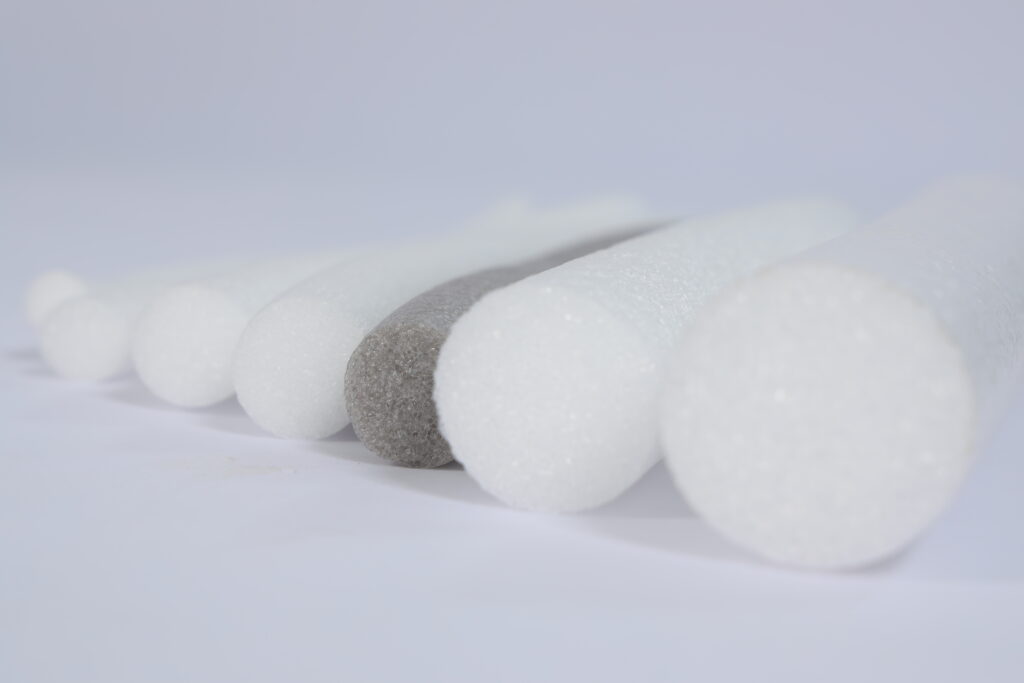
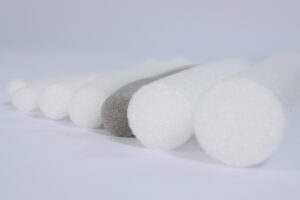
In modern construction, small details create big impact. Among these details, Backer Rod stands out as one of the most critical hidden components within joint systems. It may look like a simple round foam filler, but it is in fact a core engineering element that directly influences sealant performance and overall project durability
Backer Rod is used as a joint filler before applying silicone or flexible sealants to control depth and prevent improper adhesion, ensuring joint flexibility and movement tolerance
When installing expansion joints in concrete or walls, applying sealant directly into the gap is not sufficient. Here, Backer Rod plays a supportive layer role ensuring
Sealant performance depends heavily on application method. Without proper Backer Rod:
Backer Rod ensures two-sided adhesion only, which is the correct engineering standard
Selecting Backer Rod is not random; it must follow specific engineering criteria
Backer Rod is typically manufactured from Low-Density Polyethylene (LDPE), known for:
Closed-cell Backer Rod prevents moisture absorption, making it ideal for:
Backer Rod is available in various diameters and is typically selected about 25% larger than joint width for secure placement
Backer Rod is widely used in large-scale B2B and construction projects.
In industrial floors and residential buildings, Backer Rod controls thermal expansion movement.
Backer Rod prevents sealant cracking at surface intersections.
In infrastructure projects, Backer Rod is vital in expansion joint systems to withstand loads and vibrations.
Backer Rod ensures the ideal depth-to-width ratio for optimal flexibility.
One of Backer Rod’s key roles is preventing sealant adhesion to the joint base.
Proper Backer Rod usage significantly extends joint lifespan and reduces maintenance costs.
A smaller diameter may cause movement and system failure.
Open-cell materials absorb moisture and reduce insulation efficiency.
As a leading Saudi insulation company, UCI delivers Backer Rod products aligned with top engineering standards.
What is the function of Backer Rod?
It acts as a joint filler to control sealant depth and flexibility.
How do I choose the right Backer Rod diameter?
It should be 20–25% larger than joint width for secure fit.
Is Backer Rod water resistant?
Yes, closed-cell polyethylene Backer Rod is water resistant.
Backer Rod may seem like a simple joint component, but it is fundamental for long-term sealant and insulation performance. In professional projects, details matter. Selecting the right Backer Rod means minimizing risk, improving efficiency, and reducing future maintenance costs.
Order Backer Rod in the right sizes for your project
 Types of Foam in the Saudi Market and a Comparison of Their Properties and Uses
  Thermal Insulation Foam Boards – Uses, Benefits & Best Thicknesses
  Expansion Joints in Construction – Types and Their Role in Protecting Structures
  Expansion Joints for Roads and Bridges – When You Need Them and How to Choose the Right Type?